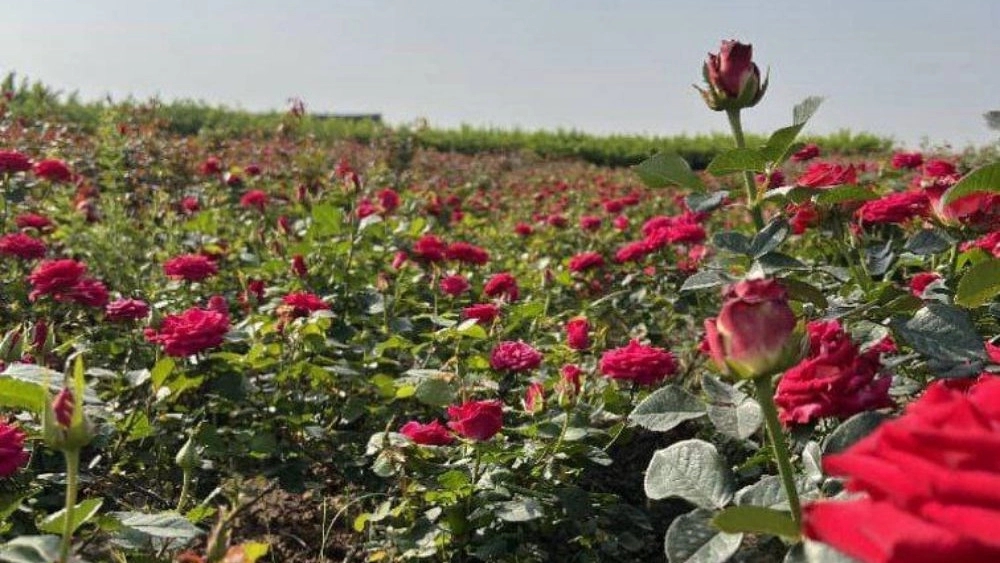


Introducing Dutch Rose Seedlings in appearance
This flower is available in the market in both aromatic and non-aromatic forms. The planting of this sapling is increasing all over the world because it is used in many occasions such as "Valentine's Day", emotional gifts, Mother's Day and many other celebrations. These flowers are sold in flower shops as single branches and arranged. Today, creating a greenhouse of Dutch roses will give you a very significant profit. This flower is covered with fragrant flowers in all seasons, except winter, but if the sun burns, the leaves will fall.
If the leaves fall, just cut the dried flowers with scissors to replenish them. become flowers
Dutch Rose Seedlings Life
It is said that this seedling flowers continuously for ten years of its life and its fragrant bouquet is extremely popular and expensive for perfumery.
The height and width of this flower is 2 x 3 feet (60 91 cm) reaches. This flower is suitable for keeping in gardens and small places.
Differences between Iranian Rose and Dutch Rose
Differences in terms of rose stems
Iranian roses mostly have a lot of thorns on the trunk, but Dutch roses do not have thorns on the trunk, and if they do, this amount is much less than the Iranian variety.
lifespan and shelf life of cut flower
Iranian roses have a useful life of only 3 to 6 days. While Dutch roses can last between 10 and 20 days, this is highly dependent on the product's storage environment.
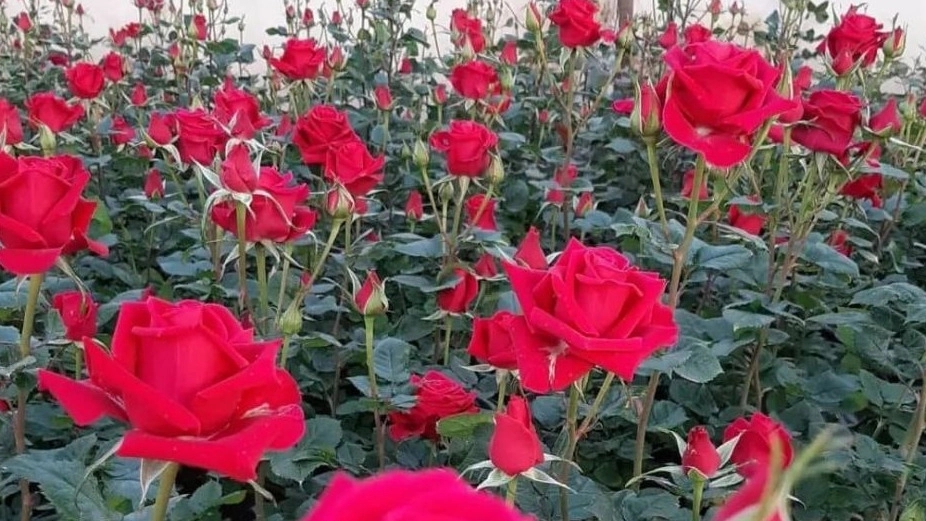
Dutch and Iranian rose coloring
Iranian Dutch roses are available in only three colors in the market, while Dutch roses have more than 20 colors in the market.
1) Broadcasting through Seed
is used to get new figures or links. Planting is done in autumn. They are not green due to insufficient cooling. One year left of the seedlings and in the spring of the second year, remove them from the main land in lines with a distance of 1.5 meters and planting distances of 10-20 cm. meters and ready for planting in June. 2) Rose seed planting is used to increase it in two times. One is to obtain new varieties and the other is to plant nested seeds to prepare young and healthy rootstocks that can be transplanted. The bushes are gone. These fruits are the result of flowers that have been starved in another way, or due to the presence of different varieties around them, the process of starvation has been performed on them in mid-autumn when the fruits are fully ripe. They harvest before the onset of cold and frost.
The sign of rose fruit ripening is when the fruits turn orange. But it should be known that in some types of roses, especially tea hybrids, the fruits become hard and in general the time of fruit ripening is different depending on the race, region and place of planting. Ripe fruits should be planted at the same time as picking, i.e. in the middle of October or November (because the rose fruit seeds lose their strength soon after picking).
If the seeds are not fully ripe and the weather is cold in the area To complement their natural ability, the seeds are layered on slightly moist sawdust or soft sand to prepare for germination (stratification). The planting of the fruits is divided into four parts with a grafting knife, the seeds are taken out and to know what seeds to plant so that after greening and flowering it is determined that new cultivars have emerged between them. Plant the seeds of each plant in a special container and identify its species with a label.
The container in which the seeds are planted is more suitable if it is in a greenhouse. Otherwise, you should use special seed beds. The tank or trough is filled with decomposed soil that they have prepared before and smoothed on it, the seeds are placed in regular rows on the soil, in some of them 100 to 150 grams of sulfur and some sulfate bisulfide and A little chemical fertilizer is used. It is added to the soil of each tank.
In order to be careful and prevent animal and fungal pests, amateurs should fertilize the reservoir soil two months before planting. This is done by disinfecting the solution (formula) or injecting sulfur dioxide at the time of planting to do this. Do not suffer from these pests after the plants are green. After the seeds are planted on the soil, they should be gently pressed with the palm of the hand so that the seeds adhere well to the soil, cover it with a 1.5 to 1.5 cm layer of sand, and water the tank.
The seeds from 30 They grow green up to 90 days after planting, depending on the type. After greening, watering should be reduced so that the roots of the bushes, which are very delicate, do not rot until the cold weather and frost keep these bushes in the greenhouse or under the chassis. After the weather becomes favorable, they are taken out and planted in another tank with more intervals or planted separately. or other parasites were observed on them, they were fought with a solution of nicotine bisulfate or other poison to prevent the plants from weakening and growing faster. Place them at a distance of 50 cm or in larger pots until they start flowering.
When planting these seeds, depending on the location of the region, it is one of the months of Mehr, Aban and Azar or late March, so that they do not lose their medicinal properties, the seeds should be dried immediately on sand or soft charcoal. Layers At the right time, sow the seeds in large plots where the soil is already prepared and deep enough. If you plant seeds in the fall, it is better to cover the plots with a layer of broad leaves to prevent the penetration of cold and frost.
3) Broadcasting through cuttings
The cuttings should have 1-3 nodes to delay the growth of the upper axillary bud, only the upper leaf is kept to ensure good rooting and provide the necessary food for the growing shoot. Its semi-woody cuttings root easily. Some roses, such as yellow and purple roses, have difficulty rooting cuttings, so they are propagated by grafting. Usually creeping and miniature types and other roses, except for red roses, have good rooting.
In order to be able to obtain healthy and strong plants for the base in a shorter period of time, or in the absence of a base for transplanting one of the roses, they have chosen cuttings.
Some cuttings From different breeds and types of roses, it gives results easily and takes root in a short period of time, and with this tool you can get a number of the same type or type.
4) Split or abdominal transplant
Split or abdominal transplant is done simultaneously and in two ways.
1- Abdominal transplant with awake bud
2- Abdominal transplant with sleeping bud
The season of transplanting with a bud is from the beginning of June to the end of July, when the flow of plant sap causes the skin to open. Wood and after grafting, there is enough time for the branch to grow and its woody core to mature. The awakening of the bud and its growth after taking the transplant remains latent until spring, it starts to grow and develop from early April.
The autumn graft should be protected from freezing in winter (so that the graft does not freeze in winter with the onset of cold weather, it is covered with a layer of frozen paraffin) and since it starts to grow in early spring, the branch Its seeds are stronger and have enough time to reach the core of the branches. It is easy and consists of taking the scion from the desired branch with a grafting knife and placing it in the slot provided in the shape of a (T) on the base and closing the slot with the bark removed from the base and tying it with a soft string. It is better to take the scion from the branch. The one that has flowers or buds should be taken.