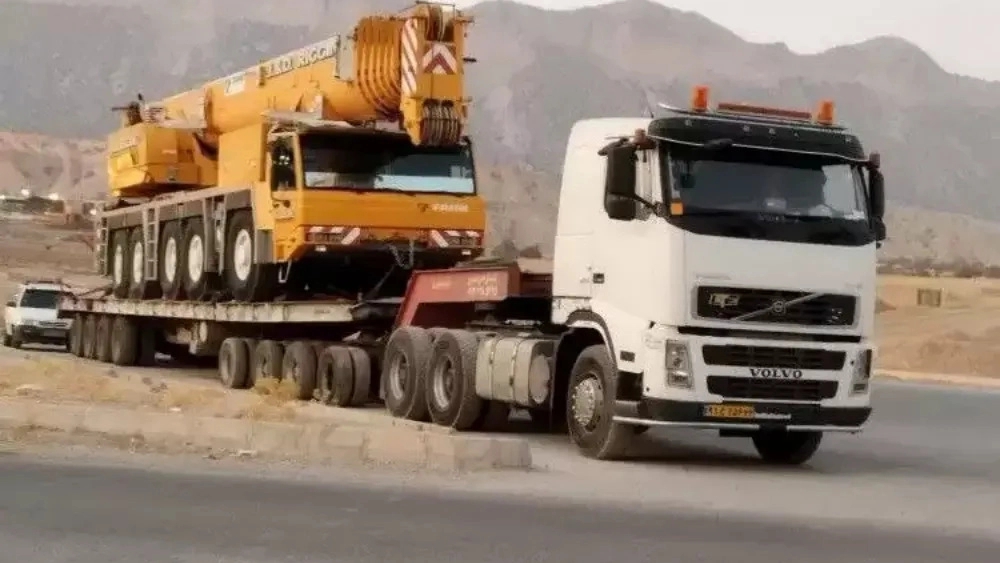
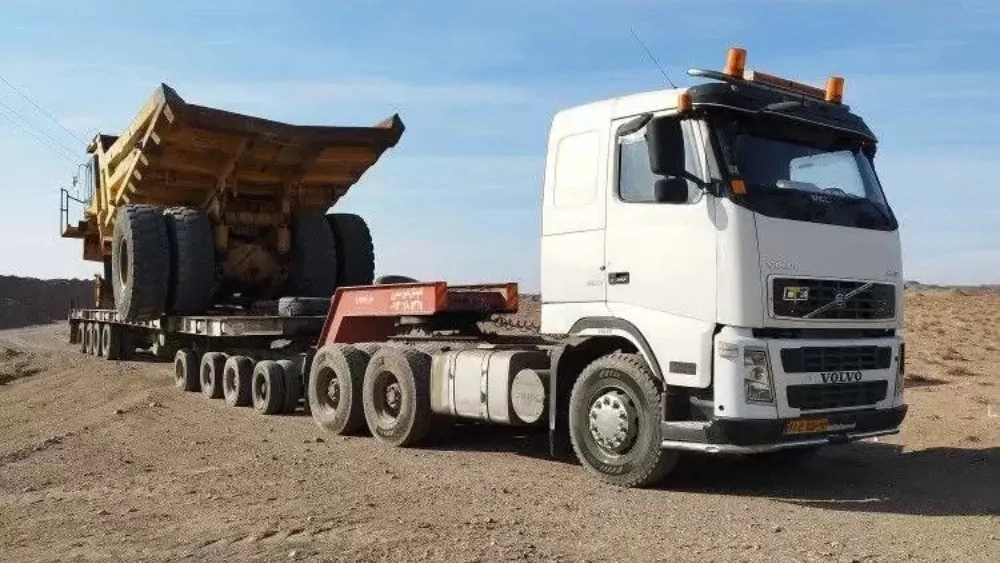


What is a trailer?
Cargo can be transported by four ways: land, rail, air and sea. Now, depending on which way the cargo is transported, the equipment and means of transportation are different. The important thing you should know is that the land route has the most variety of machines due to the prices and availability. In simpler words, choosing a means of transportation based on the type of cargo, route and cost can be completely diverse.
One of the types of these devices is known as back-breaking trolley. Back-breaking trolley consists of two parts: tractor and trolley. The front part, which includes the driver's cabin and the main connections, is called a tractor, and the back part, on which the load is placed, is called a trailer. The special feature of the backbreaking trailer is the movement of all four wheels of the front part (tractor). In simpler words, the cabin and front part of the back-breaking trolley has a much higher possibility of movement than other types of vehicles.
There are different types of back-breaking trolley based on different factors. In the following, we will examine the types of these trailers.
Types of trailers
As mentioned, back-breaking trolleys are divided into different types based on different factors. The most important factor in this division is the type and weight of carrying cargo with a back-breaking trolley. Based on how heavy or bulky the load is, it has been tried to design and produce a suitable back-breaking trolley. These factors have caused the types of back-breaking trolleys to differ from each other in several ways:
The issue that is quite clear is that based on the weight of the load and its increase, it is expected that a back-breaking trolley with a longer length and a higher number of wheels will be used. Note that as the length of the loading floor increases, the weight of the load is divided and practically less pressure is applied to the front part of the trailer - the engine.
On the other hand, the wheels bear a large part of the weight do Therefore, with the increase in the weight of the load, the number of wheels carrying the loading floor increases, and they also become a little wider in terms of size. As tires become wider, their pressure tolerance increases and the possibility of tearing or bursting is almost eliminated.
Mechanical shovels
Excavators are one of the first modern construction machines used in earthworks. Excavators are mainly used for excavating in the soil and loading it with trucks or trolleys or conveyor belts. Its powerful types are capable of excavating in all types of soil except rocks without primary destruction. Excavators consist of three basic parts. It is: Carriage - the part of the revolving chamber on the car and the additional part in front of the car.
Chariot or chassis: The chassis is divided into two types: chain wheel chassis, rubber wheel chassis (truck)
The chain wheel chassis provides stability and reliability for the upper rotating chamber and provides mobility. It creates a good effect on the soil removal site. Also, due to the wide surface of the wheels, it creates a little pressure on the soil, which makes it possible to work on loose soils, in cases where more friction is needed depending on the type of soil, and there is a slippery problem. If there is, the role of the chain becomes important in the machine, instead, such shovels have low speed.
Rubber wheel chassis have a faster movement speed and are therefore more useful for small jobs where the number of trips is high and the used road surface is firm. This type of chassis is of two types: the self-moving type that is driven from the steering room and the other type that is installed in the back of the truck and is called a truck; The speed of the first type reaches 50 and the speed of the second type reaches 80 kilometers per hour.
Excavator with reverse cup
This shovel is given many names, such as: curved shovel, back-bend shovel, and traction shovel.
These shovels are in two types, mechanical and hydraulic, and are suitable for digging.
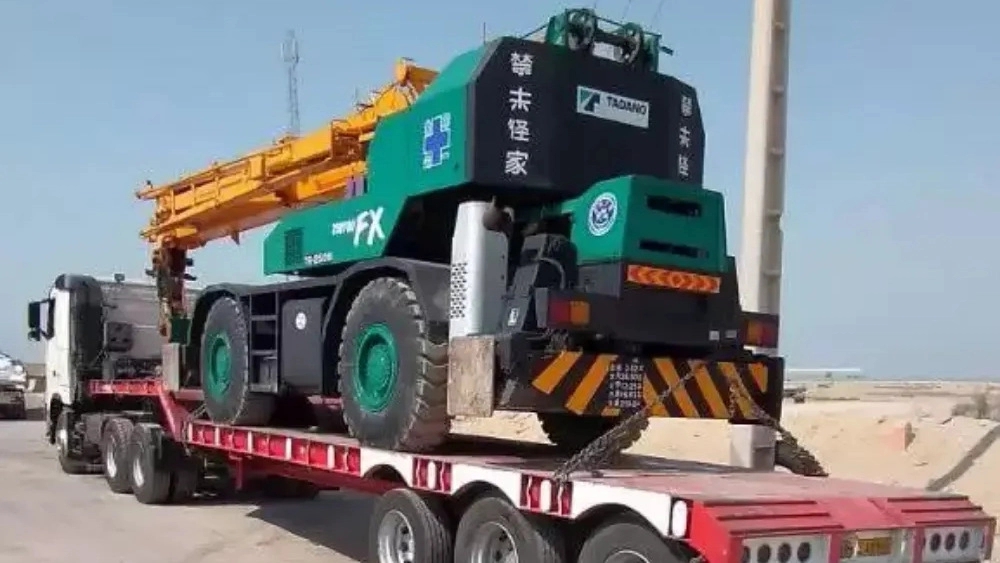
Excavator with cable system
This excavator is a rotating cabin that is mounted on wheels and is attached to the front end of the shovel. This shovel is in two types, mechanical and hydraulic.
The tensile shovel (Dragin)
Dragline excavator consists of a control room - crane - excavator cup and necessary cables to control different parts. The excavator is able to work at levels much higher and much lower than its support level and is used in all types of land. is placed Its long arm is useful for digging and unloading excavated materials, and the short cycle time is one of the advantages of this machine.
Crane
The crane consists of a steering room, a long lattice beam and the heart of the crane, and is usually used for tying heavy objects and moving them. By connecting different devices to the end of the long mesh beam of the crane, other uses can be made. Cranes are of two types, mechanical and hydraulic, which are mostly hydraulic today.