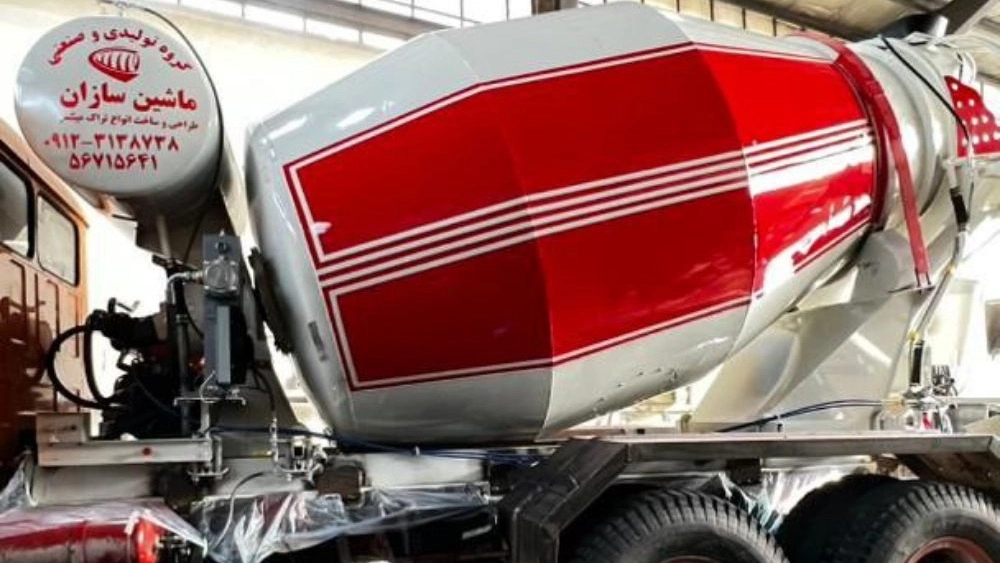


Working with a truck mixer, a concrete mixing truck, involves various steps that must be performed with precision and delicacy to ensure the quality of concrete, safety and efficiency of the process. Here we briefly describe the steps of working with the track mixer:
1. Before loading:
Preparation of the boiler: The boiler (tank) of the truck mixer must be completely cleaned and washed before loading from the previous concrete. For this purpose, water or special detergents are used.
Checking the technical condition: The technical condition of the truck mixer, including the engine, gearbox, boiler rotation system, boom pump (if presence) and safety systems should be thoroughly checked and serviced and repaired if needed. Fluid discharge of raw materials (cement, sand, sand and water) inside the pot.
2. Loading:
Raw materials: Cement, sand, gravel and water are measured in predetermined proportions by the batching plant device.
Transfer to the boiler: The raw materials are transferred into the truck mixer using a conveyor belt or other methods.
Loading order: Usually aggregates (sand and gravel) first, then cement and water. are added to the pot. Loading rate: The volume of raw materials should not exceed 80% of the nominal capacity of the pot so that there is enough space for complete mixing of concrete. p>
1. Mestion:
Rotation of the pot: When the motor is turned on, the pot-track mixer starts to rotate clockwise (or counter-clockwise, depending on the design).
Rotation speed: The rotation speed of the boiler is usually between 15 and 30 rpm.
Blades and lifters: To increase the efficiency of mixing, it is possible to use spiral blades or lifters. Internal as well be used in the pot.
Mixing time: The mixing time is usually between 3 and 5 minutes and until all the raw materials are evenly mixed and the concrete is homogeneous and If it is uniform, it will continue.
1. Shipment:
Move to the project: After the concrete is completely mixed, the truck mixer moves to the project site.
Continue rotation: During transportation , the rotation of the pot continues to prevent the separation of heavy grains (sand) from the liquid phase (cement and water) and the concrete remains homogeneous.
Time limit: To maintain the quality of concrete, the transportation time should be limited As short as possible, in general it should not exceed 2 hours.
Weather conditions: In hot and dry weather, it may be necessary to use additives such as setting retarders. be used to maintain the effectiveness of concrete during transportation.
1. Discharge:
Dumping place: The concrete dumping place must be prepared in advance and be in such a way that easy access is provided for dumping and spreading concrete in the desired place.
Discharge method:
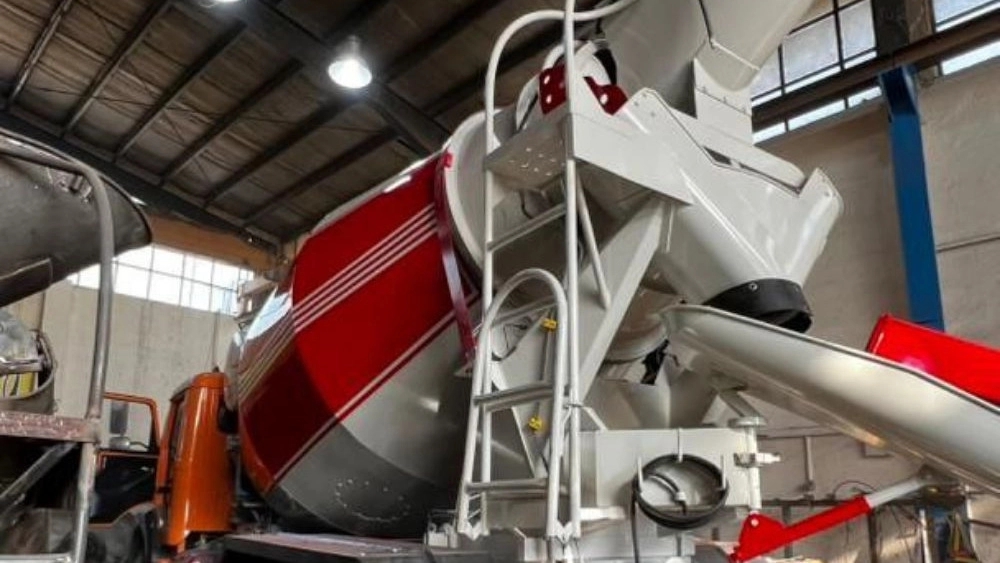
Turning the pot: By turning the pot in the opposite direction or using a boom pump, the concrete is discharged through a valve at the end of the pot.
Conduction of concrete: from shot or guide pipes The agitator can be used to direct the concrete to the exact desired location.
Vibration: In some cases, vibration is used to compact the concrete at the place of discharge.
1. Washing:
Importance of washing: After emptying each load of concrete, it is necessary to thoroughly wash the pot and other components of the track mixer that were in contact with concrete.
Washing method : Washing is done using water or special detergents and continues until all concrete remains are removed and the boiler is completely cleaned.