
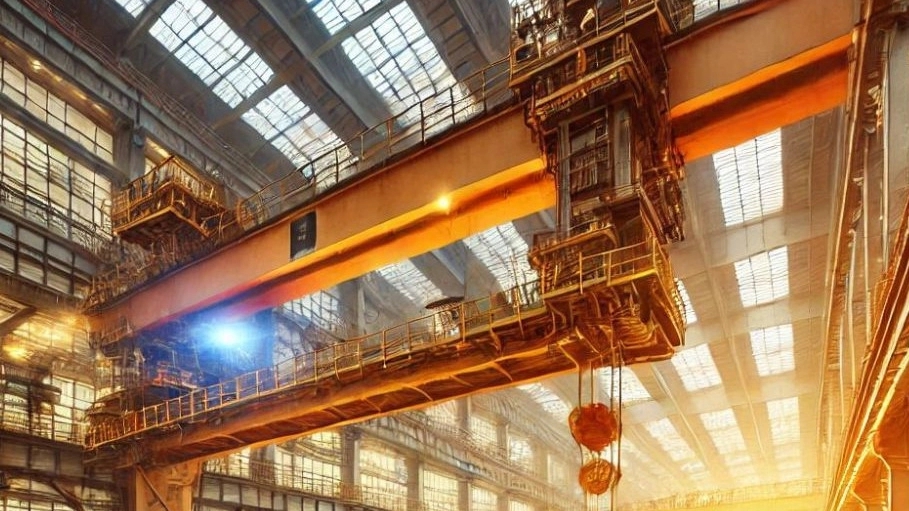
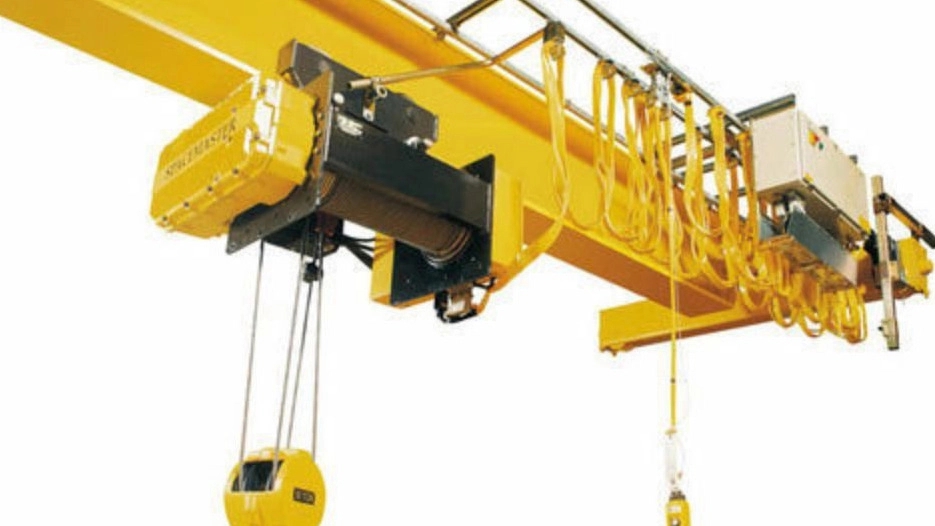
In an overhead crane, there are various parts such as the cross beam, end wheel, longitudinal beams or bridges, shock absorbers, pulleys, hoists, longitudinal rails, etc. and each of these components has a specific function. They jointly cause the activity and movement of the overhead crane. In this article, we introduce the components of the overhead crane.
Crane Parts Price
According to the fluctuations, the price of overhead crane components varies like other parts of the market. But don't worry, our team is always trying to offer the best and most suitable price for crane parts according to the market situation. In order to control the market, we are trying to provide you with the most appropriate price of crane parts with the best quality.
Overhead Crane is a machine or part that allows you to move heavy materials and parts from one point to another and accurately. Since each crane has its own design and use, it is not possible to find a definition that covers all cranes. But in general, in simple terms, it is a roof crane for transferring and moving heavy equipment in sheds, halls, and warehouses in certain places.

Hook Hook: The lifted load is connected to the hoist using a hook.
Hoist: It is something that causes Lifting and holding, lifting and lowering with the help of wire, chain and rope. The lifter can be powered manually (by hand), by electricity or compressed air (pneumatic).
Trolley: The trolley is responsible for supporting the lift. This device moves horizontally along the crane bridge. Used to position the hook and hoist before lifting or lowering the load. This device is set in two modes.
Under Running: Wagon wheels move on the bottom of the crane beam flange.
Top Running: Wagon wheels move on rails fixed on the crane beam. This system is mostly seen in two-way traffic. This piece is part of the primary structure of the overhead crane and connects the rails together. Performs forward and backward lifting using a carriage. A bridge can be made of one or two beams, known as single-span and double-span. The girders can be made of rolled steel or can be made by welding the girders to the steel box. and below is used. This part is part of the building. There are two runways for each overhead crane.
RUNWAY RAIL OR TRACKS: The rail supported by the runway is where the crane moves. Heavy duty cranes usually move on ASCE rails. Ground-based cranes can use a rail on the ground and the crane moves on it.
End Trucks: These parts are located at the end of the bridges, they move the bridge up and down its thigh. These parts use several wheels to move on the track. Depending on the type of crane, each loader can have 2, 4 or 8 wheels. Reduce the impact. The crane moves in a controlled manner, and the novel that reaches the end of the path minimizes its force. The shock absorber can be connected to the bridge, trolley or stop of the movement. Or a hanger allows the operator to control the crane. The controls control the lifting motor and the movement of the crane. The controls are typically mounted on a panel on the crane or hoist, and a pendant or remote radio console allows the operator to operate the crane. Controls can use variable frequency VFD devices and accurately control the speed and direction. (Flat cables) transfer the power from the building to the crane.
Ceiling cranes
Overhead cranes come in different sizes, shapes and capacities, and choosing the right type of overhead crane is essential to simplify your production and consumption process. To determine the right type, pay attention to the fact that there is no specific all-purpose crane, and you should pay attention to the following according to your needs:
Movement and structure of the crane
Weight and type of materials to be moved
Place of installation of the crane - are they inside or outside
Required capacity
How often is the crane used
Length or span of the crane p>