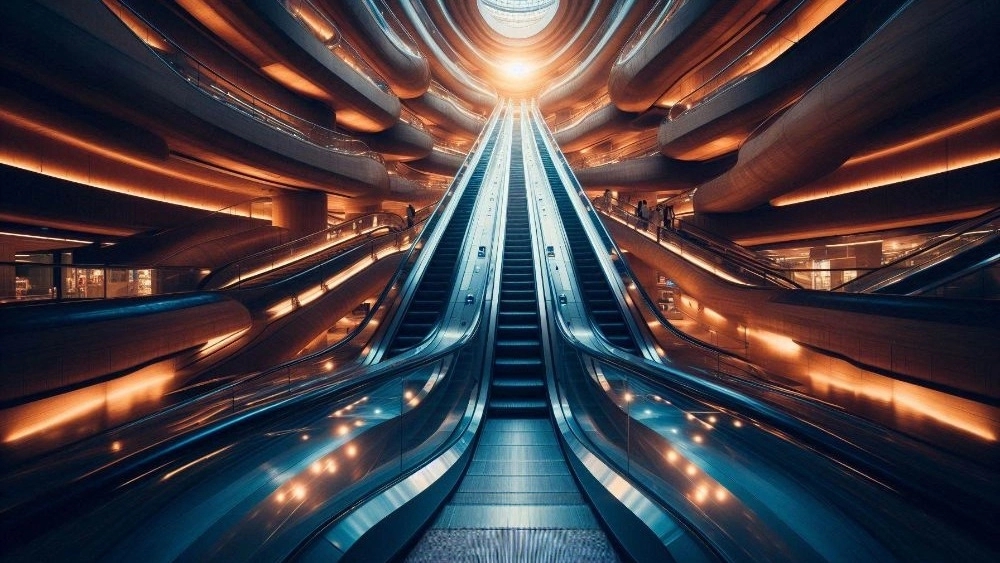




Escalators have wide applications in residential, commercial and industrial buildings. Escalators are usually used in shopping malls, airports, subway stations, offices and hotels. These systems allow people to move quickly and effortlessly between floors and are very useful for people with physical limitations, including the elderly and people with disabilities.
Escalator design is a very important issue that affects the quality of work and even the lifespan of this product. Many factors are considered in the design of this important and practical element, which we will mention below. Calculating the slope and actual length of the escalator largely depends on its design factors. After checking the factors and bringing them to the standard level, the escalator is designed. Then the design is implemented and the stairs are installed in place. After that, the quality control process is carried out by the relevant experts. If the design is done correctly according to the existing criteria and standards, we can expect optimal and appropriate performance from it.
The main components of the escalator
In general, the most important components of escalators are: 1- The electric motor that is located under the stairs and provides the necessary energy for the rotation of the gears. 2- There are four gears under the stairs, two of which are parallel at the top of the stairs and two at the bottom of the stairs. 3- There is a belt or chain around the gears that move with the rotation of the gear. At the same time, this belt is connected to the stairs and with its movement, it moves the stairs at a certain speed. 4- The rubber band, which is known as Handrail, is one of the components of the escalator. When riding the escalator, people use these strips to maintain their balance. The handrails move at the same speed as the stairs, and the energy needed to move them is provided by an electric motor.
Factors influencing the design of escalators
- the vertical and horizontal distance to be drawn - Location - Other building infrastructure - Traffic patterns - Carrying capacity – Safety considerations – Aesthetic preferences
Notes when designing an escalator
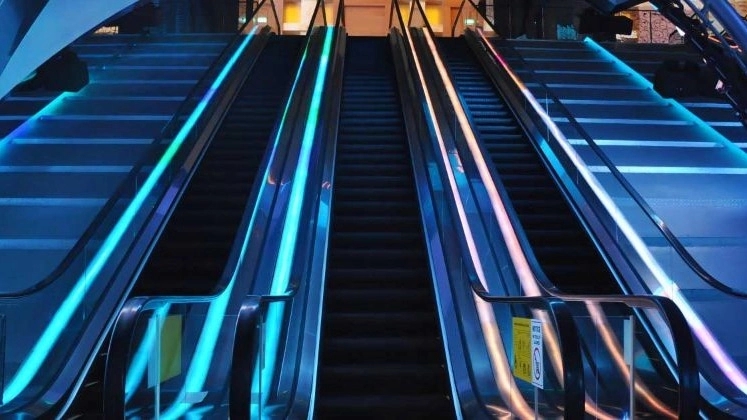
The weight bearing capacity of the escalator during the peak traffic of users Choosing the location of the escalator in such a way that people do not have problems getting on or off and the access to the escalator in the building is close and appropriate. The design of the escalator should be in accordance with the strength of the desired location and structure. In the design of the escalator, the vertical distance between the floors should be taken into account to obtain the correct slope. Escalators must be able to go back and forth. In the design of new escalators, sensors are usually used that do not work when they are not in use, thus saving energy. It is necessary to have red buttons next to the escalators so that in case of a problem, the emergency stop can be activated.
The benefits of escalator
The difference between a normal staircase and an escalator in a building is the speed of movement and the comfort of people who can move between floors without physical activity. The escalator is designed and manufactured to speed up the movement of people between the floors of the building in complete peace and without loss of time. Escalators can be programmed in such a way that in large centers such as huge metros where several escalators are used, they can be placed in orderly routes as a guide for entering and exiting and arranged in such a way that people without delay , access their desired location. There is no time for the elevator and it is constantly moving people. Another advantage of the escalator is that it does not have a limited capacity like the elevator cabin.
Escalator components
Escalator is a device used to move people between different floors of a building. This device has many parts and components, each of which has a specific task. The main components of an escalator are:
Skeleton
The skeleton of the escalator as the first component forms the main bed and frame on which other components are installed and assembled. The skeleton must be able to bear the weight of stairs, motor and other equipment.
Staircase
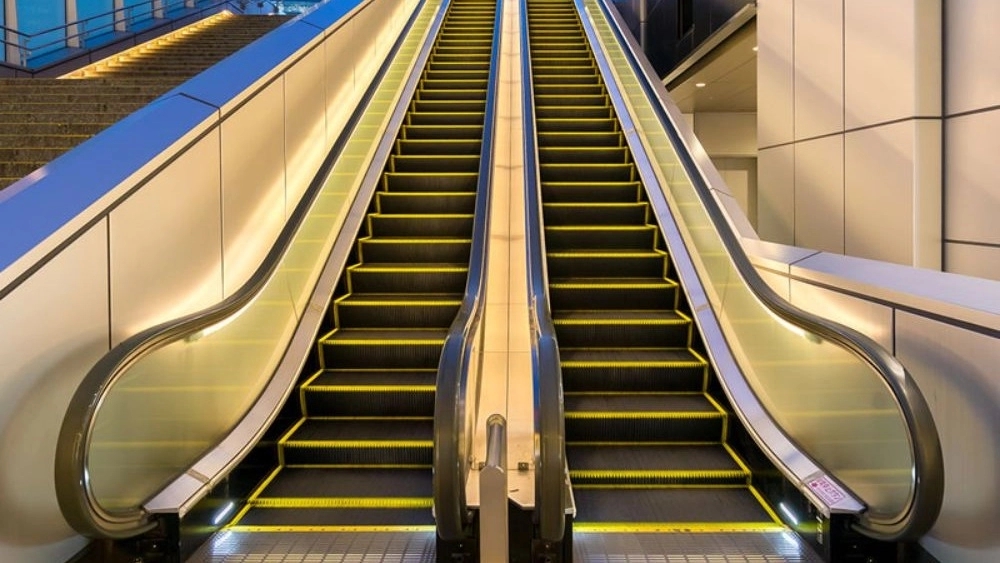
Stairs are the next main piece on which passengers stand. The stairs are usually metal and their surface is anti-wear to prevent passengers from slipping.
The fence
Fences are installed on both sides of the stairs for the safety of passengers, so that people can use them as support and support if necessary.
Handle
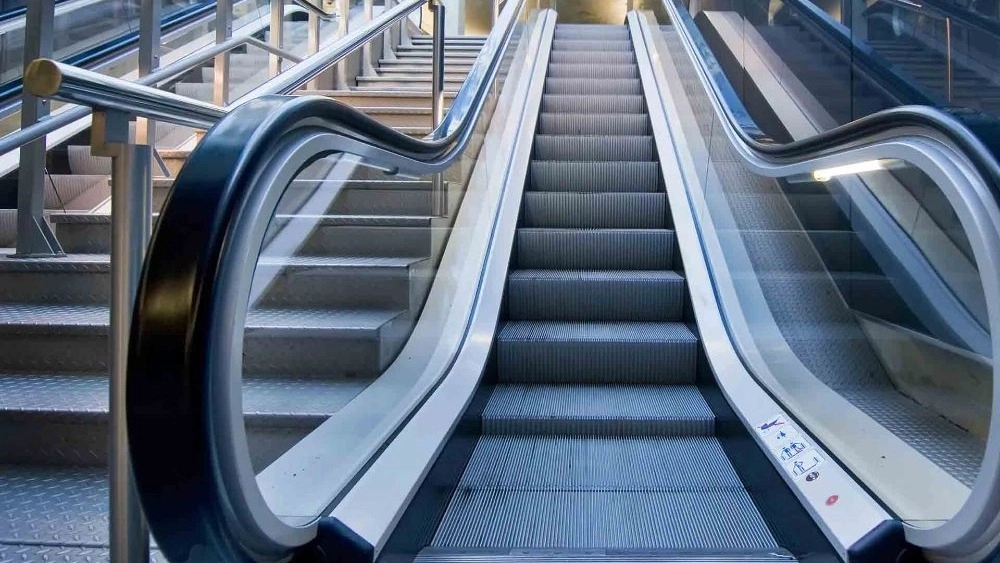
Handholds are also installed on the side of the fence and on the wall in order to hold and support more passengers.
The stimulus force
Brake system
In addition, the brake system is also very important to stop the stairs in case of a power outage or any other problem and prevent accidents.
Other important components include:
Dashboard Safety and technical protections Escalator speed