
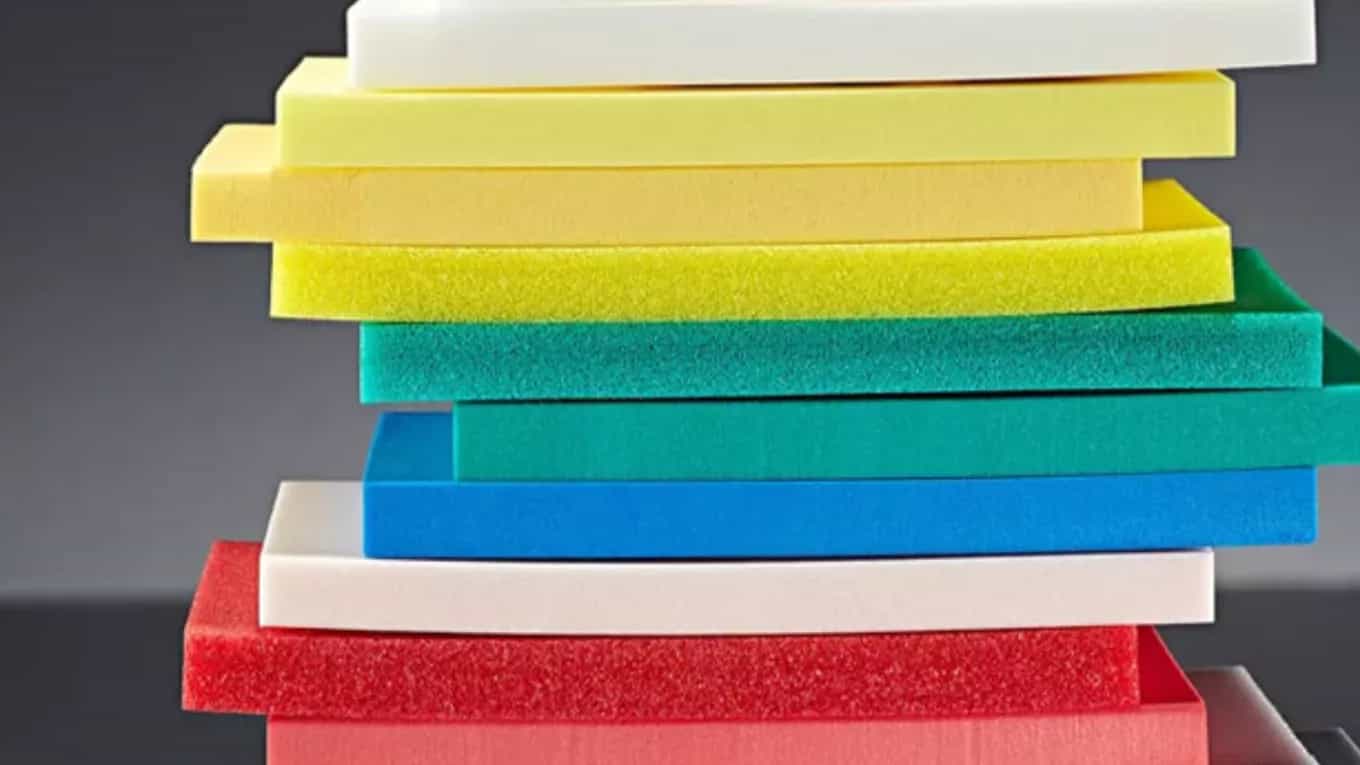
In many industries, choosing a suitable material for insulation, protection of products and prevention of shock transmission is very important. One of the materials that has been noticed due to its light weight, flexibility and insulating properties is polyethylene foam. This product has a simple structure in appearance, but its technical features have made it widely used in construction, packaging, automobile manufacturing and various industries.
Perhaps you have come across the name of this product while buying construction equipment or packaging materials and want to know what polyethylene foam is, how it is produced and what it is suitable for. Can this foam be a good substitute for other insulations? What is the difference between its roll and sheet models?
In this article, instead of providing a simple introduction, we will examine the technical features, actual applications, limitations and important points of choosing this product so that you can make a decision with sufficient information.
What is polyethylene foam?
Polyethylene foam is a light and flexible polymer material that is produced from polyethylene and creating small gas bubbles in its structure. These bubbles form small cells that do not have a direct path to each other in many products. For this reason, this material is included in the group of closed cell foams.
The closed cell structure is one of the most important reasons for the proper performance of this product against moisture, heat transfer and impact. The presence of small holes in the foam texture reduces its weight and at the same time, it creates a suitable elasticity to absorb pressure and impact.
Polyethylene foam is produced in different thicknesses, densities and dimensions and can be ordered in the form of rolls, sheets, tubes or cut pieces.
The important point is that the performance of all products is not the same. The type of raw materials, production method, density, thickness and the presence or absence of transverse connection in the polymer structure can affect the final quality.
How is polyethylene foam produced?
To better understand the performance of this product, you need to get to know its production process.
In the production process, polyethylene raw materials are first heated and softened under specific conditions. Then, using gaseous materials, tiny bubbles are formed inside the polymer structure. By expanding the material and stabilizing the cell structure, a light and porous product is obtained.
General production steps include the following:
- Preparation of polyethylene raw materials.
- Heating and preparation of materials for expansion.
- Creation of gas bubbles in the polymer structure.
- Shaping and stabilization of closed cell tissue.
- Cooling, cutting and preparation of the final product.
In some methods, cross-linking process is also used. This process creates bonds between polymer chains and can improve the strength, dimensional stability and resistance of the foam.
What are the types of polyethylene foam?
This product is divided into different models based on the production method, structure, appearance and type of application. Knowing this category will help you choose a product that suits your needs.
1. Simple or non-bonded polyethylene foam
This type of foam is produced without creating a transverse connection network in polymer chains. It usually has good flexibility and is used in many general applications due to its more economical price.
Product packaging, surface protection, shock absorption and some construction uses are among its common uses.
2. Cross-linked polyethylene foam
In this model, polymer chains are connected to each other using physical or chemical processes.
The result of this process is usually to create a more uniform structure with features such as better mechanical resistance, more dimensional stability and better surface quality.
This model is considered a suitable option for more specialized applications, protective parts, automotive industries and some insulations.
3. Rolled polyethylene foam
Foam roll is produced and supplied in the form of continuous layers. Due to the ease of carrying, cutting and installing, this model is widely used in surface insulation and floor underlayment.
4. Sheet polyethylene foam
This type of product is available in specific dimensions and in sheet form. Its thickness and density can be selected according to the application.
Foam sheets are mostly used to make shock absorbing parts, package sensitive equipment and protect various goods.
5. Backed and coated polyethylene foam
Some models have an adhesive layer to make it easier to install them on surfaces. Another group comes with covers such as aluminum or metallized.
If designed and installed correctly, aluminum cladding can help reduce radiant heat transfer; Of course, the final performance depends on the type of cover, air gap and installation conditions.
The most important features and advantages of polyethylene foam
The reason for the wide use of this product is a set of its physical and mechanical features. Each of these features can be more important in a specific application.
Light weight and easy to carry
One of the most important advantages of polyethylene foam is its light weight. The porous structure allows this product to be used for product protection and insulation without creating a significant additional load.
This issue is especially important in packing large products and transporting sensitive equipment.
Good resistance to moisture
The closed cell structure makes water absorption low in many models of this foam. For this reason, it can be a suitable option in environments where there is a possibility of contact with moisture.
Impact and pressure absorption properties
Polyethylene foam partially deforms when pressure is applied and absorbs part of the impact energy.
This feature has made it used in the packaging of electronic devices, industrial equipment, car parts and breakable products.
Thermal insulation
The presence of small gas cells in the foam structure reduces heat transfer. For this reason, this product is used in some building insulation systems, pipes and facility equipment.
The amount of insulation depends on the thickness, density, product type and installation conditions.
Flexibility and cutting ability
This product is easily cut and can be prepared according to the required dimensions and shape.
This feature is very useful in the production of custom parts for packaging and covering irregular surfaces.
Good chemical resistance
Polyethylene has good resistance against many common chemicals. However, the amount of resistance depends on the type of chemical substance, concentration, temperature and duration of contact, and for sensitive applications, the technical specifications of the product should be checked.
Application of polyethylene foam in various industries
One of the reasons for the popularity of this material is its ability to be used in various fields. Depending on the type of structure and technical specifications, it can be used to insulate, protect and reduce shock transmission.
Application of polyethylene foam in construction
In the construction industry, heat transfer control, noise reduction and prevention of thermal bridges are very important.
Polyethylene foam is used in different parts of the building, including:
- Floor and parquet substructure.
- Insulation of some utility pipes.
- Use as a separating layer in some building structures.
- Sealing and filling certain gaps.
- Reduction of vibration transmission in some connections.
- Use in some heat and cold insulation systems.
For example, when installing flooring, using a suitable layer of foam under the surface can help reduce the transmission of some impact sounds and create a more even surface.
Of course, for professional sound insulation, the choice of foam type should be based on the sound frequency, the type of structure and the structure of the layers used.
Application in packaging and transportation
One of the most important areas of polyethylene foam consumption is the packaging industry.
When moving goods, impact, vibration and collision with hard surfaces can damage the products. Using this foam as a protective layer reduces the possibility of direct shock transfer to the product.
Some of its uses are:
- Packaging of household appliances.
- Protection of electronic equipment.
- Packaging of industrial parts.
- Protection of containers and sensitive products.
- Making inner compartments of bags and tool boxes.
- Protection of painted and sensitive surfaces against scratches.
In this area, choosing the right density and thickness is very important; Because foam that is too soft or too hard may not provide the expected protection.
Application in the automotive industry
In a car, different parts must have suitable conditions against vibration, pressure and temperature changes.
For this reason, polyethylene foams are used in some car interior parts and protective parts.
Among these applications, the following can be mentioned:
- Insulating parts of the cabin.
- Using in interior coverings.
- Bumping some parts.
- Reducing vibration transmission.
- Making protective and separating layers.
The type of foam used in this industry must be compatible with the temperature conditions and technical standards of the car.
Application in sports industry
The property of flexibility and shock absorption has caused this product to be used in the manufacture of some sports equipment.
For example, polyethylene foams are used in some sports mats, protective equipment, inner layers of helmets and recreational products.
In these applications, the quality of reversibility and resistance to compression is particularly important.
Application in facility industries
In facility systems, reducing energy loss and protecting pipes is very important.
Pubular polyethylene foam can be used as an insulation coating on some hot and cold water pipes.
In addition to reducing heat transfer, this coating can also reduce the possibility of sweating on the surface of cold pipes in the right conditions.
What is the difference between polyethylene foam and other foams?
One of the common questions of buyers is why should they choose polyethylene foam, when products such as polyurethane and polystyrene are also available in the market?
The answer depends on the type of application and expected features.
Comparison of polyethylene and polyurethane foam
Polyurethane foam is used in many applications due to its structure and insulating properties. On the other hand, polyethylene foam usually has good resistance to moisture, shock absorption and flexibility.
For packing and protecting parts, polyethylene foam can be a good choice; But for some specialized insulation systems, polyurethane has a better performance.
Comparison of polyethylene and polystyrene foam
Expanded polystyrene, also known as Unolite, is mostly used in insulation and packaging.
This product usually has a harder and more fragile structure; While polyethylene foam is more flexible and is considered a suitable option for shock absorption and surface protection.
As a result, one product cannot be considered superior for all applications. The choice should be made based on the needs of the project.
What are the disadvantages of polyethylene foam?
Despite many advantages, this product also has limitations that you should pay attention to before buying.
1. Limitation against high heat: Polyethylene foam is not suitable for all temperature conditions, and long-term exposure to temperatures outside the permitted range can cause its shape to change.
2. Sensitivity to fire: Polyethylene is a flammable material. Therefore, in environments where there are fire safety requirements, models with appropriate approval should be used.
3. Limitations in airborne sound absorption: This product is more suitable for reducing the transmission of some shock and vibration sounds and is not necessarily a substitute for specialized sound insulation.
4. The effect of continuous pressure: Applying pressure beyond the capacity of the product can cause permanent compression and decrease its thickness.
5. The difference in quality between products: Different foams are not the same in terms of density, uniformity of cells, mechanical resistance and quality of raw materials.
What points should we pay attention to when buying polyethylene foam?
For the right purchase, it is better to determine your real needs before checking the price. The wrong choice may increase the cost or reduce the performance of the product.
1. Choose the thickness of the foam according to the application
Thickness is one of the important factors in foam performance. For example, the thickness required to wrap a delicate piece will be different from the thickness suitable for subflooring.
2. Check the density
Density affects the strength, softness and behavior of the foam when compressed.
For impact applications, a product must be selected that can properly absorb the applied pressure and perform properly after compression.
3. Specify the structure type
If dimensional stability and mechanical resistance are very important to you, it is better to check the specifications of transverse link models.
4. Consider environmental conditions
Environmental temperature, humidity, sunlight and type of contact with chemicals are some of the factors that should be checked before choosing.
5. Pay attention to the quality of production and technical specifications
Merely the cheapness of the product is not a sign of economic purchase. It is better to check the technical specifications, the uniformity of the structure, the quality of the surface and the application recommended by the manufacturer.
If you need guidance to choose the right product, you can consult sales experts to determine the required thickness and density based on the type of consumption.
The price of polyethylene foam depends on what factors?
The price of this product is not a fixed number and changes according to technical specifications and order conditions.
The most important factors affecting the price are:
- Thickness and dimensions of the product.
- Density and quality of raw materials.
- Type of foam and production method.
- Linked or non-linked structure.
- Presence of aluminum coating or adhesive layer.
- Order amount and transportation cost.
For example, high density foam sheet may cost a different price than regular foam roll.
For this reason, when inquiring about the price, it is better to state the type of application, dimensions, thickness, and required quantity in detail.
Is polyethylene foam the right choice for you?
If you are looking for a light, flexible and suitable material to protect goods, reduce shock transmission or some insulation applications, this product can be one of the options to consider.
However, the final choice should be made based on the actual usage conditions. For packaging, shock absorption is more important; In building insulation, thickness and thermal performance are more important, and in automotive industries, mechanical resistance and temperature conditions should also be checked.
Before buying, match the technical specifications of the product with the needs of your project. If you are still not sure about the right type of foam, its thickness or density, getting expert advice can avoid additional costs and wrong choices.
summary
Polyethylene foam is one of the most widely used products in the construction, packaging, automotive, and facility industries, which has been noted for its light weight, flexibility, shock absorption, and good moisture resistance.
Knowing the types of this product, the difference between bonded and non-bonded models, and examining factors such as thickness and density, will help you make a more accurate choice.
If you intend to buy this product, it is better to carefully check the needs of the project and the technical specifications of the foam before making a decision. To receive guidance and inquire about the price that suits your needs, contact the sales experts now and choose the most suitable option.
In researching the best waterproofing materials for your construction purposes, you've probably come across the term "polyethylene foam" and wondered what exactly it is. Polyethylene foam, or PE, is a common material in waterproofing and other construction applications. Due to its unique structure and ease of production, it can be used for a variety of purposes. Polyethylene foam has high thermal and mechanical resistance. heating, but also used in automotive, aerospace, marine industry, sportswear and other sectors.
Quality of polyethylene foam
The quality of PE foam makes it ideal for many applications.
Secondly, it is lightweight. This feature is the main reason you will see PE foam used in many places and cars. As manufacturers look to reduce the weight of cars to meet CAFE (fuel efficiency) standards, designers turn to PE foam for insulation and vibration. It's easy to make and shape PE foam. Manufacturers can shape it to an almost unlimited amount of width and thickness, and even shape it to conform to very specific contours. This level of flexibility makes it a popular choice for designers.
Finally, PE foam resists tearing. This reduces the amount of accidental defects and defects that might compromise a construction project.
