
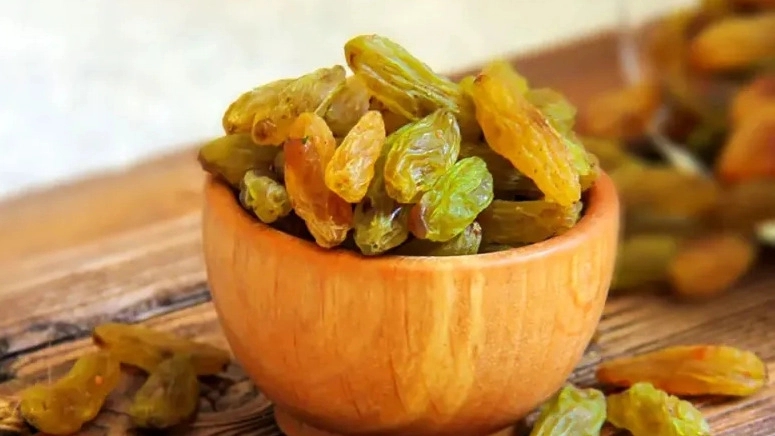
Appearance and physical characteristics:
• Color: Green to olive -green • Figure: stretched and pen (about 2-3 cm long) • Texture: soft with wrinkled skin • Taste: Sweet with gentle sour veins • Core: No kernel (seedless)
Applications of Green Pen Raisin:
- Pastry Industries (Cake, Make, Raisin Bread) - Produce nuts and mixtures of nuts - Use in baking authentic Iranian food (such as Sweet Polo) - Application in the food industry (yogurt, granola) - direct consumption as healthy snacks
Main Countries Importer of Iranian Green Pen Raisin
1. CIS and Eurasia Countries:
- Russia (the largest consumer - 40% export) - Kazakhstan - Azerbaijan - Armenia - Ukraine (after the war declined)
2. EU:
- Germany (Imported 5000+ tons) - the Netherlands (European distribution center) - England - France - Poland
3. The Middle East and North Africa:
- the UAE (the Dubai market is central) - Iraq - Oman - Algeria - Morocco
4. East and South Asia:
- China (Growth 25% annually) - India - Indonesia - Malaysia - Vietnam
A pen yellow raisins are one of the types of raisins known for their golden yellow and long (long) shape. This type of raisins is usually produced from green or yellow grapes such as Sultanate or Peykani grapes, and because of the specific drying method, it has a yellow and sweet taste.
Raisins of yellow pen
Features of Raisin Yellow Pen:
- Color: Golden yellow or amber - figure: long, narrow and no nucleus - Taste: Sweet and Mali - Size: Usually taller and more uniform than ordinary raisins - Production Method: It is dried using sulfur (sulfur) or natural methods to maintain its yellow color.
Applications of Yellow A pen raisins:
- consumption as healthy snacks - Use in nuts and mixtures of nuts - Add to cakes, pastries and desserts - Use in sweet rice such as raisins - Application in international salads and cuisine
1. Russia (one of Iran's largest raisins consumption markets) 2. China (high demand for raisins in the food and pastry industry) 3. India (use in desserts and local cuisine) 4. Türkiye (as a consumer and for re -packaging and export to Europe) 5. European countries such as Germany, the Netherlands, Britain and Italy (for home and industrial use) 6. Arab countries such as the UAE, Iraq, Oman and Kuwait (consumption in nuts and pastries) 7. Central Asian countries such as Kazakhstan, Tajikistan and Uzbekistan 8. America and Canada (more limited and usually through intermediaries)
Golden Raisins is one of the popular types of raisins known for its golden yellow and sweet and gentle taste. This type of raisin is usually produced from green or yellow grapes such as Sultanate or Thompson grapes and is dried in certain ways to maintain its bright and attractive color.
Golden Raisin Features (Golden):
- Color: Golden yellow or bright amber - Taste: sweeter and softer than dark raisins - Texture: soft meat (compared to ordinary dry raisins) - Size: Usually coarse and more uniform than ordinary raisins - kernel: No kernel (seedless)
Golden Raisin Applications:
- consumption as snacks (in nuts and nuts) - Use in pastry (cakes, cookies, cookies, raisins) - Add to desserts (pudding, Harrisa, halva) - Application in sweet rice (such as raisins or sweet pilaf) - Consumption in international salads and foods (pasta salad, fruit salad)
The main importing countries of the Golden Iranian raisins
1. Russia (the largest consumer of Iranian raisins) 2. EU: - Germany - the Netherlands (Rotterdam Port Distribution Center in Europe) - England - France 3. Arabic Countries: - the United Arab Emirates (Dubai Trading Center) - Saudi Arabia - Oman - Kuwait 4. Asia: - China - India - Indonesia - Malaysia 5. North America (more limited): - Canada - US
Key Tips of Target Markets:
- Europe : High sensitivity to the residual sulfur - Arabic countries : tendency to luxurious packages - Russia and China : High purchases, competitive price is important