

Air Dicts are the main arteries of air conditioning systems that are responsible for optimal distribution of air flow in buildings by careful engineering design. In this specialized review, we discuss the systematic classification of the types of channels by different criteria.
The classification based on the gender
Metal canals
- Galvanized (Gi Sheet): - Standard thickness: 0.4-1.2mm - thermal resistance up to 300 ° C - in accordance with the standard Smacna - stainless steel (304/316): - Application in health and food environments - resistant to corrosion and chemical wash - Aluminum: - Lightweight weight (30% lighter than steel) - High heat transfer coefficient
Non -metallic channels
- Ferglass (DUCT BOARD): - integrated acoustic and thermal insulation - Low friction coefficient (0.02-0.03) - Polymer (PVC/PP): - moisture resistant and chemicals - Suitable for industrial oxast systems - Composite: - Aluminum and polyethylene composition - Fast installation with clip -up connection system
Cross -sectional classification
rectangular channels
- Benefits:
- High spatial productivity
- Ability to install on false ceilings
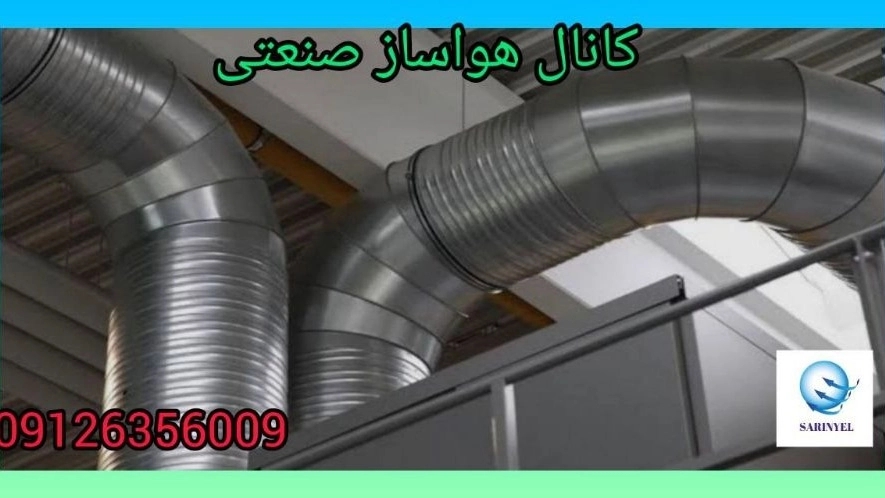
Circular channels
- Benefits:
- lower pressure drop (about 30% decrease)
- a stronger structure at high pressures
Early Channels (OVAL)
- a combination of rectangular and circular benefits - Suitable for spaces with limited altitude
Classification by working pressure
Channel Type | Pressure Range (Inch Abston) Design Speed (M/S) | -------------- -------------------- | ------------------ | Low Pressure | 0-2 "| 5-10 | | Medium Pressure | 2-6 "| 10-15 | | High pressure | > 6 "| 15-25 |
Advanced connectivity systems
TDC system (trapezoidal duct connection) - Reduce 40% of installation time - Automatic sealing with silicone dilemma Flanged connections - in accordance with the standard DW/144 - Suitable for pressure top 1000pa
Channel Engineering Calculations
Wellocity Reduction method - Gradual calculation of channel dimensions - Calculation Calculation Formula: A = q / (V × 3600)
Equal Friction ( - Use static pressure chart - Usual friction coefficient: 0.08-0.12 INWG/100FT
Design standards
- Ashrae Handbook HVAC Systems - eurvent 8.1 (Performance Testing Methods) - EN 12237 (structural strength)
New technologies
- Smart Channels: - Equipped with pressure and discharge sensors - Dynamic self -regulation capability - Nano -coatings: - Self -disturbing properties - 60% reduction in bacteria
Optimal channel selection
To select the most appropriate type of channel you should consider:
1. Environmental conditions (temperature, humidity, chemicals) 2. Acoustic considerations 3. Spatial constraints 4. Health requirements (in hospital environments) 5. Life Cycle Cost (LCC)
Technical conclusion
Comparative Table of Channel Channel: | Criterion | Metal Ferglass | Polymer | | -------- ------ | -------- ------ ------ | | Longevity | 25-30 years | 15-20 years | 20-25 years | | Installation Cost | Medium | Down | Above | | Repair | Easy | Problem | Medium | | Energy efficiency | Medium | Above | Top |