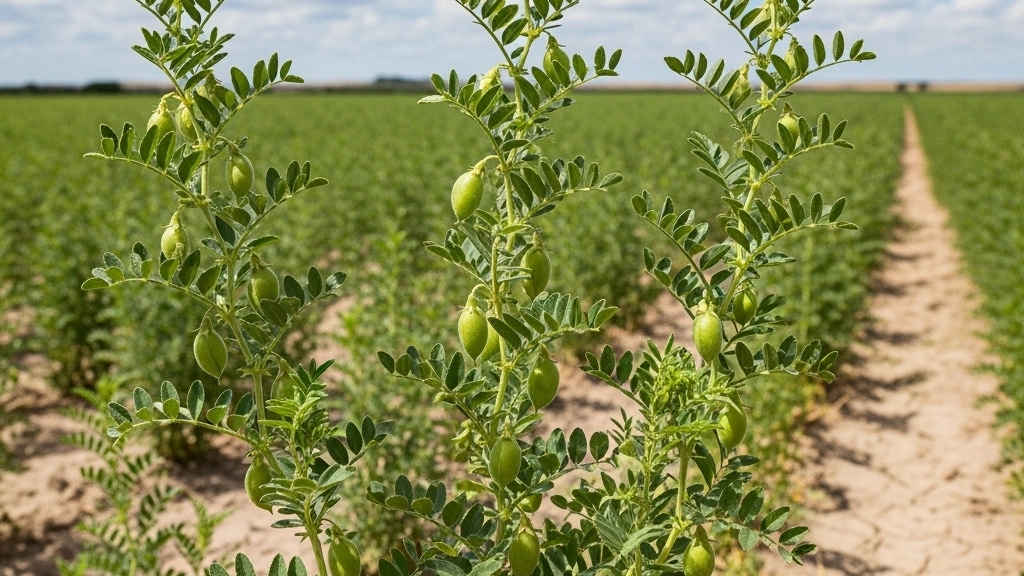

Why is the timing of planting for long dry chickpea seeds?
spring frost risk:
collision with the end of the season:
late appear causes the sensitive flowering stage and filling of the pods to coincide with the wave of summer heat and severe drought stress. This leads to abortion, lack of inoculation, and production of fine grains.
Optimal use of celestial descent:
The main purpose in dryland cultivation is to maximize seasonal rainfall. The precise timing of the long -standing chickpea seed planting allows the plant to make the most of the moisture stored in the soil.
Expectative Cultivation: A clever strategy for temperate and cold regions
Expected cultivation means seed planting in the fall, after lowering the soil temperature to less than 1010 ° C, so that the seed does not sprout and remain asleep in the soil until spring. This method has great advantages, especially for the resistant cultivars of long dry chickpeas.
The exact timing of the expected planting of the long -standing chickpea seed
The best time for expectation is late fall (usually from mid -November to late December). The main criterion is soil temperature. The soil temperature at depth of planting (about 55 to 77 cm) should be stable below 1010 ° C. This temperature prevents seed germination and maintains it until late in winter. Key Note: Avoid expected implantation on rainy days or when the soil is completely muddy. This causes soil compression and reduced ventilation around the seeds.
Expected Cultivation Benefits
early germination in the spring: with the first warming of the air in March, the seeds will germinate and have a longer growth period. Maximum use of winter and spring rains: The plant enjoys all moisture stored in the soil profile. Escape from the end of the season: Due to early growth, the sensitive stages of flowering and granulation ends before the intense summer heat reaches. Significant Increase: Studies have shown that long -standing seed pea seed cultivation can increase yield by up to 50% compared to spring cultivation. To succeed in waiting cultivation, the use of high -end dry chickpeas and cold resistance offered by reputable centers such as "Asial Beans" is a necessity.
Spring cultivation: A common method with key technical tips
Spring cultivation is still the most common method of planting chickpeas in many areas. Success in this method depends heavily on choosing the right "window".
The exact time of spring planting of chickpea seeds of longland
The ideal time for spring planting is overwintering and overheating before warming. This interval varies from late March to late April and depends on the climatic conditions of each region: tropical regions: late winter to early spring (late February to mid -March). temperate areas: The second half of March to the first half of April. Cold Regions: from early April to early May, after ensuring the lack of late spring cold. Practical Index: The best time is when the soil temperature in depth of planting reaches about 55 to 77 degrees Celsius. Delay in spring planting is the biggest enemy of deepening. Every day delay after the optimal date can make a significant reduction in the final tonnage of the product.
best method of planting long -standing chickpeas: From preparation to implementation
Choosing the planting method is as important as scheduling. The goal is to put the seed in the right depth, with the ideal density and in a soft, humid hospital.
1. Land Preparation (Seed Bed)
Earth preparation should be done in the fall and before the rains begin. Deep Autumn Plow: To break the hard layers of soil, increase permeability and better store moisture, a deep plow is essential in autumn. Use a disc or claws: In the spring and before planting, use secondary devices to soften the clogs, eliminate the weeds and level the soil surface. Conservation of Plant Residues (Conservation Agriculture): In modern systems, preserving part of the previous product residues on the soil surface (about 30%30%) helps reduce erosion, moisture and improve soil organic matter. The use of direct cultivation (NO-Till) with long dry chickpeas has had a brilliant result.
1. The depth of proper planting
planting depth is a vital parameter depending on the soil texture and moisture existing: Heavy soils (clay): depth of planting 33 to 55 cm. The high depth in these soils prevents the seedling from becoming green. Sandy soils: 55 to 88 cm deep plant. In these soils, it should be planted more deeply to access the seed to sustainable moisture. General Law: Set the seed in a deep contact with moist soil.
Ideal density for long dry chickpeas is between 3030 and 4040 plants per square meter. Seed required: This amount varies depending on the weight of a thousand seeds, names and planting methods. Generally, about 120120 to 160160 kg of seeds per hectare is needed for the cultivars of long -standing pea -chickpeas with coarse grains. Specialized Counseling: To determine the amount of seed, be sure to consult with agricultural experts or reputable seed suppliers such as asyalhobubat.ir. They will give you the best advice by having detailed information about the weight of a thousand seeds and the name of their seeds.
1. Planting Methods: Mechanized, Best Option
The use of long -standing chickpeas shows its main advantage in mechanized planting and harvesting. Planting with seed (deep): This is the best and most efficient way. Seeds place the seeds in a uniform depth and at regular intervals, leading to a standard and standard farm. This is essential for mechanized harvesting. Traditional or Traditional Planting: This method, which is done by sprinkling and covering it with the disc, is not recommended for long dry chickpeas seed. The lack of uniformity in the depth and density results in a sharp decrease in performance and impossible to make mechanized harvesting.
Final Tips for Success: The Role of "Asial Beans"
Success in the cultivation of long -standing pea seeds is a puzzle whose all parts must fit together. Choosing Original Seed: The first and most important piece is seed. Do not use self -consuming or invalid seeds. See specialized centers such as "Asal Beans" that guarantee the authenticity, health and name of the long -standing chickpea seed. Seed disinfectant: Before planting, disinfect the seeds with suitable fungicides (such as carbaxine tiram) to avoid soil diseases such as fosarium. Many of the standard seeds offered by asyalhobubat.ir have been pre -disinfected. Weed Management: Weeds are the main competitor of peas for water and food. It is essential to use prefrontal herbicides and integrated pest management (IPM).
Conclusion: Accurate timing, Golden Key to Successful Harvesting
Finally, the exact timing and the best way to plant the long -standing chickpea seed is two successful flights to the profitability of dry agriculture. With a deep understanding of the differences in expected and spring cultivation, regulating the date of planting based on the region's climate, and the implementation of mechanized and precise planting, you can release the true potential of these amazing figures. Never forget that the basis of all these efforts is a high quality chickpea seed. The Asal Banobat Collection is proudly committed to being a certified, certified, and highest quality standard with you, dear farmers.