


Entering the poultry farmer, both small or industrial, begins with a fundamental question: the purpose of breeding is the production of meat or eggs? The answer to this question determines your path to race, diet, management type, and most importantly, poultry equipment . Many newcomers think the differences are minor, but in reality, the difference between broiler and laying equipment is very deep and structural. Ignoring these differences can lead to decreased efficiency, increased costs and even complete project failure.
In this comprehensive article, we intend to explain these key differences in the Equipment of Qazvin as a specialized center for consulting and equipment supply in both areas. Our goal is to make the best decision to invest with open and complete information and know why each system is designed for its own purpose.
Different design philosophy: Growth rate against sustainable production
To understand the deep understanding Difference of broiler and laying poultry equipment , we must first understand the philosophy of breeding:
- Broiler: The goal is to deliver one -day chickens to the maximum possible weight in the shortest time (usually 40 to 45 days). All equipment must be optimized at the service of "growth rate" and "conversion coefficient". Comfort, continuous access to water and water, and accurate environmental control to prevent stress, the first word.
- Layer poultry (Layer): The goal is to produce high quality eggs over a long period (about 80 to 100 weeks). Equipment must be designed for "sustainable production", "egg health", "easy management" and "long life".
These two different philosophies lead to completely distinct design in the equipment that we will discuss in detail below.
1. The maintenance system and cage: the bed against the cage
The most prominent difference between meat and laying poultry equipment is in their maintenance system.
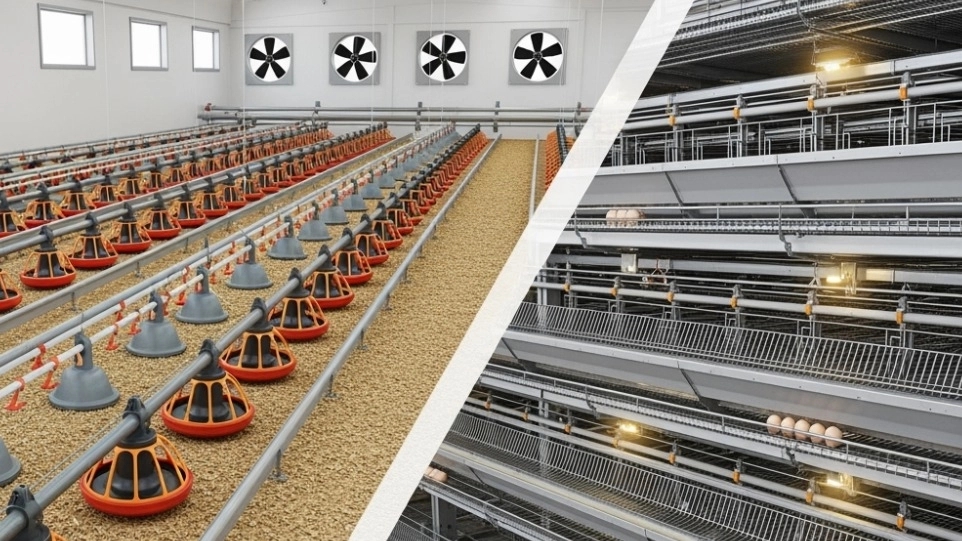
Broat Poultry Equipment: Bed System (Hall Floor)
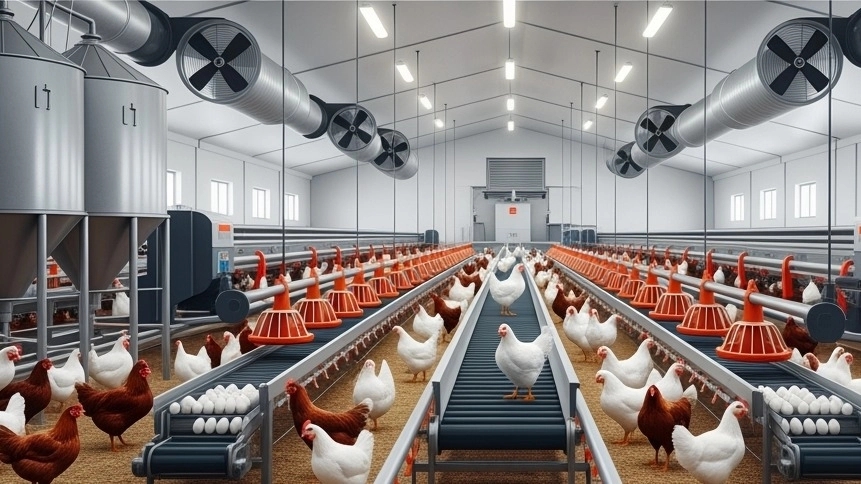
broiler chickens are almost always grown on the bed. The floor of the hall is covered with a soft, absorbent cover (such as wood chip or straw).
- Why bed system?
- Motion Space: Meat chickens need enough space to move muscles.
- Stress Reduction: The bed system is closer to the bird's natural behavior. It is much cheaper than equipping the hall with a cage.
- Related Equipment: In this system, dining and drinking equipment is suspended from the ceiling to adjust the height of the flock. Bedroom quality management is crucial to prevent cuxidworthy diseases and foot problems.
Laying Poultry Equipment: Cage System (Battery)
laying hens are mainly kept in multi -storey cages called "battery cage".
- Why Cage System?
- Egg Health: Eggs are rolled on a sloping surface and collected in a special channel after production. This prevents egg contact with waste and contamination and maintains its quality.
- easier management: herd control, removal of patient or unproductive chickens, and vaccination in the cage system is much easier. And the facilities are.
- Reduction of consumption: due to movement limitations, less energy loss and less donor is used to maintain the body.
Equipment of Qazvin Specialized advice helps you choose the best system (bed or cage) based on its goals, budgets and spaces and provides a variety of modern automatic and traditional cages for laying poultry.
2. Danish System: Free access against controlled distribution
Second Differences of broiler and laying poultry equipment in the design of the nutrition system.
Danish chicken: plate -plate
The standard system for meat chicken is an automatic plate.
- Design and purpose: These plates are designed to be easily accessible from day one (one -day chick) until the end of the period. The short edges and the special design of the plate minimize the waste. The goal is to feed unlimited (Ad Libitum) for maximum growth rate.
- Valid Brands: Brands such as Kenavi, Big Herdzman and Pars provided by Qazvin Equipment .
Laying Chicken Danish: Chain or Vagania
These systems are integrated with cages.
- Design and purpose: In the cage system, a Trough channel is in front of the cages. Don is distributed in this channel by a chain system or a moving wagon. The goal is to distribute the rapid and uniform distribution of the entire flock in specific meals to prevent competitive and selective nutrition.
- Consumption Control: The amount of dan in the laying system is carefully controlled to prevent excessive obesity of chickens that lead to reduced egg production.
3. The Drink System: Difference in detail
both systems use Nipple Drinks, but there are subtle differences.
- broiler chicken drinker: Usually 2 -degree nipples are usually activated from any angle. This is ideal for small chickens who are learning. Cups below Nipple are essential to prevent the substrate from wetting.
- Drinking Chicken Drinking: In the cage system, nipples (vertical) are used. The bird must press its tip vertically to the pin. This design helps reduce playfulness and water loss.
Equipment of Qazvin Understanding these details, it offers the best and most suitable drinking system for any type of breeding, including rectangular pipes with Nipple Turk.
4. Climate Ventilation and Control System: Different temperature needs
Although the general ventilation principles (fresh air entry and harmful gases exit) are the same, allergies and settings are different.
- broiler poultry: Due to high biological density and severe metabolism, heat production and moisture in the hall are very high. The ventilation system must be very powerful (large size 1 and 2) so that it can quickly replace the air of the hall (tunnel ventilation). Temperature management is critical to prevent heat stress in the final weeks.
- laying poultry: The optimal temperature for laying chicken is at 2 to 5 ° C. Temperature fluctuations can directly affect the production of eggs. The ventilation system focuses more on "conditions stability" than "maximum discharge".
5. Product Collection System: Hand against Automation
This is another of the biggest differences between meat and laying poultry equipment .
- broiler chicken: The final product (live chicken) is collected at the end of the period. This process, called "loading", is performed manually using the worker. So there is no specific equipment for this step.
- laying hens: The product is produced and collected daily.
- Traditional cage: is collected manually. The eggs gently move to a central point at the end of the hall and completely automate the collection process. This system is heavily effective in reducing labor costs and egg fractures.
Conclusion: Smart selection with specialized advice
As you can see, Difference of broiler and laying equipment is beyond a few minor changes; These differences are rooted in biology and the ultimate goal of breeding. Investing in the wrong equipment, such as the use of plates in the cage system or the attempt to breed the meat in laying cages, is not only non -economic but also leads to managerial problems and severe reduction of efficiency.
This is that the role of a valid consultant and supplier is highlighted. Equipping Qazvin with full mastery of both areas and with a complete basket of new and functional equipment for both poultry farms, is ready to help you at all stages, from the initial design to the launch and operation. We help you make the best and most profitable decision for your business by fully understanding the differences.
For free and specialized advice on meat and laying poultry equipment , or inquire prices for all types of new and second -hand equipment, please contact the Qazvin Equipment Experts . We use your knowledge and experience to ensure your success.