
Mixer and Homogenerator Difference
Introduction
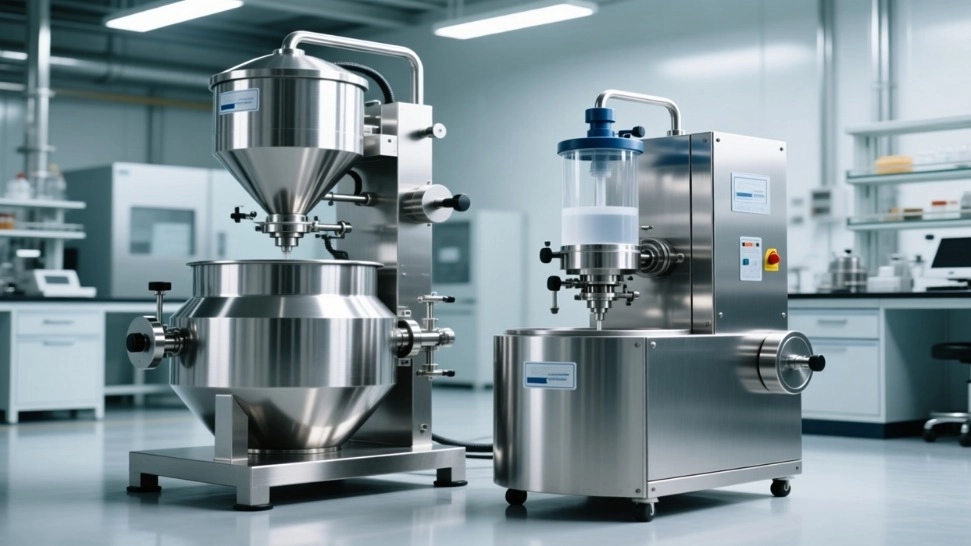
Mixers and hemorkers are two types of industrial devices used to mix materials, but each has its own applications and features. Here's a look at the main differences between these two devices.
Mixer
Homogenerator
- Definition: Hemor is a device used to create a uniform and homogeneous mixture of materials. It is commonly used to reduce the size of the particles and distribute them uniformly in the fluid.
- Application: Hemorgenants are mostly used in the food industry (such as hemogenic milk production), pharmaceutical and chemicals. Their main purpose is to create a completely uniform mixture and prevent the separation of the material.
- Function: Homoosemakers usually reduce the size of the particles using high pressure and specific techniques such as cutting and homogenization, and distribute them uniformly in fluid. They create a completely uniform, without separation of substances that are essential for many food and medicinal products.
Key Differences
- target: Mixers are used to mix materials, while homogeneomers are designed to create a uniform mixture and reduce particle size.
- Function: Mixers usually work together with materials and techniques. They do.
conclusion
The selection between the mixer and the hemorrhage depends on the type of material and the ultimate purpose of the process. If you need a uniform and homogeneous mixture, the hemorrhage is a better option. But if you only need to mix materials, the mixer may be enough.