
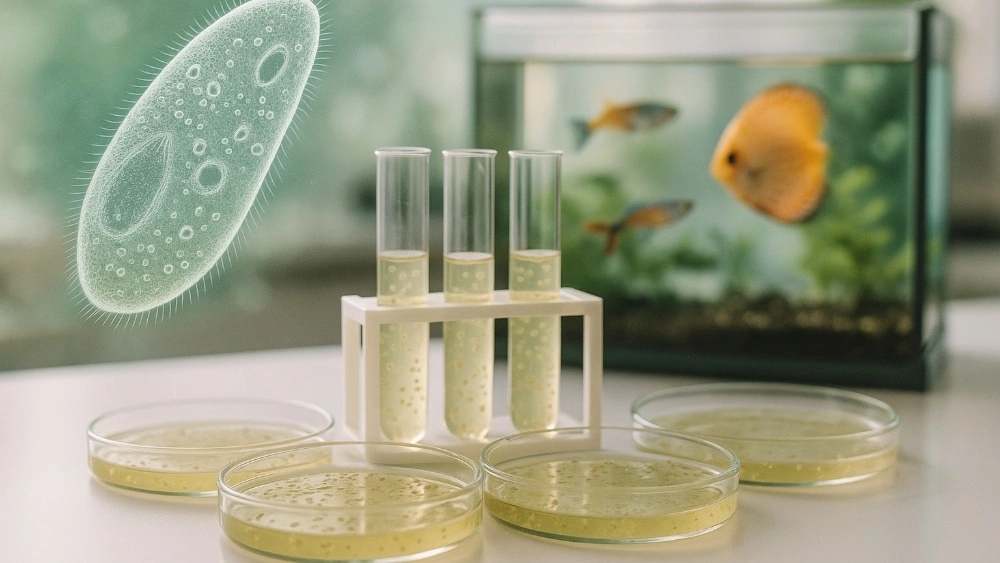


Comprehensive Paarami Nutrition and Nutrition Protocol for ornamental fisheries
Abstract
as one of the live and valuable food sources in the nutrition of ornamental fish larvae, especially tetra, plays an important role. This protocol examines pure cultivation methods, optimized nutrition and a combination of different nutritional sources for paramasy. Using this protocol can achieve high efficiency in mass production of the proper nutritional value.
Introduction to Paramasy and its Importance in aquaculture
Paramseys are mono -celled protozoors belonging to the ciliophora branch found in freshwater, especially stagnant environments. These organisms are one of the best options for nourishing ornamental fish larva because of their proper size (1–2 micrometers), high mobility and good nutritional value. Paramasi naturally feed on bacteria, fine algae and diettus and act as a food source for smaller creatures.
Pure pure cultivation
The general principles of net cultivation
Axical Culture is a ship where there is only one specific species and lacks any contamination with other microorganisms. Sterilization and precise disinfectant should be used to achieve pure pure cultivation.
Parami Pure Cultivation Protocol
Materials Required:
· Basic Medium: Green water (contains fine algae) or artificial medium
· Parami Primary Source: Sampling stagnant or purchasing from reputable centers
· Antibiotics: Penicillin and Streptomycin for controlling bacterial contamination
· Sterilisator device (Autoclav)
· Floo Laminar Hood for Sterile Conditions
Pure cultivation steps:
1. Basic Medium: MM MM (Medium for Microorganisms) or Paramese Special Media is used.
2. Sterilization: The culture medium is sterilized in autoclave at 2 ° C for 5 minutes.
3. Protected Protecting: A sample containing a paramasy with a rpm of 1 RPM is centrifuged for 5 minutes and its sediment is transferred to the new medium.
4. Adding Antibiotics: Penicillin Antibiotics (1 ml) and Streptomycin (1.5 mg/ml) are added to control bacterial contamination.
5. Incubation: Cultivation is stored at 2-5 ° C and gentle light.
6. Regular Passage: Part of the cultivation is transferred to the fresh medium every 2-5 days.
Maintenance
The following methods are used to maintain long -term maintenance of pure Parami cultivation:
· Freezing method in liquid nitrogen (-5 ° C) in the presence of protectors such as glycerol
· Freeze-drying
· Keeping in the refrigerator (2 ° C) with regular passage every 1-2 weeks
Nutrition
Nutrition with microjolbacles
Paramacey can feed directly from microwaves such as Chlorellla and Nannochloropsis. These algae not only act as a direct food source, but also help improve the growth of the paramacea by creating appropriate conditions in the medium.
Nutrition Protocol with Microglabec:
· Algae are cultivated in a special medium (such as the BG-11 environment).
· Algae density used: 1-5 cell per ml
· Added algae daily to 1: 1 (one part of algae to two sections of Paramasi cultivation)
· Optimized Nutrition Time: In the morning when the metabolic activity of the paramasy is at maximum
Nutrition with yeast bread (Saccharomyces Cerevisiae)
Bread yeast is one of the cheapest and most accessible food sources for Parami. Yeast rich in protein, B vitamins and other nutrients are essential.
Nutrition Protocol with yeast:
· The yeast is used as dry powder or fresh suspension.
· Optimal concentration: 1/2/2/1 g/liters.
· Dissolve the yeast diet before adding to Parami cultivation, in some lukewarm water and use this solution in the feeding of Paramasy after one hour
· Add yeast due to the conditions of cultivation and transparency of water cultivation, in the diets.
The use of perbiotics and probiotics
Perbiotics and probiotics increase its growth and nutritional value by improving the health and digestive function of the paramace.
Recommended Perbiotics:
· Inulin: 1/2/2 %
· Fructobaligosaccharides (FOS): 1/2/2 %
· · Manan oligosaccharides (MOS): 1/2/2 %
Recommended Probiotics:
· Lactic acid bacteria (lactobacillus spp)
· Bacillus Subtilis (Bacillus Subtilis)
· Saccharomyces Cerewisiae Sacromyceces
Vitamin
adding minerals and vitamins to the medium of the Paramaceous culture, enhances its nutritional value for fish larvae.
Table 1: Mineral and Vitamin Supplements Offered to cultivate Paramcy
Nutrient
Calcium Chloride 1-4 Mg/L Strengthen the shell and external skeleton
Magnesium sulfate 1-2 mg/l improvement of enzymes
Vitamin B12 1/2/2 ۰G/L Improvement of Growth and Proliferation
Vitamin C 1-5/1 Mg/L Strengthening immune system
Folic acid ۰ ۰ ۱ ۲ μg/l improve cell division
Optimal Nutrition Protocol for Parami
Suggested Protocol
Based on practical studies and experiences, the following protocol is suggested for composite nutrition:
Materials Required:
· Nanoclero -Microjollabec: 1 %
· Bread yeast: 1 %
· Perbiotics (inulin): 1 %
· Probiotics (Lactobacillus): 1 %
· Mineral and Vitamin Supplements: 1 %
Method of implementation:
1. Separate preparation of each component
2. Mixing the material in указ category ratios
3. Final sterilization of mix
4. Gradually adding to Paarami cultivation
5. Daily monitoring of congestion and health of the Paramese
Optimized conditions
· Temperature: 1-5 ° C
· pH: 1/2/2/2
· Light: indirect light with 1-4 luxurious intensity
· Ventilation: Mild aeration to provide oxygen and prevent stenosis
· Initial density: 1-5 ml
Monitoring and evaluating cultivation
Cultivation Quality Indicators
· Cellular density: Counting using a hemositometer.
· Paramese Health: Under the microscopy.
· Microbial contamination: Controlled with specific bacterial and fungal environments.
Common defects in paramasy cultivation and their removal strategies
Problem of the possible causes of suggested strategies
Decreased food density of food deficiency, increased food concentration pollution, replacement medium
Bacteria accumulation Non -sterilization of Adding Antibiotic, Passage to Fresh Environment
Unpleasant odor of contamination with an idiotic bacteria increase aeration, replacement medium
Reduce paramasy mobility change pH or temperature adjust pH and temperature
Conclusion
Parami as a living and tasty food source for ornamental larvae such as Glofish, Gorami, Beta Fish and Zebra plays an important role. Using the hybrid nutrition protocol presented in this article can achieve high density and good quality of the Paramsey. The simultaneous use of micro-algae, yeast, prebiotics, probiotics, and mineral-venitamine supplements significantly increases the nutritional value of the paramessy and ultimately increases the survival rate and growth of ornamental larvae.