Step One: Initial consultation, need assessment and visits to the site
1. Research and Selection of Professional Cabinet
2. Call and receive telephone advice
1. Expert visits to the location and accurate measurement
- accurate space measurement: Harvesting precise wall dimensions, ceiling height, windows, doors and installations (water pipes, sewage, gas, power outlets).
- Employer needs assessment: To understand. Do you need a lot of storage space? Do you want a special place for the oven, microwave or dishwasher?
- Place Consultation: Based on your existing conditions and needs, the expert offers the initial consulting expert on the best layout (modern, classic, neoclassical) and appropriate materials.
Step Two: Design, Estimation of Cost and Contract Contract
1. Provide initial plan and cost estimation
2. 3D design (3D) and finalization of the design
- Change the color of the cabinets.
- Check the layout and modify if needed.
- Make sure space and access.
1. The final selection of materials and fittings
1. Official contract
Once all the details are finalized, a formal and transparent contract is signed between you and the company. A professional contract should include:
- Full Specifications of the Parties
- Final and Confirmed Maps
- The detailed list of materials and fittings with brand cited
- The entire project amount and how to pay
- accurate schedule for construction, delivery and installation
Signature of this contract is the green light to start the production phase and Cabinet building in Tehran .
Step Three: Cabinet Making in the Workshop
With the finalization of the contract, the maps and the list of material will be sent to the workshop to begin the construction process.
1. Sheets
The first step is to prepare raw or colored MDF sheets by contract. These sheets are then cut based on the executable maps that specify the exact dimensions of each piece (body, door, floor), cut with advanced cutting machines (such as the cut machine). Precise cutting is the basis of a perfect assembly.
2. Eliminations of the edges (PVC)
Cutting edges of raw MDF are vulnerable. To protect them from moisture and impact as well as for beauty, the edges are covered with PVC strips. This is done by the adhesive edge device using hot granular glue and its quality plays a key role in the durability of the cabinet.
1. Tools and Coating (for classic and neoclassical cabinets)
If Implementation of your kitchen cabinet is a type of membrane or neoclassical, the doors and views before the coating are eaten by the CNC device based on the selected design. Then in the membrane cabinet, the PVC coating is pulled under heat and vacuum on the piece (vacuum). In colored cabinets (polyurethane), the pieces are transferred to the paint workshop and in several stages, the paint and polishing process is performed on them.
1. Groove
At this point, the location of the floors, drawer rails, hinges and fittings on the bodies is precisely accurately carried out by special drilling and groove devices. At this point, accuracy guarantees the speed and quality of the final installation.
1. Initial assembly and quality control
Finally, the main parts of the cabinets (units) are assembled in the workshop to ensure the accuracy of the dimensions and joints. Quality Control Team Interior Decoration At this stage, all components examine all parts in terms of construction quality, lack of lip and adaptation to order.
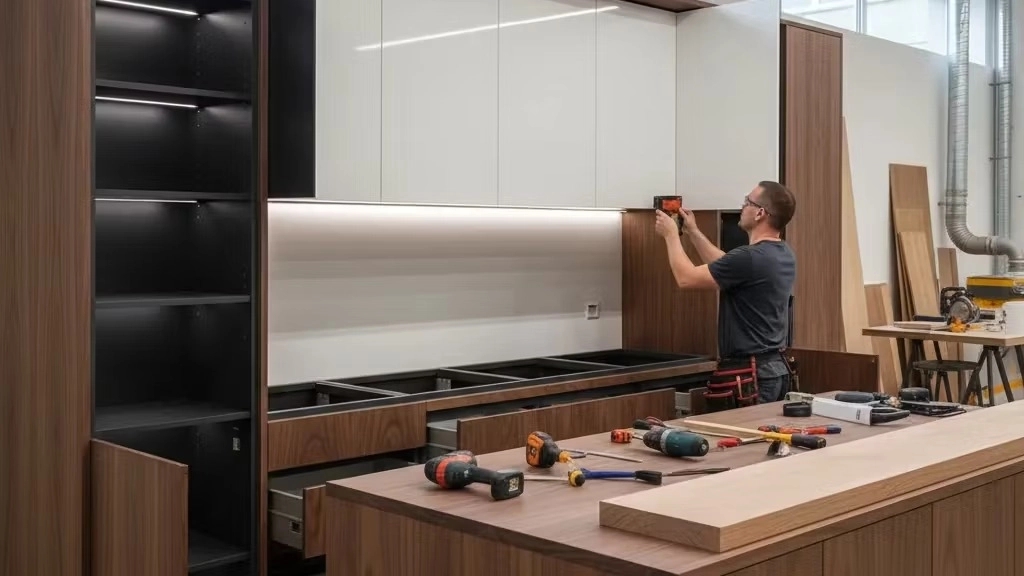
Step Four: Installation of Cabinet on the Project Place
After completing the construction and confirmation of quality control, the cabinets are shipped to your project location in Tehran with the right packaging and the most exciting part of the process of building and installing kitchen cabinets from zero to one hundred .
1. Installation of connections and bases
The first installation is to install special joints (usually L -shaped) on the wall for storing air cabinets. These connections must be completely aligned. Then the ground cabinets are installed and aligned.
2. The installation of ground and air units
Ground cabinets are in place, aligned and twisted into the wall. The aerial cabinets are then mounted on the walls mounted on the wall. The balance of cabinets at this stage is critical for the proper performance of the doors and the beauty of the cabinets.
1. Installation of doors, drawers and regulations
are installed after the units, doors and drawers are installed. The most important part of this stage is "regulator". By adjusting the hinges, the quota adjusts the distance between the doors and ensures that all the doors are easily open and closed and in the same direction.
1. Installing cabinet, pakor and crown
The plate is installed on ground cabinets. Parts such as Pakhor (at the bottom of the ground cabinet), crown and undercover (above and bottom of the aerial cabinet) are installed to complete the facade and appearance.
1. Installing handles and accessories
1. Final cleaning and delivery
Once the installation is completed, the installation team will completely clean the site and deliver the project for final review. You will check all the sections and if the project is complete, the project will be completed.
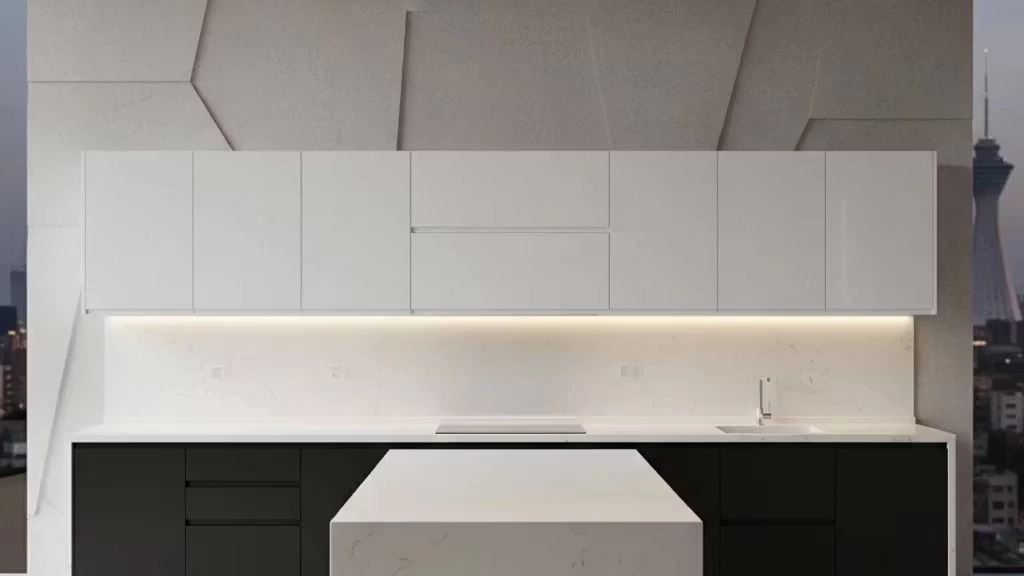
Interior Decoration With specialized and committed installation teams, it ensures that the installation phase is done with the highest quality and accuracy so that the end result is what you have seen and approved in 3D design.
If you are also planning to transform your kitchen and looking for a team that build and install the kitchen cabinet from zero to one hundred with expertise, commitment and transparency, contact us at 's interior decoration . We are ready to make your dream a beautiful and lasting reality.