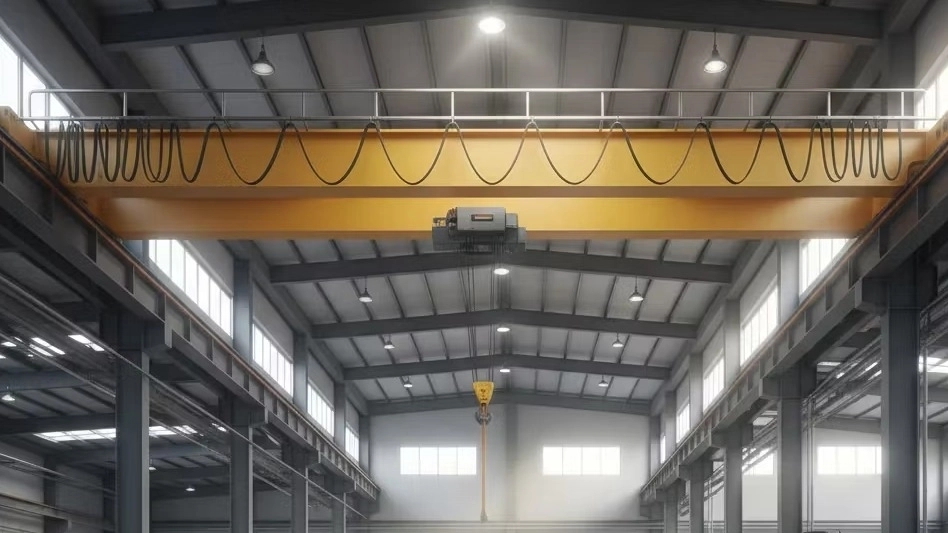
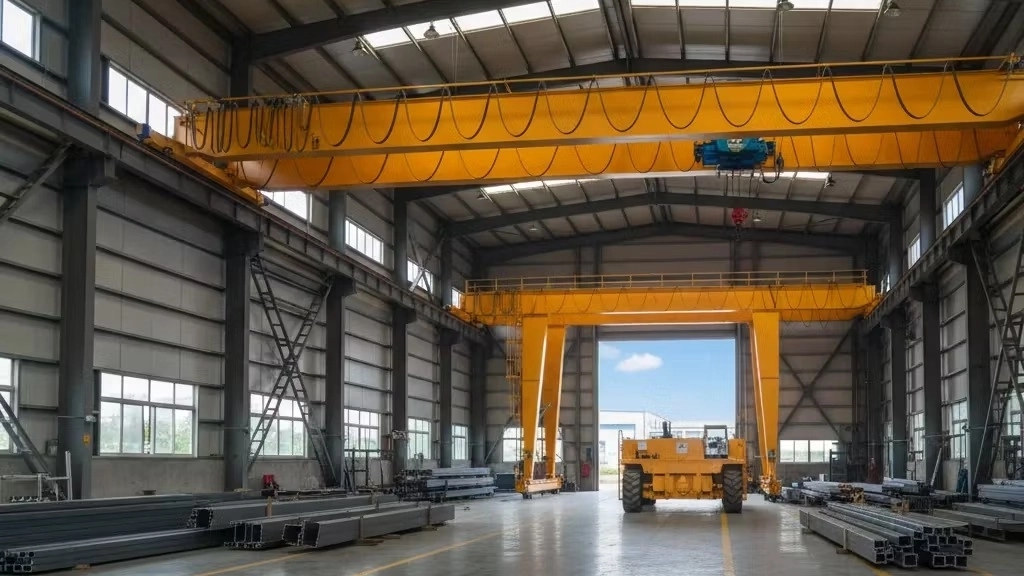

Ceiling crane is one of the most vital investments for any industrial, manufacturing or warehousing unit. This powerful equipment transforms heavy -duty displacement processes, enhances productivity, and dramatically improves workplace safety. But achieving these benefits requires a detailed process of selection to implementation. A wrong selection or installation of a non -standard ceiling crane not only waste your capital, but it can also create serious safety risks. This comprehensive article acts as a ceiling crane selection guide as well as a guideline for installation of ceiling crane and helps you step by step in this path. Safe Samen Company, as a leading expert in designing, producing and installing a ceiling crane in Tehran and throughout Iran, share its knowledge and experience to help you make the best decision.
Part One: Comprehensive Guide to Selection of the Suitable Crane
Choosing the right is the first and most important step. Before you even think about the price, you need to precisely identify your operational needs. Answers to the following questions lead you to the best option.
Step 2: Capacity and Crane Classroom Determine
- Tonnage: The first question you have to ask yourself is: "How much is the heaviest time to move?" Always consider a safety margin. If your heaviest time is 2 tons, choosing a ceiling crane is a smarter option. This removes pressure from the equipment and extends its lifespan. Safe Consultants Samen will help you choose the optimal capacity.
- Duty Cycle: This factor is often overlooked but is of great importance. The work class determines how and how much your crane will work throughout the day. Standards such as FEM and CMAA divide the cranes into different classes (style, medium, heavy, super heavy). A crane for a small workshop used several times a day (lightweight class) has different structure and components with a crane that works in a 4 -hour steel production line (heavy work class). Choosing the wrong class leads to early burnout and frequent breakdowns.
Step 2: Analysis of the Dimensions and Specifications of the Workplace
Ceiling crane must be fully compatible with your space. Careful measurements at this stage are essential:
- Span: The center of the center to the center of the longitudinal rails on which the crane moves. This is one of the main parameters in the design of the crane.
- Runway length: The distance traveled throughout the hall.
- Lifting Height: The maximum distance that the crane hook can be distanced from the ground. This should be calculated by considering the dimensions of the load and the possible obstacles.
- Headroom: The vertical distance from the top of the crane rail to the lowest barrier on the ceiling. This parameter is very effective in selecting the type of crane (single bridge or two bridges) and the type of winches (pendant or rendered).
Step 2: Selection between Single Bridge Crane and Two Bridge
This is one of the key decisions in the ceiling crane selection guide.
- Single Girder Crane:
- Benefits: Lower dead weight, less pressure on the structure, cost and installation of lower roof crane, ideal for less openings and capacities (usually up to 2 tons and under 5 m). Assembly.
- Double Girder Crane:
- Benefits: High stability, high capacity accessibility (up to several hundred tons), higher lift altitude (because the vinches between two bridges), suitable for wide openings, Great.
Engineering Team Safe Samen Company with careful analysis of your needs will offer the best option between Single Bridge and Two Bridges.
Part Two: The principal process of installing the crane
After the selection and construction, the sensitive phase of the crane installation reaches. This process must be done exclusively by expert and experienced teams to ensure the safety and proper functioning of the device. Installation of ceiling crane can lead to catastrophic events.
Step 2: Infrastructure Preparation
This step is done before the crane arrives.
- Building structure control: Experts must ensure that columns and niches are capable of tolerating the loads of crane (both dead and dynamic load). Structural reinforcement is essential if needed.
- Installation of Runway Beams: These beams on which the rails are placed must be installed and aligned with great care. Any impatience at this stage causes the crane to move inappropriately, wheel abrasion, and double pressure on the whole system.
- Careful rails: The rails must be fully parallel, level, and in one stretch. The authorized tolerances in this section are very limited. The expertise of the crane installation team shows itself at this stage.
Step 2: Assembling and setting up a ceiling crane
This step is the heart of the crane installation operation.
- Transfer to the site: Crane parts (bridges, churches, winches) are carefully transported to the project site.
- Assembly on the ground: If possible, the main parts on the ground are assembled. This increases safety and accuracy.
- Increase and placement (eraction): Using the appropriate mobile crane, the assembled crane structure is slowly raised and placed on longitudinal rails. This operation requires the high skill of the Rigger and installation team. Safe Samen's Safe Company uses the most experienced teams.
Step 2: Installation of mechanical and electrical equipment
After the establishment of the structure, it comes to the details.
- Winch and Carriage Installation: Vinci lifts and strollers are carefully installed and tightened on bridges/bridges.
- Wiring and installing power panels: Longitudinal and transverse power system (usually C-RIL or BUSBAR) is installed. The main crane panel is connected and all the wiring of motors, brakes and control systems is done.
Step 2: Startup, Test and Final Inspection
This is the last step before the ceiling crane delivered to the employer.
- Non -load tests: All crane movements (up/low, longitudinal motion, transverse motion) are tested several times without load to ensure the proper performance of the motors, brakes and limit keys.
- Load tests: This is the most important safety test. The crane is first tested with a nominal load (1% capacity) and then overload (usually 1% or 2% capacity, according to standard). In this case, brake performance and structure deformation (bridge upright) are carefully measured and compared with design values.
- Certificate issuance: After success in all tests, the Crane Health and Safety Certificate (often issued by third -party inspection companies) will be prepared and delivered to the employer. Ceiling crane installation is not complete without this certification.
Why trust in the selection and installation of a ceiling crane?
The complex process described clearly shows that the selection and installation of a ceiling crane is a specialized task. Safe Samen Company for the following reasons, your ideal partner is on this path:
- Specialized and honest advice: We help you choose exactly what you need, not necessarily the most expensive option.
- Custom Design and Production: We, as a ceiling crane manufacturer in Tehran, design and produce each device in accordance with the unique conditions of your project. Trained and experienced are familiar with all the details and safety standards.
- Commitment to Safety and Standard: We never sacrifice quality or safety for speed or cost. All of our work is in line with the latest standards.
- Comprehensive after -sales service: Our commitment will not end with the launch of a ceiling crane. We will make you comfortable for years by providing valid warranty, periodic service and maintenance programs and supplying spare parts.
Conclusion:
Ceiling crane selection and installation guide shows that this process is far beyond a simple purchase. This is an engineering decision and a long -term investment in your business infrastructure. Following the principles mentioned in this guide and by choosing a reliable partner such as Safe Samen Samen, you can make sure that your ceiling crane will serve you for many years with maximum efficiency and safety. Contact our experts today to get free advice and start your project.