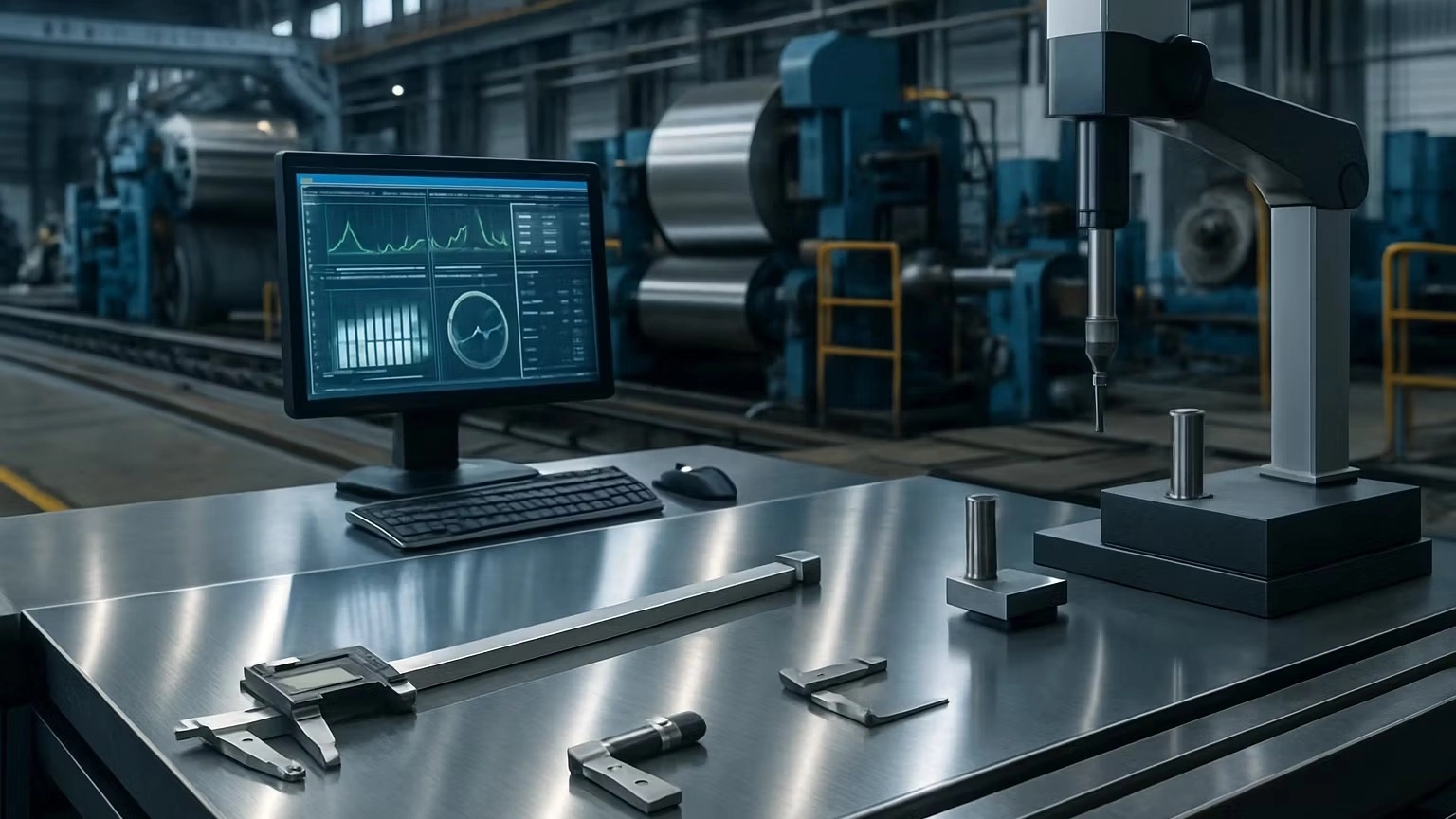
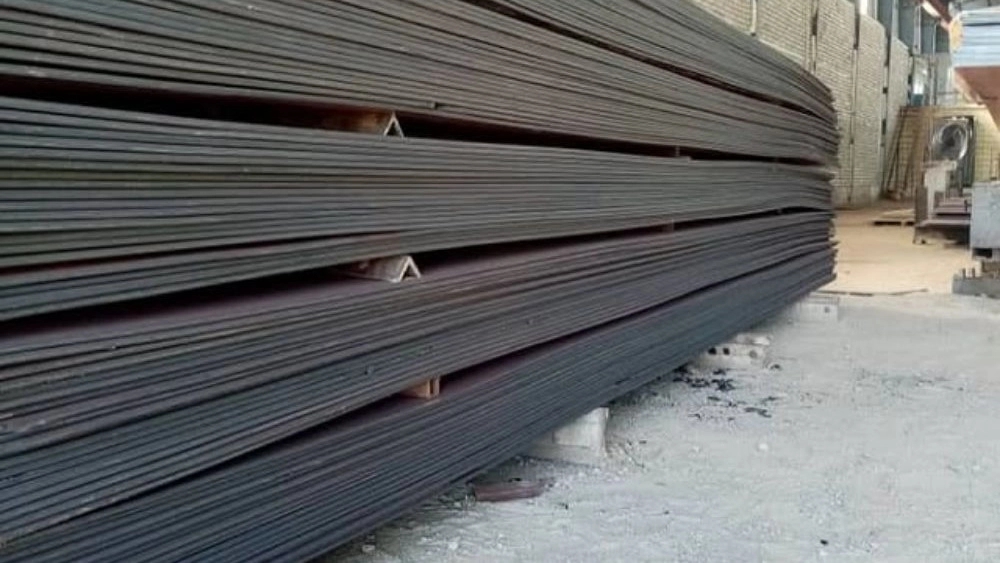

The role of quality control in the steel production process
Quality control in the steel industry is not just a final step, but a continuous process that starts from the selection of raw materials and continues to package the final product. Each process of manufacturing sheet production in Yazd Rolling Steel is carried out under the supervision of specialist engineers and quality inspectors to identify and fix the errors in the early stages.
The main purpose of this process is three things:
Ensure Products to International Standards
Reduce waste and increase production lines
Increase customer satisfaction and brand durability in competitive steel market
Quality Control Steps in Yazd Knowledge Rolling
In Yazd Knowledge Rolling Steel, quality control is systematically implemented in several steps, each of which has a specific task. These steps include checking raw materials, melting and rolling process control, mechanical and chemical evaluations, and ultimately final product inspection.
1. The quality control of the raw materials
The final quality of climbing depends on the purity and precise chemical composition of the raw materials. For this reason, the first and most vital stages of quality control in Yazd's Knowledge Rolling Steel is to review the raw materials.
At this point, the input steel bars and billes are examined in terms of:
chemical composition (percentage of carbon, manganese, silicon and alloy elements)
appearance and existence of cracks or cavities
Weight and Dimensions
samples of each cargo of raw materials are transferred to the laboratory, and precise chemical analysis is performed using a spectrometer. If the elements are out of standard, the raw materials are not allowed to enter the production line.
2. Supervision at the melting stage and preparing the bullion
In Yazd's Knowledge Rolling Steel Factory, the process of melting and recovering bars is another sensitive point of quality control. In this section, the furnace temperature, melting time, and oxygen levels in the furnace are precisely measured to create a clean and homogeneous steel structure.
Quality control experts constantly test the molten sample and measure the amount of impurities while measuring the analysis. Any deviation in the percentage of elements is immediately corrected by the smart production line system.
3. Quality control in hot rolling
At this stage, steel bars enter the rolling shelves after reaching the optimal temperature (about 2 to 5 ° C). Rolling operations lead to a decrease in thickness and increase the length of the sheets.
Quality control in hot rolling rolling Yazd Rolling Rolling includes:
precise measurement of thickness and width of the sheet per pass
control of the sheet outlet temperature from rolls
check the sheet surface to ensure the absence of cracks or oxide shell
monitor the speed of rolling to maintain the uniformity of the structure
Automation Systems in Yazd Rolling Steel are designed to detect and modify any deflection in the thickness or surface of the sheet at the moment.
4. Cooling and controlling metallurgical structure
After hot rolling, the sheets must be cooled to minimize internal stresses in the steel structure. The cooling system in Yazd's Knowledge Rolling Rolling System operates uniformly and continuously to prevent the twist or twist of the sheets.
5. Mechanical and chemical experiments
In Yazd Knowledge Rolling Steel, quality control is not limited to the appearance or thickness of the sheet. The mechanical laboratory section is responsible for examining the physical and chemical properties of the products.
Mechanical experiments include:
Tension Test to measure the final sheet strength
bending test to check flexibility
impact test (sharp) to evaluate resistance to sudden failure
Hardness test to control level hardness level
On the other hand, chemical tests are performed to investigate the composition of the elements and the amount of sulfur and phosphorus. All results are recorded in the central control system and compared to the base standards.
6. SEMBERSHIP AND ADD
After the technical tests, steel sheets enter the appearance and dimensional inspection.
At this stage, Yazd Knowledge -Rolling Steel Quality Control Technicians Examine the Thickness, Thickness, Length, Width and Sleep Using Sheets.
Also, the surface of the sheets is evaluated in terms of the following:
Line and surface scratch
scaling
to be wavy or tolerance
Oxide stains
Any sheet that has an apparent defect or unauthorized number of dimensions is reinforced or melted.
7. Quality control in packaging and sending
In Yazd Knowledge Rolling Steel, even the packaging stage is considered part of the quality control process. Confirmed sheets after cutting in standard dimensions are complicated and labeled by automatic devices.
is listed on each package of technical specifications including melting number, thickness, type of steel and production date so that the product can be traced at any time. In addition, the quality control team performs the last eye review before leaving the product from the factory to ensure physical health.
Technologies used in Yazd Knowledge Rolling Quality Quality Control
One of the secrets of Yazd's rolling steel success in ensuring the quality of its products is the use of modern technologies in monitoring and measurement systems. Among the technologies used in this factory are the following:
Nouri spectrometry system (OES): To analyze precision chemical compounds
XRF device: To identify alloy elements in very low percentages
Digital Hard Measurement: To control the hardener of hardness at the sheet surface
Laser Thickness Measurement Machine: with a precision of less than 1.5 mm
Smart Industrial Cameras: To identify surface defects automatically
These technologies have made the level of accuracy in the quality control of Yazd Knowledge Rolling Steel.
The importance of documenting in quality control
Each step of producing climbing in Yazd Knowledge Rolling Steel has special forms and checklists recorded by Quality Association (QA). In addition to continuous quality control, these documentation is kept as a technical background of each product to be cited in subsequent references or export processes.
The existence of this electronic data registration system has made the process of production and trust in domestic and international customers
Adaptation to national and global standards
All steps to control Yazd Knowledge Rolling Steel Quality Controls in accordance with international standards such as ISO 9001, ISO 14001 and OHSAS 18001. It is also fully compatible with the following technical standards:
ASTM A36 for building sheets
ASTM A516 for industrial sheets under pressure
jis g3101 for public use
ISIRI 3694 as National Iranian Standard
These cases show that Yazd's rolling steel is significantly technical not only at the national level, but also among competitors at the regional level.
Impact of quality control on market trust
One of the tangible results of the precise implementation of quality control steps in Yazd Knowledge Rolling is to increase trust among different customers and industries. The sheets that come out of the lines of this factory are always in accordance with the declared specifications.
This confidence has led the country's largest industrial projects, from power plants to high -rise towers, to supply their sheets to Yazd Rolling Steel.
Conclusion
Quality control in the production of steel products is a complex, precise and multi -step process. At Yazd Knowledge Rolling Steel Factory, this process is systematically and scientifically implemented to ensure the highest quality for customers.
from the selection of raw materials to the final delivery, each step is done under the supervision of quality control professionals using advanced equipment. It is this scientific and committed approach that has made Yazd's steel steel name symbolizes trust and quality in the Iranian steel industry.
With careful observance of these steps, Yazd Knowledge Rolling Rolling Sheets have been able to shine in national and export projects and gain a sustainable place in the country's steel market.