
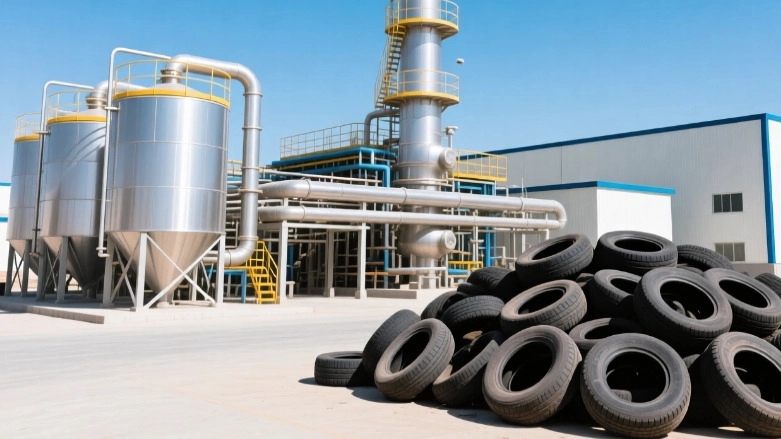
In recent years, the dramatic increase in rubber waste in the world, and especially in our country, has become one of the major environmental challenges. Millions of tires and rubber products are discarded in the country annually, which are irreversible due to their high durability and cause significant contamination. Under such circumstances, the rubber regeneration technology has been considered as a new way of recycling, processing and producing valuable rubber waste.
In the Aras Free Zone, Aras Polymer Refining has been able to bring the industry into a new stage by applying modern technologies and localizing production lines Pirvilys and Rapid Rubber . The purpose of this article is to scientifically examine the concept of rubber rifinry, its method of work and its prominent role in Aras Petrochemical Industries .
What is a rubber refinery?
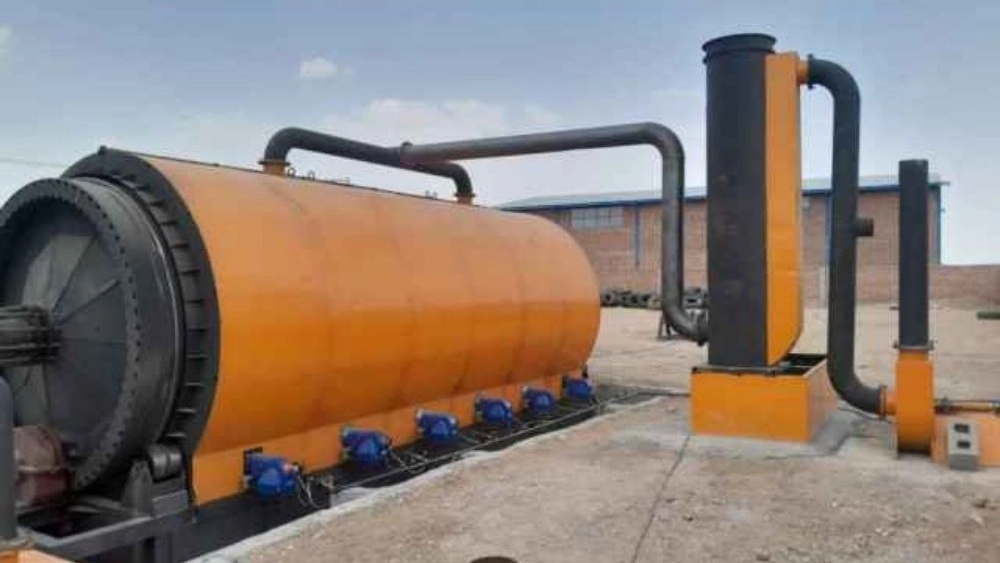
Ruba Rapinarry is an industrial and thermal process designed to recycle a worn -out polymer and rubber materials. In this process, tires and rubber products are heated in an oxygen -free environment at high temperatures. The result of this reaction is the conversion of hard and non -decomposed rubber materials into functional products such as pyrrolis oil, carbon black and industrial gas .
Aras Polymer Refining in Jolfa is one of the few companies that has been able to upgrade tires to industrial and mass production and take effective steps to localize its equipment.
Steps of the rubber refinery process
The rubber rifinry process consists of several main steps:
- Shredding of input materials: Tires and rubber scraps are first crushed and turned into smaller particles so that uniform heating is done.
- Thermal pyrolysis: Shredded materials are placed in closed reactors at a temperature between 350 and 500 degrees Celsius. In this oxygen-free environment, the polymer structure is decomposed and simpler compounds are produced. Distillation and separation: The vapors from pyrolysis pass through the condensers and are converted into pyrolysis oil and light gas. Industrial catalysts are refined and turned into products that can be used in the petrochemical industry.
- Carbon black recycling: The remaining solid material (carbon black) after separation can be used as a filler in the rubber industry, paint industry and even nano fuel production.
In the Company Processing Lines Aras Polymer Refining , all of these steps are carried out automatically with precision temperature and pressure control systems to place the finished product quality at international standards.
The main products of the rubber refinery
Rapid Rubainer technology produces products that are widely used in different industries:
- Pyrolysis oil or nanofuel: It is the most widely used rubber refinery product, which is used as a substitute for industrial diesel and fuel in power plants, cement factories and petrochemical industries. It is used industrially.
- Combustion gas: a gas with a high calorific value that can be used as a heating fuel or energy source in the same refinery complex.
- Recycled steel: metal wires left over from tires that can be recycled in the steel industry.
Company Aras Polymer Refining With the development of refining and purification technologies, it has been able to produce the above products with a high degree of purity and supply to the petrochemical and petroleum industries.
The connection of rubber refinery with Aras Petrochemical Industries
Aras Free Zone is becoming an important pole Northwest of Iran due to its privileged geographical location and strong industrial infrastructure. Ruba Rafinar Technology plays a complementary and supplier role of raw materials for some petrochemical units.
A few examples of these collaborations are:
- Supplying industrial oil and nanofuel for chemical factories in the regionRefining Aras polymer materials by producing refined oils from the rubber source has met the needs of many industrial and energy-intensive factories in the region. Rubber is used as a pigment and stabilizer in the manufacture of plastic and rubber equipment. Thermal recycling and clean energy for petrochemicals Using the exhaust gas from the pyrolysis process, a part of the energy required to run petrochemical production lines is provided. This has reduced costs and carbon emissions in the workplace.
- Synergy between Aras Refinery and Petrochemical IndustriesMany petrochemical units in Aras have been able to reduce their dependence on the import of additives by using Aras polymer refining products. This cooperation has caused the economic and industrial prosperity of Jolfa region.
Advantages of using rubber refinery technology in Aras
Application of Ruba Rapin Refinery Technology in Aras Free Zone has many benefits in environmental, economic and industrial areas, including:
- Significant reduction of rubber waste and environmental pollution
- Production of alternative fuel with low emissions
- Increasing self-sufficiency in domestic petrochemical industries
- Massive employment generation in technical and Engineering
Aras polymer refining by implementing automated control systems and using specialist engineers adheres to the worldwide safety and quality standards in the rifaine process.
The role of Aras polymer material refining in the development of refinery technology in Iran
Company Aras Polymer Refining is one of the first industrial complexes in Iran to localize rubber technology. The company has taken an important step in the industrial innovation and Sustainable Development by designing and manufacturing advanced pyrolysis lines.
distinctive features of Aras polymer refining are:
- Use of multi-stage filtration systems to improve fuel quality
- Design of modern reactors with high efficiency
- Exact control of the pyrolysis process with smart software
- Cooperation with academic centers in the field of nanocatalysts
- Compliance with the environmental standards of the Environment Organization and Free Zone Ars
The company's activities have made its products welcome not only domestically but also in several neighboring countries, including Armenia, Georgia and Azerbaijan.
Challenges of the rubber refinery industry
Although the rubber regeneration process has many benefits, there are also challenges facing the industry:
- High initial investment for industrial equipment
- Insufficient familiarity of industries with the applications of recycled products
- Need for permits and strict environmental controls
- Necessity of government support in the field of energy Renewable
However, government support for tire recycling plans and the development of petrochemical downstream industries in Aras Free Zone shows that the future of this industry in Iran is clear.
The future of rubber refinery in Aras Free Zone
Aras Free Zone is quickly becoming a recycling hub and The Ruba Ruba Refinery Industry in Iran . Development programs of the company Aras Polymer Refining include launching new lines to increase production capacity, manufacture of dual -step reactors, and the use of nanotechnology in the refining phase. These programs could make Iran one of the recycled energy centers in the Middle East.
Based on indigenous experience, technology and knowledge, Aras will play a key role in supplying industrial fuels and environmentally friendly chemicals in the near future.
Summary and call to action
Ruba Rafinry is the intersection of the recycling industry, petrochemical and new energy. This technology not only provides an effective solution for managing rubber waste, but also in the production of clean fuel, industrial additives and petrochemical raw materials.
Company Aras Polymer Refining relying on world -class technologies, the experience of specialized engineers and modern infrastructure in the Aras Free Zone is the pioneer of the development of this industry in Iran.