
Recycling of rubber waste is considered as one of the serious environmental challenges in the world. In recent years, pyrolysis technology has become one of the best industrial methods to convert used tires into fuel, oil, gas and carbon. The rubber pyrolysis production line in Jolfa has taken a big step in the direction of sustainable recycling and industrial development in the northwest of the country by using the latest technologies in the world.
Introducing the rubber pyrolysis industrial plan
What is pyrolysis technology?
Pyrolysis is a process in which polymer materials such as rubber are heated in the absence of oxygen and at high temperatures of about 350 to 550 degrees Celsius. During this process, the chemical structure of rubber is broken and decomposed into simpler molecules including pyrolysis oil, gas and carbon black.
In the rubber pyrolysis production line in Jolfa, this technology is implemented with high efficiency and precise temperature control to get the most efficiency from each unit of waste rubber.
The purpose of implementing this plan
The main goal of setting up pyrolysis lines in Jolfa is to reduce the negative environmental effects of used tires and turn them into sustainable sources of wealth and energy. This project will also cause extensive job creation and the development of Aras Free Zone in the field of recycling and petrochemical industries.
Aras Polymer Materials Refining Company; Iran's leader in pyrolysis technology
Aras Polymer Materials Refining Company operates as the first specialized industrial complex in the field of designing, manufacturing and operating a rubber pyrolysis production line in Jolfa. Relying on the experience of Iranian engineers and localized technology, this company has succeeded in providing production lines that can compete with European models in terms of energy consumption, safety and quality of the final product.
Distinguished features of Aras Polymer Materials Refining Company
- Custom design of pyrolysis lines with different capacities (5 to 20 tons per day)
- Using double-walled reactors for uniform heat control
- Using a multi-stage condenser system to increase oil extraction
- Reducing environmental pollution by using gas filters and smart burners
- Production Clean industrial fuels (pyrolysis oil, light gas, carbon black)
Process steps in rubber pyrolysis production line in Jolfa
To better understand the operation of this production line, we review the main steps of the process:
1. Preparation of raw materials
At this stage, worn car tires and heavy tires are crushed and cut into pieces to make it easier for them to enter the reactor. In the Ares Polymer Materials Refinery, stone crushers and automatic conveyors are used to transfer tires to the main system.
2. Feeding materials to the pyrolysis reactor
The rubber parts enter the reactor and with the gradual increase in temperature to about 450 degrees, the thermal reaction begins. The lack of oxygen in the system causes the tire to decompose without burning.
3. Vapor and gas production
At this stage, the vapors resulting from the reaction are directed to the cooling condensers through transmission lines. Part of the steam turns into liquid (pyrolysis oil) and part remains as combustible gas.
4. Collection of products
- Pyrolysis oil: Can be used in boilers, burners and even as refinery feed.
- Carbon black: Black powder that is used in the production of new rubber and pigments.
- Pyrolysis gas: A clean fuel that is reused in the process to produce heat. is used.
Economic and environmental benefits of implementing rubber pyrolysis production line in Jolfa
1. High financial returns
According to the current price of fuels and the need of industries for industrial oil, investing in a rubber pyrolysis line has a very quick return on investment (usually less than two years).
2. Job creation and regional growth
3. Reducing waste and pollution
For every ton of input tires, about 45% oil, 30% carbon black and 10% pyrolysis gas are produced, which prevents thousands of tires from being buried in the soil and harming the environment.
4. Strengthening the chain of downstream industries
The production of by-products such as carbon black and industrial gases enables cooperation with the petrochemical and steel industries of the region.
The main equipment of the rubber pyrolysis production line in Jolfa
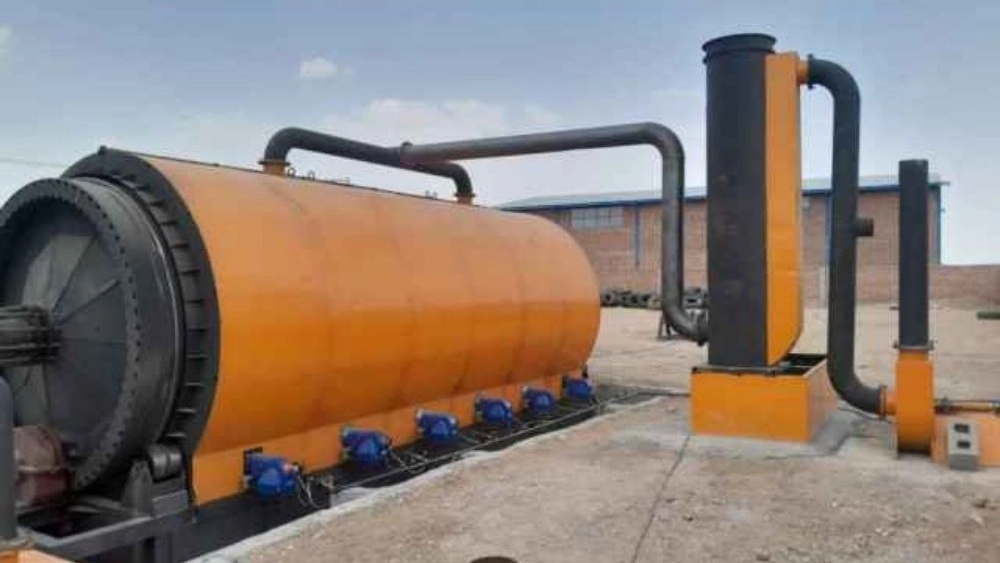
- Heat-resistant double-walled steel reactor
- Gas or diesel intelligent torch
- Multi-stage vapor liquefaction condenser
- Cooling tower and circulating water system
- Smoke filters and pollution control system
- Condensation and storage device Oil
- carbon black collection tank
All these equipments are designed, assembled and installed at Ares Polymer Materials Refining Company. Full technical support, periodical service and operator training are also after-sales services of this collection.
Comparison of rubber pyrolysis production line in Jolfa with other cities
Jolfa, as a free zone, has special advantages for the implementation of industrial projects:
- 20-year tax exemptions
- Easy access to the border of Nakhchivan and Turkey for product export
- Suitable energy and industrial gas infrastructure
- Adjacent to the North-South international transit route
For this reason, setting up a rubber pyrolysis production line in Jolfa is a smart option for investors. Compared to the lines located in the centers of the country, the costs of importing equipment and transporting raw materials are lower in Jolfa.
Development of pyrolysis line and rubber refinery in the second step of the project
In addition to producing pyrolysis crude oil, Ares Polymer Refinery Company has started the second phase of its project with the aim of refining oil and producing standard diesel fuel.
Environmental and safety standards
One of the strengths of the rubber pyrolysis production line in Jolfa is full compliance with the regulations of the Environmental Organization. In the design of the systems, multi-stage filtration is used to remove gases and control smoke. Also, all storage tanks are made of resistant steel and have an anti-explosion system.
The future of pyrolysis industry in Iran
The growing demand for alternative fuels and the government's mandate to reduce rubber waste landfills have set a bright future for the pyrolysis industry. Forecasts show that by the year 1407, the country's rubber recycling capacity can be doubled, and a large share of it will belong to the Aras polymer material refining projects in Jolfa.
summary
The rubber pyrolysis production line in Jolfa is not only an effective step in recycling and preserving the environment, but it is also considered a valuable opportunity for investors, industrialists and entrepreneurs. Aras Polymer Materials Refining Company is ready to design, launch and sell pyrolysis lines with various capacities and guarantee operational efficiency.