
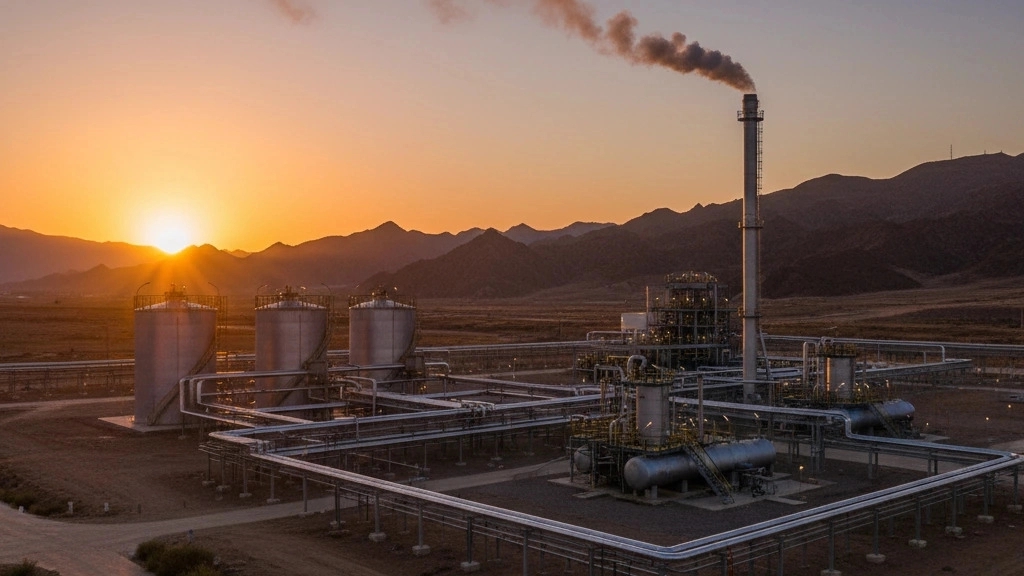
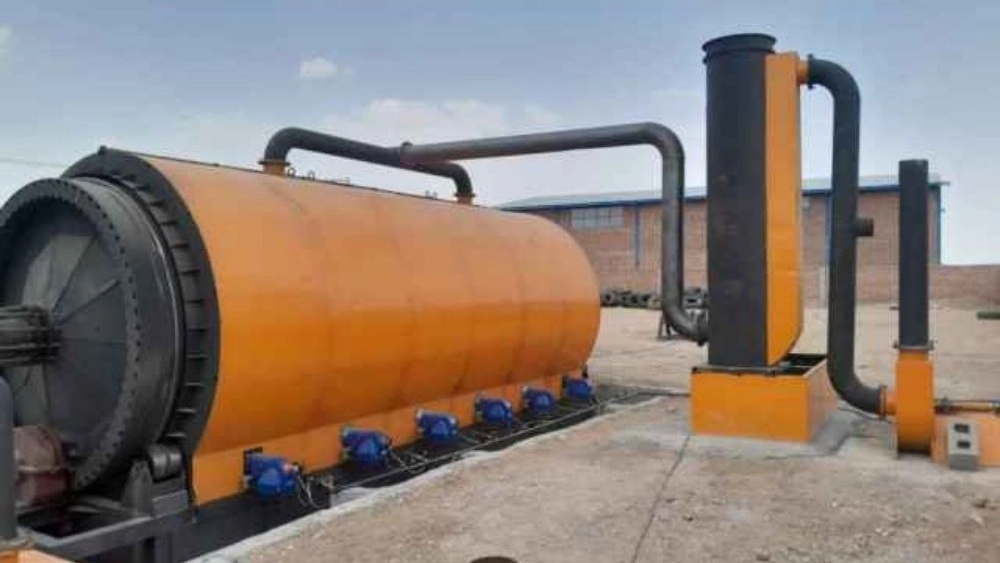
Pyrolysis oil is one of the valuable products of recycling tires and polymer materials, which has found an important place in the energy and alternative fuels industry in recent years. With the help of advanced technology, Aras Polymer Materials Refining Company has succeeded in producing high-quality products from the rubber pyrolysis process in Jolfa, including refined industrial pyrolysis oil, which is widely used in the oil, steel and petrochemical industries.
Introduction of pyrolysis oil production process
How is pyrolysis done?
Pyrolysis is the process of thermal decomposition of polymer materials in the absence of oxygen. In this method, worn tires are placed under 450-550 degree heat in special reactors and turn into gas, carbon black and liquid oil.
Types of pyrolysis oil
The most important classification of types of pyrolysis oil is based on the degree of purification and their chemical composition. Each type has different characteristics and applications in industries.
1. Crude pyrolysis oil
This type is obtained directly from the rubber pyrolysis process and has not yet been refined. Its color is dark brown to black and has a slight smell of sulfur.
Features:
- Density about 0.95 g/cm³
- High calorific value (40 MJ/kg)
- Has aromatic and sulfur compounds
Usage: in furnace industry, indirect heating and industrial boilers.
2. semi-refined pyrolysis oil
In this type, part of the sulfur and heavy compounds are removed during the filtration and distillation process.
Features:
- Lighter color than crude oil
- Less odor
- Lower pollution when burning
Application: fuel for industrial burners in cement factories, brick making and small power plants.
3. Refined Pyrolysis Oil
This product is produced in the second phase of refining. At Aras Polymer Materials Refining Company, after passing through the distillation tower, catalytic filter and desulfurization system, crude oil is transformed into refined pyrolysis oil with high viscosity index and cetane number.
Features:
- More transparency and less smell
- Ctane number between 45 and 50 (similar to diesel)
- Compatible with industrial diesel engines
Usage: replacing diesel fuel in petrochemical units, steel industries, thermal power plants and steam units.
4. Light and heavy pyrolysis oil
In the distillation process, based on the boiling point, the oil is divided into two parts:
- Light oil with a low boiling point (300 to 400 degrees): suitable for cleaner fuel.
- Heavy oil with a high boiling point: suitable for thermal furnaces and melting metals.
Ares Polymer Refinery has made it possible to accurately separate these two types of oil with the special design of its distillation towers.
The main applications of pyrolysis oil in industries
In the following, we will examine the most important uses of this oil in three key industries of Iran.
1. Application in oil and energy industries
a. Replacement of diesel fuel in boilers
Refined pyrolysis oil is close to diesel in terms of calorific value and is easily used in boilers and thermal burners.
b. Production of blended fuel (Blending Fuel)
In refineries, this oil is used as a combined feed with other petroleum products to increase combustion efficiency.
In some small refineries, pyrolysis oil is used as feed for the cracking process to extract liquefied gases.
2. Application in the steel industry
In melting units and electric arc furnaces, uniform and continuous heating is critical. In this section:
- Heavy pyrolysis oil is used as the main fuel for long flames.
- The property of high viscosity makes it stable in extreme thermal pressure environments.
- Its fuel cost is about 30% lower than conventional diesel fuel.
In the steel factories of the northwest of the country, many new lines are equipped with burners compatible with pyrolysis oil, which are supplied by Aras Polymer Materials Refining.
3. Application in the petrochemical industry
In the petrochemical industry, types of pyrolysis oil play a dual role: both an energy source and a chemical feed.
Applications include:
- Heat supply for heat exchangers and distillation towers
- Use as feed in the production of industrial solvents, process fuel and synthetic oils
- Emergency fuel supply in production units that do not have access to natural gas
One of the big advantages for petrochemicals is the storage stability of pyrolysis oil and its ability to be transported without the need for high pressure.
Economic benefits of using all types of pyrolysis oil
Purification and refining stages of pyrolysis oil in refining Aras polymer materials
First step: mechanical filtration
Removing soot particles, metal and solid impurities with multi-stage steel filters.
Second step: thermal distillation
In the distillation column, the oil is heated to a temperature of 360 degrees to separate light and heavy components.
Third step: Desulfurization
Using specific catalysts to remove sulfur compounds and improve oil smell.
Fourth step: adding stabilizers
Additives are injected to control viscosity and prevent oil oxidation.
All these steps are carried out under the technical supervision of Aras polymer material refining engineers in the Jolfa refinery unit, and the final product has export quality.
Environmental benefits of pyrolysis oil production
The production and consumption of types of pyrolysis oil in addition to the economic aspect, prevents the destruction of the environment.
- Elimination of buried tires and soil pollution
- Reduction of fossil fuel consumption
- Reduction of sulfur dioxide and carbon monoxide emissions
For this reason, the implementation of such projects is in line with the country's macro policies for clean energy.
Aras polymeric material refining development programs
summary
Now that the need of industries for alternative fuel is increasing, the use of types of pyrolysis oil produced by Refining of Aras Polymer Materials can be a reliable, economical and sustainable solution for the country's industrial units.