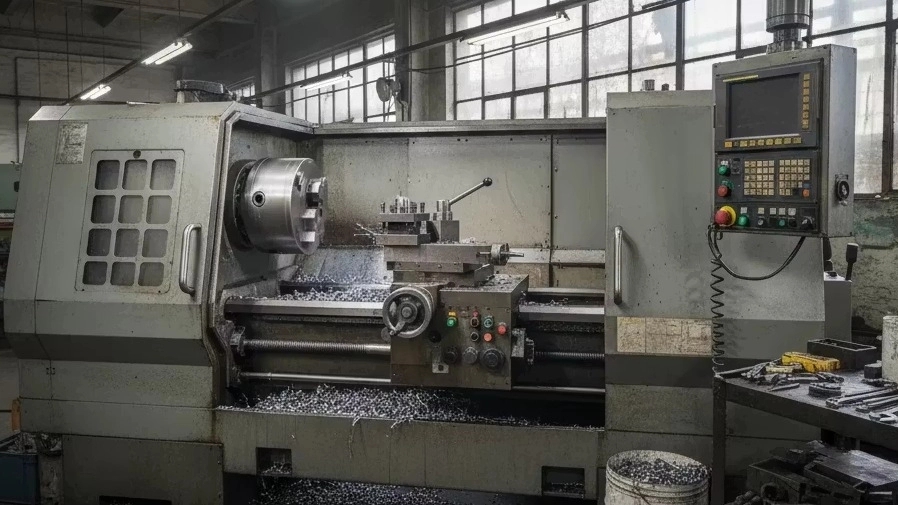
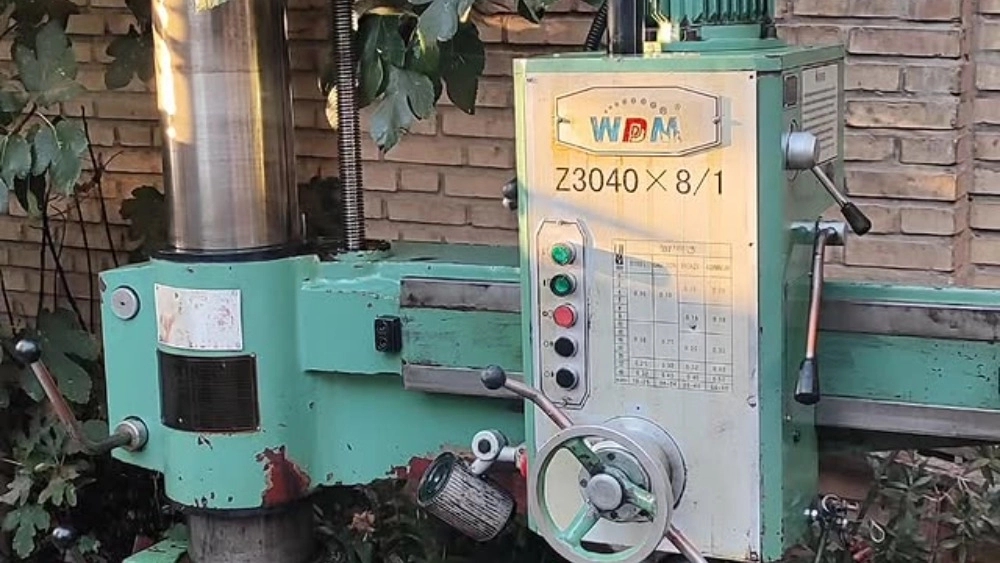

The decision to buy a used CNC lathe is one of the smartest yet riskiest decisions an industrial manager or entrepreneur can make. Smart because at a fraction of the price of a new machine, you can get advanced CNC technology and greatly accelerate the return on investment. Risky because a wrong choice, without adequate technical know-how and thorough investigation, can turn into a nightmare of repair costs, poor accuracy and wasted capital. This comprehensive guide, the result of years of experience of Sanat Moazzami in the market of buying and selling industrial machinery, will help you choose the best second-hand CNC lathe according to your needs and overcome all the pitfalls of this complicated path with full confidence.
Why buying a second-hand CNC lathe is a strategic choice?
In the current economic situation where the price of new machinery is skyrocketing, many workshops and factories are thinking about alternative options to expand or start their activities. Purchasing a second-hand CNC lathe is not only an economic solution, but also a strategic move.
- Significant reduction in initial cost: The main and most obvious advantage is its much lower price than the Akband model. This price difference can be between 30 and 70%, which allows you to spend the rest of the capital on buying tools, raw materials or strengthening your team.
- Faster return on investment (ROI): When the initial cost is lower, the break-even point of costs and revenues comes sooner. This is vital for start-up businesses.
- Immediate access and no waiting: Unlike many new machines that require placing an order and waiting several months for import and delivery, a used CNC lathe is ready to go and can be put into your production line immediately after purchase.
- Cost reduction Depreciation: The biggest drop in the price of a device occurs in the first year of its operation. By buying a second-hand CNC lathe, you will be safe from this sharp price drop.
Fully understanding these advantages, Sanat Moazzami group facilitates the process of buying a used CNC lathe for craftsmen by providing expert and healthy options.
Basic steps before you start looking to buy
Before you even make a phone call or visit a showroom, you should do your homework. A successful purchase begins with a detailed planning.
First step: detailed analysis of production needs (the most important step)
An expensive used CNC lathe is not necessarily the best choice for you. The right device is the one that exactly matches your needs. Ask yourself:
- What is the maximum diameter and length of my workpiece? These parameters determine the main dimensions of the machine (Swing over bed, Distance between centers).
- What is the material I am machining? Machining hard alloy steels with a machine with Spindle Power and It needs higher rigidity than aluminum.
- How is the complexity of the parts? Do you need live tooling (Live Tooling) or Y axis to perform milling operations on the lathe?
- How much accuracy (tolerance) is required? Different machines, different accuracies.
- What is your final budget?
The first service Sanat Moazzami experts offer you is a free consultation to answer these questions to avoid wasting your time and money in the next steps.
Second step: Research about brands and models
Not all brands are created equal. Some Japanese and German brands (such as Mazak, Okuma, DMG Mori) are known for high quality and longevity, while Taiwanese brands (such as Victor, Leadwell) offer a good balance between price and quality. Research which models in the Iranian market have better spare parts and after-sales service. Purchasing a second-hand CNC lathe from an unknown brand can face you with the problem of supplying parts in the future.
Technical Checklist: How to Appraise a Used CNC Lathe Machine?
This is the most important part of the guide. Never, we emphasize NEVER, buy a used CNC lathe without a thorough technical inspection by an expert. If you do not have enough expertise yourself, be sure to use the advice of collections such as Sanat Moazzami. This checklist will help you evaluate the device like a pro.
1. Mechanical inspection (heart of the device)
- Bed & Guideways: Check the entire surface of the rails with a flashlight. Look for any deep scratches, corrosion, uneven wear or "stepping". run your hand over the rails; The surface must be completely smooth and polished. The health of the rails directly affects the long-term accuracy of the machine.
- Spindle:
- Sound and vibration test: Turn on the machine and rotate the spindle at different speeds (low, medium and maximum). Listen for any unusual noises (such as howling, rattling, or grinding) or strong vibrations. These noises can be a sign of expensive spindle bearings failing.
- Heat test: Let the spindle run at medium speed for about 15-20 minutes. Then carefully check the temperature of the shell. Overheating is a sign of serious danger. Ball screws and motion system (Ball Screws): Ball screws are responsible for converting the rotary motion of servo motors into precise linear motion. Backlash test: This is the most important test. Using the indicator watch, measure the amount of slack in the X and Z axes. Too much slack destroys the positioning accuracy and thus the accuracy of the workpiece. It is very expensive to repair or replace the screw ball.
- Turret:
- Index and Lock Test: Run the Tool Change command several times. The tart should rotate smoothly, quickly and without impact and lock firmly in the new position. Any vibration or noise when locking is a concern.
- Hydraulic and cooling system: Check the level and quality of hydraulic oil and soapy water. Check for leaks in hoses and connections.
2. Electrical and control inspection (the brain of the device)
- Controller (CNC Controller): Turn the machine off and on several times. The controller should load quickly and without errors. Test all the buttons on the panel.
- Monitor: Look for burned-out pixels or dimming on the screen.
- Servo motors and drives: Listen to the servo motors as the axes move. A smooth and smooth sound is a sign of their health.
- Electrical board: Open the door of the electrical board (carefully!). Look for burnt wires, damaged contactors or any non-standard changes in wiring. The presence of a lot of dust and dirt in the electrical panel is a sign of poor maintenance of the device.
3. practical test (final exam)
The best and surest way to evaluate the health of a second hand CNC lathe is to carve a test piece.
- Clamp an aluminum or mild steel part.
- Write a simple program including face milling, multi-step face milling, internal milling, and threading.
- Machine the part and then measure its dimensions with precision tools (micrometer, digital caliper).
- Do the dimensions match the drawing? Is the surface finish of the part desirable? Has a step been created in the resection operation?
This hands-on test demonstrates the integrated operation of all mechanical and electrical components. Sanat Moazzami always insists that any purchase of a second-hand CNC lathe is finalized only after the successful completion of this test.
Legal and contractual points in buying a second-hand CNC lathe
After the technical approval, it is time for the legal aspects of the transaction. Ignoring this part can cause big problems.
- Ownership verification: Ask the seller to provide the device ownership documents (customs green card, initial purchase invoice). Make sure the device is not stolen or leased.
- Set up a clear contract: Set up a detailed contract in which the full specifications of the device (model, serial, year of manufacture), final price, method of payment, time and place of delivery, and responsibility for shipping and installation costs are clearly mentioned. And all the things confirmed in the technical inspection are the same.
Transacting through a reputable authority like Sanat Moazzami will protect you from many of these legal concerns, as we verify all of these before releasing a device.
Conclusion: consult experts to make a smart purchase
Buying a used CNC lathe can be a powerful launching pad for your business, provided the process is done with knowledge, precision and passion. The technical checklist provided in this article is a great road map, but nothing replaces the experience and expertise of a seasoned professional.
The market is full of devices with attractive appearance but worn inside. Trusting uninformed or profiteering salespeople is the biggest mistake you can make. Sanat Moazzami, relying on an experienced technical team and a commitment to honesty, presents itself as your advisor and companion in this path. Not only do we introduce the best options for used CNC lathes based on your needs and budget, but we are by your side at all stages of technical inspection, negotiation and contracting to ensure that your capital is used in the best possible way.
For a reliable, economical and smart purchase of a used CNC lathe, contact our experts at Sanat Moazzami today and benefit from our free expert advice.