


What is precision casting and how is it different from traditional methods?
- Mold quality: Use of high-precision molds that convey intricate details well.
- Temperature control: Close monitoring of metal melting and pouring temperatures to prevent defects.
- Chemical composition: Accurate analysis and control of the alloy to achieve desirable mechanical properties.
- Solidification rate: Process engineering to control the crystal structure of the metal during cooling. becoming.
Main types of precision casting processes
- Precise casting with wax models (Investment Casting): In this method, a precise wax model of the final piece is made and covered with a ceramic slurry. After drying, the wax is melted and removed, leaving a hollow ceramic shell. Molten metal is poured into this shell. This method is ideal for producing highly complex parts with excellent surface quality.
- Die Casting: In this process, molten metal is injected under high pressure into a permanent steel mold. This method is suitable for mass production of parts with high precision and high speed.
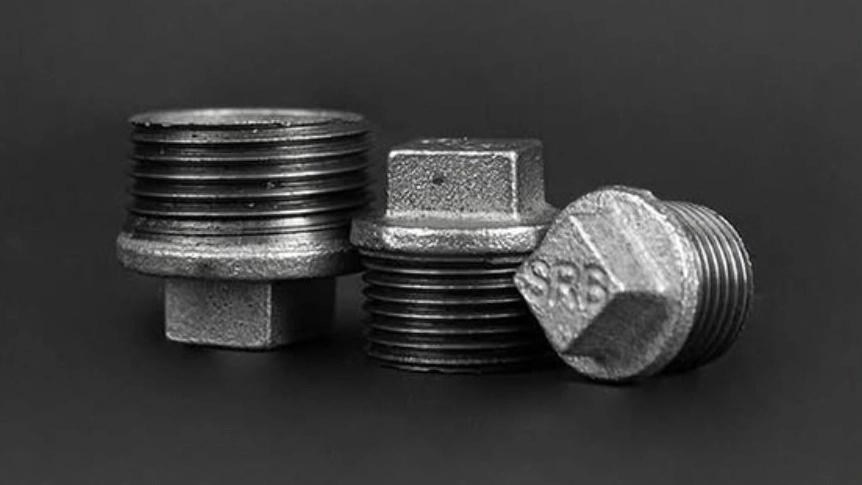
Mastering the principles of precision casting, SRB Industrial Group utilizes techniques appropriate to its product type, such as galvanized joints, to lay the foundation for a superior final quality product right from the start.
The direct effect of precision casting on the final quality of the product
Choosing a casting method is like choosing DNA for a living organism; It determines the basic properties and characteristics of the product. Let's see how precision casting directly affects various aspects of final quality.
1. Mechanical strength and structural integrity
The most common defects in non-precision castings are internal defects such as porosity and gas bubbles. These microscopic holes, like weak points in a chain, create stress concentrations and greatly reduce the strength of the part. In a pipe joint that is under fluid pressure, these weaknesses can lead to bursts and catastrophic leaks.
Precise casting prevents the creation of these defects by controlling the melting process, degassing the melt, and the correct design of the channel systems (the way the metal enters the mold). The result is a dense, homogeneous and integrated structure that can withstand high working pressures with confidence. This is the reason why SRB Industrial Group insists on a precision casting process to produce its fittings.
2. Dimensional accuracy and closed tolerances
Imagine that a piece of the puzzle does not have the correct dimensions; It will never fit properly. In the engineering world, this mismatch can lead to leaks, vibration, premature wear, and failure of the entire system. Precision casting produces parts that are very close to the final design dimensions (Near-Net-Shape). This matter:
The final quality of an assembly system depends on the accuracy of its individual components, and accurate casting ensures this accuracy.
3. Surface Finish
The surface of a part is the first point of contact with the environment and other parts. A rough and uneven surface can be the starting point for corrosion, increasing friction and reducing the appearance. Precision casting processes inherently produce smoother, cleaner surfaces than traditional methods. This high surface quality is doubly important, especially in applications where coatings are applied (such as galvanizing on SRB joints). A smooth surface ensures better adhesion of the coating and prevents peeling, which directly affects the final quality and longevity of the product.
SRB Industrial Group: A commitment to excellence through precision casting
Theoretical knowledge of precision casting is one thing and its successful implementation on an industrial scale is another. With years of experience and investment in technology and expertise, SRB Industrial Group has turned the casting process into an art-science.
Specializing in ductile iron casting
To produce fittings that have both the strength of steel and the castability of cast iron, SRB uses ductile iron with controlled analysis. The precision casting of this material requires very high process control to create a spherical graphite structure that gives the piece exceptional toughness and impact resistance. This expertise is the main distinguishing feature of SRB fittings against products made of brittle gray cast iron.
Quality control at every stage of casting
At SRB, precision casting is not just one step, but a philosophy that runs through the entire process:
- Metallurgical laboratory: Quantitative analysis of raw materials and melts to ensure compliance of chemical composition with standards.
- Continuous temperature control: use of thermocouples and advanced control systems in furnaces and crucibles.
- Mold engineering design: Computer design of molds and channel systems to ensure complete filling and directional solidification, which creates Prevents shrinkage cavities.
- Non-Destructive Inspections (NDT): Inspection of manufactured parts for any hidden internal defects, to ensure that any part bearing the SRB designation is flawless.
It is this commitment to quality control at the casting stage that ensures the final quality of the product is nothing short of excellent.
How to choose a supplier with precision casting capability?
If the final quality is critical to your project, you must choose your industrial partner carefully. When evaluating a supplier, ask these questions:
- Are they a real manufacturer or just a distributor? Tour the factory and their production processes.
- What control processes do they have for casting? Ask about their laboratory, temperature control and material analysis.
- Can they provide a Material Certificate? This certificate guarantees the chemical composition and mechanical properties of the product.
- Check their product samples. Pay attention to the quality of the surface, dimensional accuracy and the absence of external defects.
SRB Industrial Group proudly rises above all these reviews and opens its doors to customers for technical visits and evaluations, because we are fully confident in the precision casting process and the final quality of our products.
Conclusion: Precision casting, the cornerstone of sustainable quality
Understanding this reality, SRB Industrial Group has applied its expertise in precision casting to market products that not only meet your needs today, but are also ready for tomorrow's challenges. By choosing products that are based on an engineered casting process, you are choosing quality from the very core.
For projects where quality cannot be compromised, trust the precision casting experts. To learn more about our production processes and its effect on product quality, contact the technical experts of SRB Industrial Group.