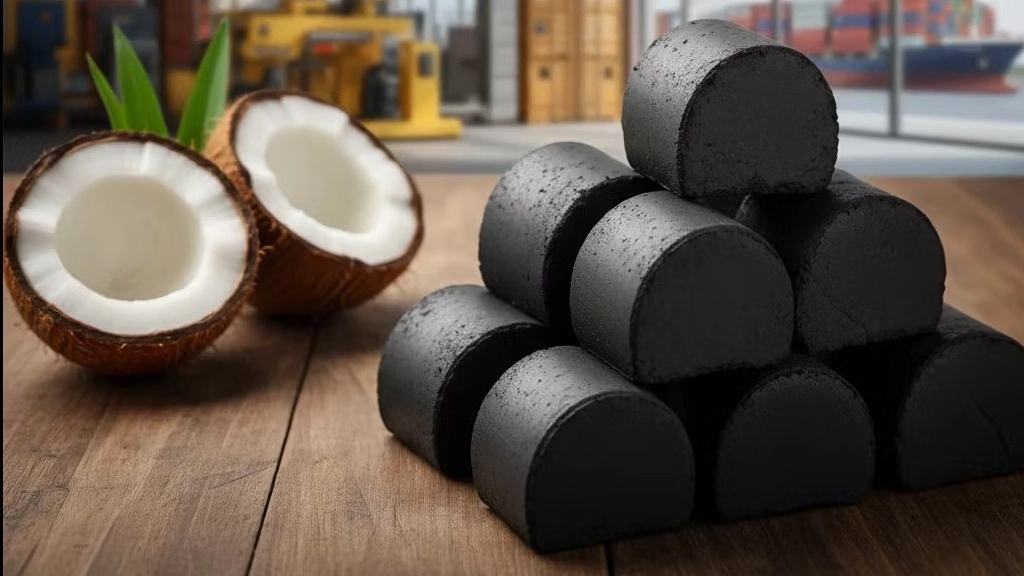

With increasing demand for natural and quality products, coconut charcoal has emerged as one of the best types of charcoal in the domestic and export market. Using modern technology and many years of experience in the production of coconut charcoal, Coco Max Co. offers high quality products and export standards.
Importance of export coconut coal
Coconut charcoal is produced from coconut shell and has advantages over other types of charcoal. Among its most important features, the following can be mentioned:
- No smoke and smell: Heat generation without excess smoke production
- Long and uniform fuel: Suitable for domestic and industrial use
- Eco-friendly: Optimum use of coconut waste
These advantages have made the coconut charcoal export market expand day by day and companies like Coco Max Shahriar can export their products to different countries.
Introduction of Coco Max Ghazhal Khazali Company
The Coco Max Shahriar company is one of the leaders in the production of coconut charcoal and charcoal in Iran. Following national and international standards, this company has designed the production process in such a way that the final product is completely uniform and of high quality.
Coco Max products
- Exported coconut charcoal
- Compressed charcoal
- Standard export packages
Coco Max Company has an important contribution in the domestic and foreign coal market by focusing on quality and providing customer service.
Export coconut charcoal production process
1. Selection and preparation of raw materials
The quality of exported coconut charcoal directly depends on the quality of the coconut shell. Coconut skin should be healthy, dry and without excess moisture. Choosing high-quality raw materials produces charcoal with uniform heat and long life.
2. Washing and drying the coconut skin
The skins of the collected coconuts are first washed to remove dust and impurities. Then they are dried in industrial dryers to completely reduce their moisture content. This stage guarantees the final quality of the coal.
3. Crushing and grinding raw materials
The dried coconut shell is chopped and prepared for the next step with a uniform size. This step is done using industrial grinding machines so that the raw materials are ready for carbonization.
4. Carbonization
Carbonization is the process of heating the coconut shell at a high temperature to turn it into charcoal. Coco Max Shahriar company uses advanced furnaces with precise temperature control to produce high quality charcoal with little smoke and odor.
5. Cooling and shaping
After the carbonization process is over, the coals are slowly cooled so that they do not crack and retain their compact structure. Then the coals are molded into suitable cubic or cylindrical shapes to meet the export standard.
6. Packaging and preparation for export
Ready coals are packed in sturdy cartons or bags with standard export packaging. This packaging prevents the coal from breaking and facilitates international transportation.
Features of Coco Max export coconut charcoal
- High durability: Long-lasting fuel compared to charcoal
- Uniform heat: Suitable for grilling, baking and industrial use
- No smoke and smell: Comfortable and hygienic use experience
- Compatible with the environment: Production from coconut skin without harming natural resources
- Packaging standards: Suitable for export and transportation. Copy
- Uniform and durable appearance: Reduction of breakage when moving
Coco Max coconut export standards
In order to export coconut charcoal, it is necessary to meet certain standards:
- Dimensions and shape of charcoal: Cube or cylindrical molds of uniform size
- Low humidity: Maximum moisture of charcoal less than 10%
- Hardness and resistance: Charcoal should be compact and resistant so as not to be damaged during transportation
- Suitable packaging: Bag or carton with design export
- Heat test: Coal should produce long and uniform heat
Complying with these standards has made Coco Max coconut charcoal a reliable option for international markets.
Advantages of coconut charcoal over ordinary charcoal
- Longer durability and longer fuel
- Uniform and controllable heat
- Compatible with the environment and renewable
- Easy to use and no annoying smell
- Suitable for home, industrial and restaurant use
Uses of coconut charcoal exported by Coco Max
- Home consumption: use in grills, barbecues and fire pits
- Food and restaurant industries: cooking and grilling with uniform heat
- Export market: Middle East, Europe and Asia countries
- Industrial use: Industries that require constant heat without smoke
Important points in the maintenance and use of coconut charcoal
- Store in a dry and cool place
- Avoid contact with water and moisture
- Use the original packaging until full use
- Light with standard method to maintain quality
Observing these tips will increase the life and quality of coal and provide a better experience for customers.
summary
Exported coconut charcoal Coco Max charcoal with high quality, uniform heat, long durability and standard packaging, is a suitable choice for domestic, industrial and export use. Compliance with production and packaging standards has made this product find a special place in the domestic and international markets.
By choosing Coco Max coconut charcoal, customers benefit from a high-quality, reliable and high-performance product that, in addition to personal use, is also perfectly suitable for export and international markets.