At the heart of every well-tailored garment, every eye-catching embroidery and every successful textile project, there is a silent and humble hero: sewing thread. At first glance, a spool of thread may seem like a simple and mundane item, but professional seamstresses and experienced artists know very well that choosing the right sewing thread is one of the most critical decisions in the entire process of creating a work. The world of threads is a vast and diverse world; From delicate silk threads to strong polyester threads, from embroidery thread used in high circulation to embroidery thread used to add color and shine. This wide variety can be confusing even for experienced people.
If you have ever encountered problems such as constant thread tearing, fabric shrinkage, or seams coming apart after several washes, it is likely that the root of the problem is in the wrong choice of sewing thread. In this comprehensive guide from Rainbow Threading, we travel deep into this colorful world to help you confidently select the best sewing thread for any project and elevate the quality of your work to a professional level.
Why is choosing the right sewing thread so important?
An inappropriate sewing thread can easily ruin the best and most expensive fabrics and waste hours of your effort. The importance of choosing the right sewing thread can be summarized in several key aspects:
- Durability and strength of seams: The thread forms the skeleton of your garment. If the thread is weaker than the fabric or does not have enough resistance to stretching and washing, the seams will open quickly and the life of the garment will be greatly reduced.
- The appearance and beauty of sewing: The thickness and material of the thread has a direct effect on the final appearance of the sewing. A thread that is too thick on a delicate fabric will create an ugly and prominent appearance, while a thin thread can get lost in thick fabrics.
- Sewing machine health: Using poor quality and fluffy threads can cause lint to accumulate in the sewing machine mechanism and damage it over time. Also, frequent thread tearing is a tiring process that slows down your work.
- Preventing puckering: If the tension of the thread is not consistent with the tension of the fabric (for example, using unstretched cotton thread for pulling the fabric), after sewing and washing, the seams will shrink and wrinkle.
At Rainbow Knitting, we believe that every stitch counts and for this reason, we have collected a collection of the highest quality yarns so that you can focus on your creativity.
Getting to know the basic concepts: the type and thickness of sewing thread
Before entering the world of specialized types of thread, we should familiarize ourselves with the two main characteristics of each sewing thread: fiber type and thickness (weight).
1. Sewing thread material: polyester, cotton, silk and beyond
The yarn should match your fabric as much as possible. This is a golden rule in choosing sewing thread.
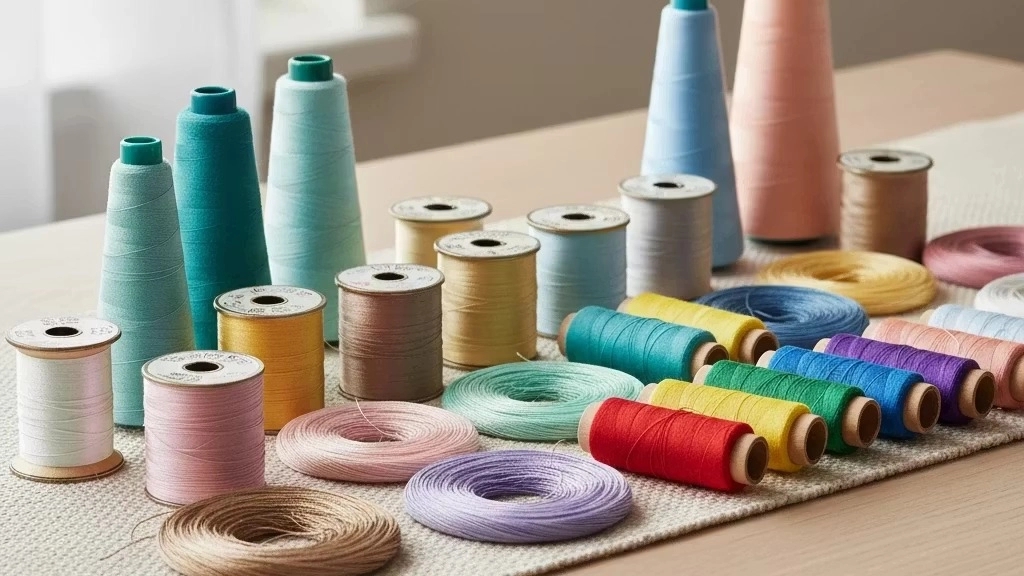
- Polyester thread: This thread is the most common and versatile sewing thread in the market. Due to its high strength, excellent durability, resistance to mold and rot, and some elasticity, it is ideal for a wide range of fabrics, including synthetic, stretch and blended fabrics. In Kharazi Rainbow, you can find a unique color range of this widely used sewing thread.
- Cotton thread: This thread is made of natural cotton fibers and has very little elasticity. For this reason, it is the best option for fabrics made of natural fibers such as linen and pure cotton. Mercerized cotton threads are made more shiny and stronger through a chemical process. This thread is also very popular for quilting.
- Silk thread: Silk thread, a luxury sewing thread, is very strong and yet delicate. Due to its high flexibility, it easily sinks into the fabric and does not leave a hole. This feature makes it ideal for sewing very delicate and delicate fabrics such as silk and wool. It is also widely used in custom sewing and hand embroidery.
- Nylon thread: This thread is known for its extremely high strength and durability. It is usually used for sewing heavy fabrics and projects that require high resistance, such as tents, sofa covers, leather and vinyl.
- Combined threads (Blends): Some threads, such as Cotton-Wrapped Polyester thread, combine the characteristics of both fibers; The strength of polyester in the core and the matte appearance and the ability to easily sew cotton in the cover.
2. Thread Weight: How to read it?
Thickness or weight of thread is indicated by a number (such as 40wt or 50wt). Contrary to popular belief, the larger this number, the thinner the thread.
- Heavy-Duty Thread: Lower numbers like 30wt or 12wt. Used for topstitching, denim stitching and thick fabrics.
- All-Purpose Thread: Usually 40wt or 50wt. This thickness is suitable for most general sewing projects.
- Fine: Higher numbers like 60wt to 80wt. It is used for silk and thin fabrics, invisible stitches and also as an under thread in the embroidery wheel.
Choosing sewing thread with the right thickness will ensure that your stitching looks neither too prominent nor too weak.
A specialized guide to types of sewing thread and their uses
Now that we've covered the basics, let's take a closer look at the specialty yarn types available in Rainbow Yarn.
All-Purpose Thread: Every tailor's best friend
This sewing thread, usually made of medium weight (40-50wt) polyester or blend, is a great starting point for any seamstress. As the name suggests, it can be used for a wide variety of fabrics and projects, from sewing clothes to simple repairs. Having a set of basic colors of this thread in your sewing box is essential.
Serger/Overlocker Thread: Clean and professional sewing
If you use an overlock wheel, you need overlock thread. These threads are usually thinner than regular threads and come on large, cone-shaped spools, because the head sewing machine works at very high speed using multiple threads at the same time. Choosing high-quality sewing thread is very important for head sewing, because poor-quality, linty threads can quickly cause problems for your expensive machine. At Kharazi Rangin Kaman, we offer a variety of embroidery threads in various colors and of the best quality so that the inner seams of your clothes are clean and professional. [Link to the category page of Sardoz yarn]
Embroidery Thread: Shine and beauty in every stitch
Embroidery thread is designed for decorative rather than structural stitches. These threads have high shine and polish to give your design an eye-catching effect. Its two main types are:
- Rayon embroidery thread: has a very high luster and soft texture.
- Polyester embroidery thread: It is a little more resistant than rayon and its color remains stable against washing with bleaching agents.
In addition to these, metallic, silk and variegated threads are also used to create special effects in embroidery. The Rainbow Embroidery Embroidery Thread collection brings a world of color and sparkle to your art projects. [Link to embroidery thread classification page]
Thick embroidery thread (Topstitching Thread): outstanding and strong stitches
This sewing thread is thicker and stronger than all-purpose thread and is used to create decorative and visible seams on clothing, such as jeans seams, jacket collars or bag edges. To use this thread, you must use a special needle for thick embroidery (Topstitch Needle) with a larger eye so that the thread can easily pass through it.
Key tips in choosing the best sewing thread for your project
With all this information, how to make the best decision? Follow these few simple rules:
- Coordinate fabric fibers with yarn fibers: Use natural yarn (cotton) for natural fabrics and synthetic yarn (polyester) for synthetic fabrics.
- Coordinate fabric weight with yarn weight: Delicate fabrics require fine yarn and heavy fabrics require heavy yarn.
- Choose the right color: For sewing seams, choose a color that is a or two degrees darker than your fabric; Because the thread on the fabric looks brighter. For decorative stitching, you can use a contrasting color.
- Never sacrifice quality for price: Choosing cheap and low-quality sewing thread will end up costing you more by causing technical problems and shortening the life of the project.
Why trust Kharazi Ranginkaman to buy sewing thread?
At Rangin Kaman Kharazi, we consider sewing thread not just a commodity, but the main tool of expressing your creativity. This is why our customers trust us to select their sewing thread:
- Unparalleled Variety: We have put together a complete collection of Sewing Threads. From embroidery thread and embroidery thread to specialized leather embroidery threads, everything is available in one place.
- Superior quality: We only work with reputable and well-known brands to ensure that every spool of thread you buy from us performs the best in your sewing machine.
- Knowledge and Expertise: Our team is ready to help you choose the ideal sewing thread for your project, from a simple stitch to a complex embroidery, by providing expert advice.
- Easy access: Whether you are looking to shop in person in the beautiful city of Yazd or online through our website, we guarantee you a convenient and enjoyable experience.
final word
Choosing the right sewing thread is a smart investment in the quality, durability and beauty of your work. By understanding the differences between yarn types and their uses, you can begin your projects with more confidence and achieve professional results.
We invite you to visit Kharazi Rainbow, both in person and online, and discover the wonderful world of our high-quality yarns. Let us be with you in bringing your creative ideas to life by providing the best tools; Tune by tune, until reaching a masterpiece.