
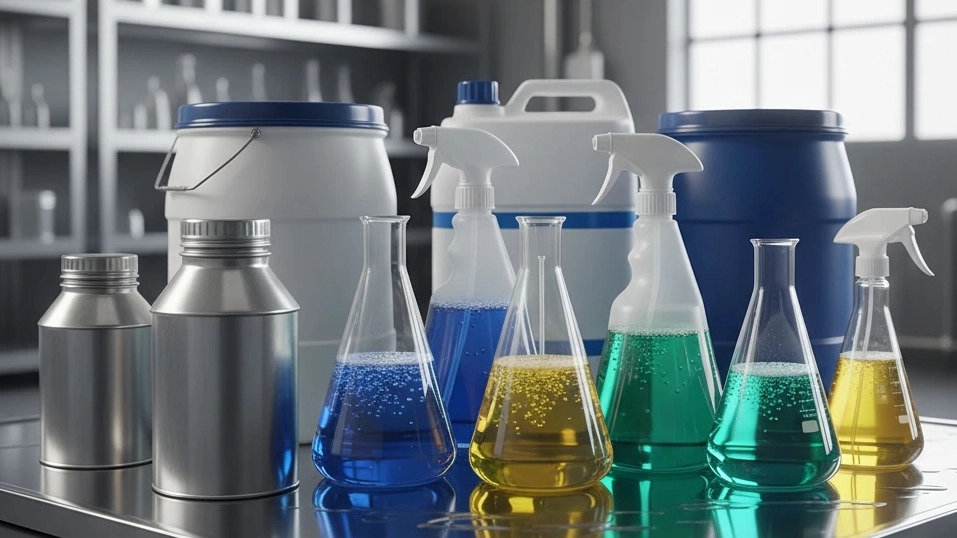

Cleaning production lines is very important in various industries, from food and pharmaceutical industries to petrochemical and automobile manufacturing. One of the key factors in this process is choosing the right industrial detergent. Depending on the type of chemical compounds, industrial detergents are divided into two main categories: acidic industrial detergent and alkaline industrial detergent. Each of these detergents has its own characteristics, uses, and benefits, and knowing their differences is critical to cleaning production lines. By providing standard industrial detergents and specialized consulting services, Timo Pak helps industries to clean their production lines with maximum efficiency and safety.
The importance of choosing the right industrial detergent for production lines
Production lines in factories and workshops are exposed to all kinds of pollution. These contaminants can include oil, grease, mineral deposits, chemicals, and microbial contamination. Using the right industrial detergent causes:
- Maintain the quality of the final product
- Increase the life of equipment and machinery
- Reduce sudden stoppages of the production line
- Have a safe and hygienic work environment
The right choice between acidic and alkaline industrial detergent can make a big difference in cleaning efficiency and equipment health.
Acid industrial detergent: characteristics and applications
Acidic industrial detergent contains compounds with a pH lower than 7, which have the ability to dissolve mineral deposits, lime and oxides. This type of detergent is very effective for cleaning production lines that face hard water, calcareous deposits or rust.
Characteristics of acid detergent
- High power in dissolving mineral and calcareous deposits
- Ability to clean rust and metal oxides
- Suitable for acid-resistant steel and metal equipment
Applications of acidic industrial detergent
Using acidic industrial detergents from Timo Pak makes the production lines clean in a professional and standard way and the equipment has a longer life.
Alkaline industrial detergent: characteristics and applications
Features of alkaline detergent
- High power in dissolving fats and oils
- Ability to remove protein contaminants and food residues
- Suitable for surfaces resistant to alkalis
Alkaline industrial detergent applications
- Food and beverage industries: cleaning packaging lines, tanks and production equipment
- Automotive and metalworking industries: cleaning grease, oil and industrial oils from machinery
- Pharmaceutical industries: disinfection and cleaning of production equipment
Using Tymo Pak alkaline industrial detergents makes the production lines remain completely clean and hygienic without damaging the equipment.
Comparison of acid and alkaline detergent performance
To better understand the difference between acid and alkaline industrial detergents, it is necessary to pay attention to the following points:
- Contaminant type: Acid detergent is effective for mineral deposits and rust, while alkaline detergent works best for fats and oils.
- Compatibility with equipment: Acid detergent is suitable for acid-resistant metals, while alkaline detergent is recommended for alkali-resistant surfaces.
- Cleaning effect: Each detergent depends on the chemical composition. itself, has a greater effect on a certain type of pollution, and the right choice increases productivity and reduces maintenance costs.
By offering a wide range of acidic and alkaline industrial detergents, Timo Pak allows Tehran industries to choose the right product for any type of production line.
Advantages of using standard industrial detergent
Using a standard industrial detergent, whether acidic or alkaline, has several advantages:
- Increasing equipment life and reducing maintenance costs
- Increasing production efficiency by reducing production line stops
- Maintaining the quality of final products and preventing microbial contamination
- Complying with safety and environmental standards
Timo Pak ensures that production lines are professionally cleaned by providing standard industrial detergents and specialized consulting services.
Important points in choosing industrial detergent for production lines
In order to buy and optimally use industrial detergent, several key points should be considered:
- Knowing the type of pollution: Before choosing a detergent, it should be determined whether the pollution is fat or mineral deposits.
- Compatibility with equipment: The detergent must be compatible with the type of equipment and machinery so as not to cause damage.
- Product safety and standardization: The detergent must comply with national and international standards. The detergent according to the instructions gives the best results.
Timo Pak's expert advice helps industries to choose the right detergent for their production lines and perform optimally by following the instructions.
Safety in using industrial detergents
Acidic and alkaline industrial detergents require special safety precautions because of their high chemical power:
- Using gloves, goggles and protective clothing
- Proper ventilation when using detergents
- Keeping products in a dry and cool environment, out of the reach of children
- Exactly observing the dosage and contact time according to the manufacturer's instructions
Timo Pak ensures that the use of industrial detergent is both safe and effective by providing usage and safety guidelines.
The effect of industrial detergent on the productivity of production lines
Choosing the right detergent has a direct effect on the productivity and quality of production lines. Thorough and accurate cleaning of equipment reduces breakdowns, increases production speed, and maintains product quality. The use of Timo Pak standard industrial detergents enables factories and workshops in Tehran to manage their production lines optimally and continuously.
Environmental importance of industrial detergents
conclusion
The right choice between acidic and alkaline industrial detergent for production lines is a key factor in improving performance, increasing equipment life and maintaining product quality. Each of these detergents is suitable for a specific type of contamination, and knowing the differences will help industries get the best results from cleaning their production lines.