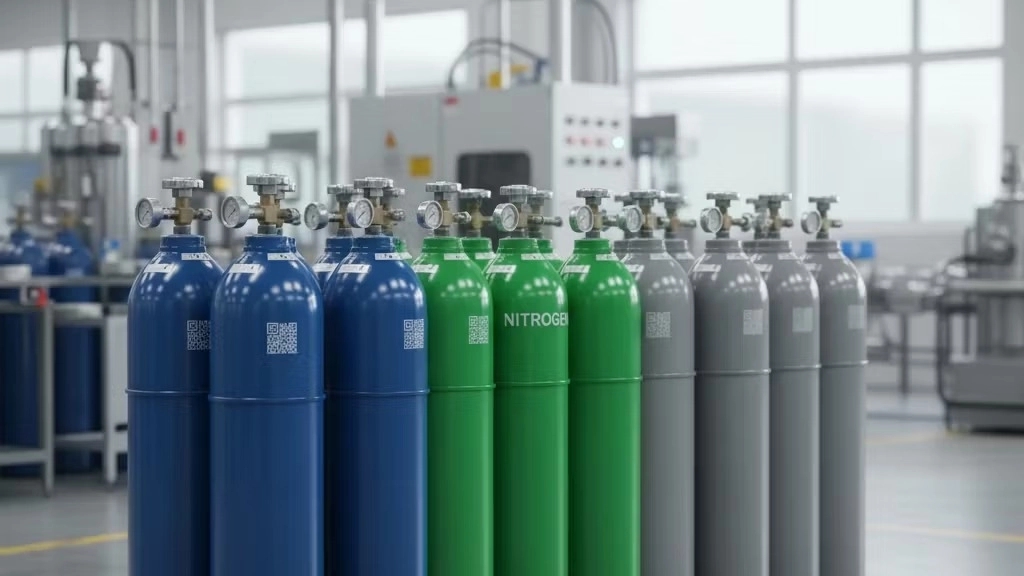
In the world of medical devices, especially those that deal with human lives, nothing is more important than trust. An oxygen cylinder is not just a metal tank; Rather, it is the vital capsule that gives breath to patients. For this reason, the slightest negligence in the production process, quality control or its charging can have irreparable consequences. At Oxygen Capsule 313, we deeply understand this responsibility and base all our processes on the strictest quality and safety standards. This article is not only an introduction to our products, but a full clarification of our commitment to your health and peace of mind.
Why are quality and safety standards critical in oxygen cylinders?
To understand the importance of this issue, we need to understand the nature of a compressed gas cylinder. These tanks hold oxygen gas with a pressure of about 150 to 200 times the atmospheric pressure. This high pressure stores a huge energy potential in the cylinder. Any weakness in the body structure, improper welding (in non-standard cylinders) or defects in the valve can lead to leakage or in the worst case, explosion.
In addition to the physical danger, the quality of the contents of the cylinder is equally important. Quality and safety standards ensure that:
- Oxygen purity: The oxygen delivered to the patient should be medical grade (Medical Grade) with a purity of over 99% and there should be no pollution or moisture that is harmful to the respiratory system.
- Structural integrity: The cylinder body should be able to withstand high pressures and possible shocks and not suffer corrosion or premature wear over time.
- The correct operation of the valve and Connections: The valve should open and close properly, there should be no leakage, and the regulator (manometer) should be securely installed on it.
At oxygen capsule 313, compliance with these standards is not an option, but the cornerstone of our existence.
The cornerstone of quality in oxygen capsule 313: from raw materials to the final product
A safe and standard cylinder is the result of a precise and controlled production process. At Oxygen Capsule 313, we fully oversee every step of the process to ensure that every cylinder that bears our name is worthy of your trust.
1. Choosing a steel alloy: the first step in ensuring safety
Everything starts with the selection of raw materials. We use high quality seamless steel alloy to manufacture our cylinders, which are manufactured according to international standards such as ISO 9809. These alloys are specifically designed to withstand high pressure, tensile and crack prevention. This selection is the first and most important step in guaranteeing quality standards and cylinder safety.
2. Seamless production process and its importance
Unlike welded cylinders, which have seams and are considered a potential weakness, production cylinders oxygen capsule 313 are manufactured in an integral manner. In this process, a cylindrical steel billet is formed under very high heat and pressure, without any welding or seams, into the final shape of the cylinder. This technology guarantees that the cylinder body has a completely homogeneous and resistant structure in all places, and the risk of leakage or bursting from the welding seam is zero.
3. Precise control of body thickness: shield against pressure
One of the most critical parameters in oxygen cylinder safety is the uniform thickness of its wall. In our production line, body thickness is carefully controlled at all points of the cylinder using ultrasonic measuring devices to ensure that no point is thinner than standard. This precise control guarantees the resistance of the cylinder against working pressure and test pressures.
Test protocols and quality control tests in oxygen capsules 313
Production of a high-quality cylinder is a part of work; Proof of quality is another part. Every cylinder that is produced in the 313 oxygen capsule series must pass a series of rigorous tests in order to receive permission to leave the factory. These tests are proof of our commitment to quality and safety standards.
1. Hydrostatic Testing: The final test of resistance
This is the most important and well-known test to measure the structural health of a cylinder. In this test:
- The cylinder is deflated and completely filled with water.
- It is then subjected to a pressure equal to 1.5 to 1.66 times its working pressure (for example, a cylinder with a working pressure of 150 bar is tested to 250 bar).
- During this process, the volumetric expansion of the cylinder is carefully measured.
A standard cylinder should not show any leakage and after depressurization, its permanent expansion should be less than the standard limit. This test ensures that the cylinder has the ability to withstand very high pressures without permanent deformation or bursting.
2. Non-Destructive Testing (NDT - Non-Destructive Testing)
In addition to hydrostatic testing, we also use other methods to identify possible defects that are not visible to the eye. Ultrasonic Testing (UT) to detect any cracks or discontinuities deep in the metal wall and Magnetic Particle Testing (MPI) to find surface cracks are part of our quality control protocols. This multi-layered approach raises the quality and safety standards of 313 oxygen capsule production cylinders to a higher level.
3. Close visual inspection: the details that make the difference
Before and after each test, each cylinder is visually inspected by experienced quality inspectors. This inspection includes a close inspection of the throat threads, checking the internal and external surface for any corrosion, deep scratches or structural defects. This step ensures that even the smallest details are not overlooked.
4. Valve quality control and fittings: cylinder safety gate
A durable body is worthless without a safe and standard valve. The valves installed on the cylinders of oxygen capsule 313 are made of high quality brass alloy and have a safety valve to discharge the gas in a controlled manner in case of a sudden increase in pressure and prevent explosion. All valves are tested for functionality and leakage before installation.
Beyond production: safety standards in charging and handling
Our commitment to quality and safety standards does not end with the sale of the product. The process of charging and after-sales service is also done with the same precision and obsession.
Ensuring the purity of medical oxygen
We guarantee that all medical cylinders are charged with medical grade oxygen with a purity above 99.5%. Our pumps and charging lines are regularly inspected to prevent any moisture, oil or other contaminants from entering the cylinder. This is vital for the health of respiratory patients who need clean and pure air.
Periodic inspections and the importance of test dates
According to the standard, every compressed gas cylinder must be hydrostatically tested again every 3 to 5 years. We at Oxygen Capsule 313 strictly adhere to this rule and inform our customers about the importance of their next cylinder test date. Buying from us means receiving a cylinder with a valid and new test date.
How to identify a standard 313 oxygen capsule cylinder?
Transparency is part of our commitment. Each standard cylinder has specifications engraved on its throat. By knowing these signs, you can also evaluate the quality and safety of the product:
- Manufacturer's name or mark: Engraving of the name Oxygen Capsule 313.
- Serial number: A unique code to track the cylinder.
- Working Pressure: Usually indicated by WP or PW (e.g. 150 BAR).
- Test Pressure: Usually by TP or PT is specified (for example, 250 BAR).
- Date of the first hydrostatic test: This date indicates the time of cylinder manufacture.
- Date of subsequent tests: Beside the initial date, the date of subsequent periodic inspections is also engraved.
- Tare Weight of the cylinder: Weight of the capsule without gas.
Getting familiar with these specifications will help you use a standard and safe product with confidence.
Conclusion: 313 oxygen capsule, a choice based on trust and safety
In the turbulent medical equipment market, choosing a safe and standard product can be challenging. But when health and life are at stake, there is no room for risk. quality and safety standards in production cylinders of oxygen capsule 313 is not just an advertising slogan; Rather, it is our existential philosophy and main policy in all stages, from the selection of the primary alloy to the delivery of the product to your hands and after-sales service.
By adhering to the most stringent manufacturing and testing protocols, we assure you that you are receiving a product that exceeds common standards. A product that you can use for your loved ones with complete peace of mind.
To receive expert advice on the quality and safety standards of oxygen cylinders and to purchase a reliable product that guarantees your health and peace of mind, contact our experts at "Oxygen Capsule 313" today.