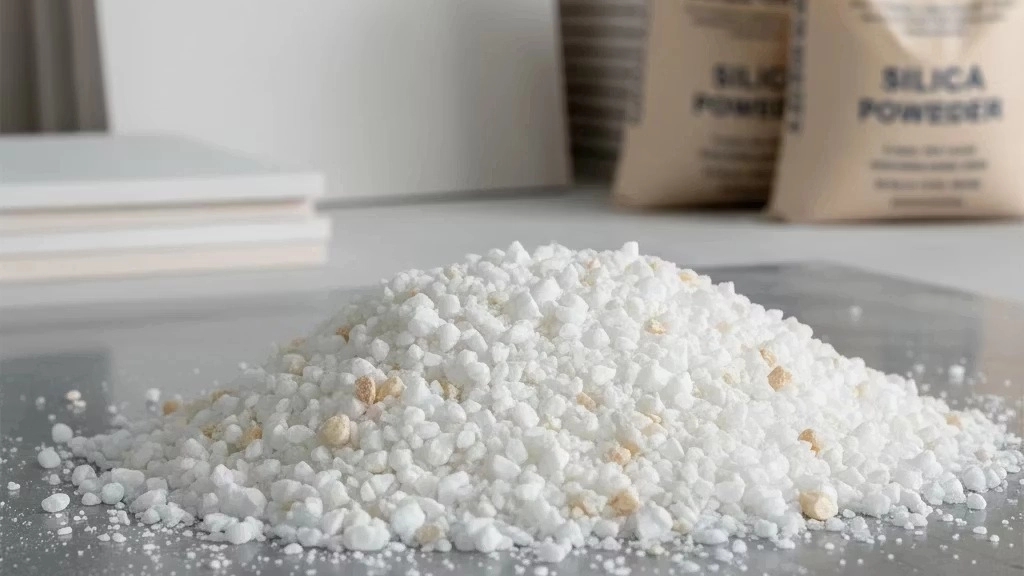
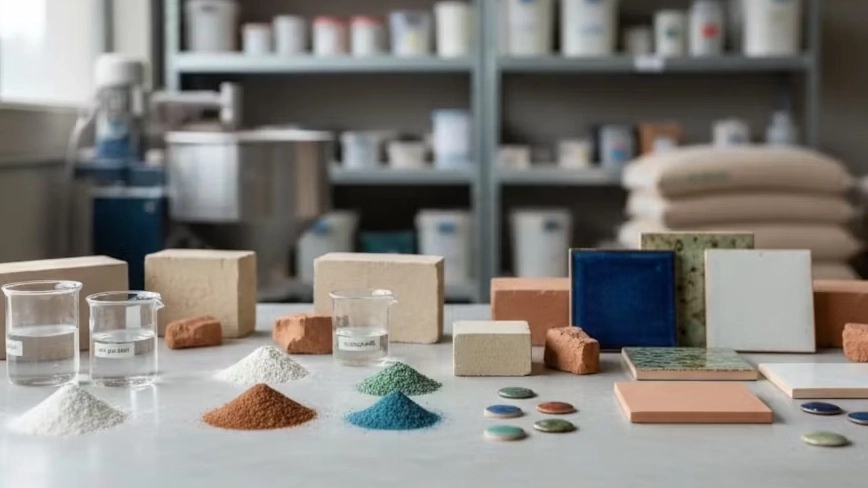

In the complex art and craft of glazing, each component of the formulation plays a vital role in achieving a flawless final product. From transparency and shine to resistance to cracking and wear, everything depends on the quality and precision of the raw materials. In the meantime, silica (SiO2) as the main "glass former" (Glass Former), forms the structural backbone of any glaze. However, not all silicas are created equal. The wrong choice can lead to disasters such as crazing, pinholing, dull surfaces and uneven texture. For this reason, this guide to buying granulated silica for the glaze industry has been compiled to help you, as a professional manufacturer, make the best choice for your production line with full knowledge and to guarantee the quality of your products with reliable business partners such as Ebrahimi Silica Factory.
This article is a technical and practical guide that shows you why "granulation" and "chemical purity" are two wings of success in choosing silica glaze and how you can carefully control these parameters.
The fundamental role of silica in glaze formulation: beyond a filler
Before dealing with the Buying guide for granulated silica for the glaze industry, we must have a deep understanding of the role of this material in the glaze melt. Silica is not just a filler; Rather, it is the main factor in the formation of the glass network, which, after cooling, creates a hard, resistant and shiny glaze surface.
- Formation of the glass structure: Silica is melted at high temperature and creates an amorphous (non-crystalline) three-dimensional network. This structure determines the chemical and mechanical resistance of the glaze.
- Coefficient of Thermal Expansion (CTE) control: Matching the CTE of the glaze with the ceramic body is essential to prevent cracking. Silica is one of the main tools for adjusting this coefficient.
- Increasing hardness and abrasion resistance: High percentage of silica leads to a harder glaze, which is vital for applications such as floor tiles.
- Effect on melting point and viscosity: Silica has a high melting temperature and helps control the viscosity of the glaze melt so that it melts during firing. Don't do it.
Why granular is the most important keyword in buying glazed silica?
When it comes to purchasing granulated silica for glazing industry, the word "granulation" becomes extremely important. The size of silica particles directly affects the kinetics (speed) of reactions in the melt and the quality of the final surface.
Understanding mesh and micron concepts: the common language of the industry
- Mesh: This unit refers to the number of holes in one square inch of a standard mesh. The higher the mesh number, the finer the particles passing through it. For example, 200 mesh silica is much finer than 100 mesh silica.
- Micron: A micron is a direct measurement of particle diameter (each micron is one thousandth of a millimeter). This unit is finer than mesh, especially for very fine (micronized) powders.
At Ebrahimi Silica Factory, we are able to produce silica with very precise particle size distribution (PSD) according to customer needs, from standard meshes to micronized powders below 20 microns, using advanced Serand equipment and Air Classifiers.
Direct effect of particle size on glaze quality
- Melting speed and homogeneity: Smaller particles have more contact surface and dissolve faster in the melt. This helps to create a homogeneous and uniform glaze and prevents remaining undissolved particles that cause turbidity or roughness of the surface.
- Quality of the final surface: Using silica with coarse particles can lead to the creation of a rough and "sandy" surface. To achieve transparent and glossy glazes, the use of micronized and perfectly granulated silica is required. This point is of particular importance in the guide to buying granulated silica for the glaze industry.
- Suspension stability (glaze slurry): The size and distribution of silica particles affects the rheological properties of the glaze slurry and helps to prevent rapid sedimentation of the particles.
Chemical purity: the second pillar of intelligent choice
A Buying Guide for Granulated Silica for the Glazing Industry would not be complete without an emphasis on chemical analysis. Impurities in silica, even in very small amounts (ppm), can have detrimental effects on the color and clarity of the glaze.
Iron oxide (Fe2O3): the number one enemy of transparent and white glazes
The most important impurity you should pay attention to is iron oxide. This compound acts as a strong colorant and creates yellow, green or brown undertones in the glaze. To produce transparent glazes, snow white or light pastel colors, the amount of Fe2O3 should be as low as possible (preferably below 0.02%).
Ebrahimi Silica Factory by utilizing the premium white silica mines of Malair and advanced magnetic separation processes, produces silica with minimal iron oxide, which is ideal for the most sensitive applications of the glazing industry.
Other impurities: titanium and aluminum oxide
- Titanium oxide (TiO2): This impurity can cause a cream or yellow color in the glaze and affect its opacities.
- Aluminum oxide (Al2O3): Although alumina itself is a component of the glaze, its uncontrolled introduction through silica can disrupt the formulation and affect melting temperature and viscosity. put it.
Providing a valid Certificate of Analysis by the supplier is a requirement. This document should clearly specify the purity percentage of SiO2 and the amount of all key impurities.
Ebrahimi Silica Factory: Your specialized solution for the glazing industry
So far Buying guide for granulated silica for the glazing industry, we got to know the technical specifications of an ideal product. Now the question is how to achieve such a product with stable quality? The answer is to choose an expert and committed manufacturer. Ebrahimi Silica Factory distinguishes itself from other suppliers by focusing specifically on the needs of the glazing industry.
Advanced processing technology for precise granulation
We don't just stop at the initial cut. Our production lines are equipped with ball mills for micronization and air classifier systems for separating particles by size with micron accuracy. This technology allows us to produce a product with a very narrow particle size distribution (Narrow PSD), which is critical to the homogeneity and quality of your glaze.
Strict quality control in every production batch
Quality is a process for us, not a goal.
- Sampling of the mine: Selection of mineral veins with the highest purity.
- In-process control: Continuous monitoring of the operation of the mills and mills.
- Final analysis in the laboratory: Each production batch is tested by XRF machine for chemical analysis and laser particle size analyzer to confirm granulation. This commitment to quality reduces your risk to zero.
Technical advice before purchase
Our team consists of experts who understand the language of the glazing industry. Before presenting the product, we discuss with you the type of glaze (transparent, opaque, effect), baking temperature and application method (spray, immersion) and offer you the most accurate and economical grade of silica. This is part of our service in the process of purchasing granulated silica for glazing industry.
A practical checklist for professional buyers of glazed silica
We conclude this Glass Industry Granulated Silica Buying Guide with a handy checklist so you don't miss anything when evaluating suppliers:
- Ask for a Technical Data Sheet (TDS): This document should include typical chemical analysis and physical specifications such as particle size (mesh or micron), whiteness and density.
- Ask for a CoA: Make sure the analysis is specific to the batch being shipped to you.
- Ask for a sample for lab testing: Before buying at High volume, receive a sample and test it in your formulation to ensure full compatibility.
- Ask about packaging: Make sure the product comes in clean, sturdy, moisture-proof packaging (such as laminated jumbo bags) to prevent contamination during shipping.
- Check the supplier's track record in the glaze industry: With a specialist manufacturer such as Work at Ebrahimi Silica Factory which understands the exact challenges and needs of this industry.
Conclusion: Investing in quality is the only way to success
Choosing silica for the glazing industry is not a simple purchase, but a direct investment in the quality, reliability and profitability of your business. A flawless, sparkling glaze is the first thing your customer sees and touches, and that quality starts with the micronized silica particles. We hope that this guide to buying granulated silica for the glazing industry has helped you make an informed decision.
Ebrahimi Silica Factory combines Iran's richest silica mines, advanced processing technology and unconditional commitment to quality, and is ready to provide the most stable and high-quality silica needed by the glazing industry as your technical and business partner. To receive expert advice, sample requests and price inquiries, contact us today and experience the difference of working with an expert.