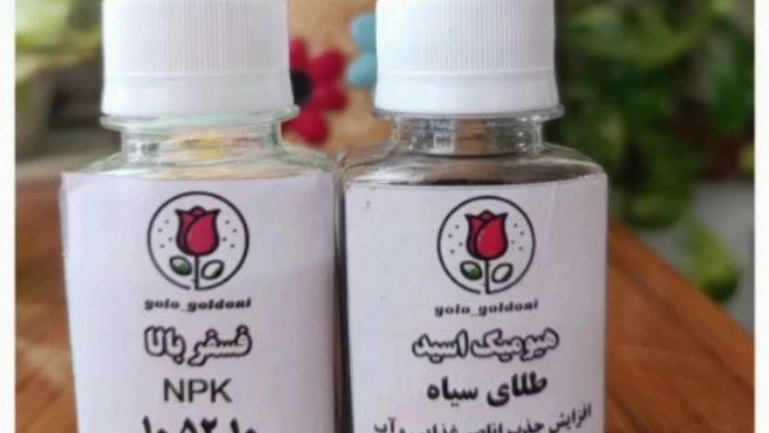



Have you ever wondered why some apartment or garden flowers do not have the expected freshness and beauty despite regular watering and sufficient light? The secret of this freshness often lies in proper nutrition. The right time to use fertilizer for flowers is one of the most vital factors in gardening and plant maintenance, which unfortunately many flower and plant enthusiasts ignore. Just as humans need vitamins for growth and health, plants also need nutrients for flowering and vegetative growth. In this article from the flower shop's specialized blog, we will deeply examine the most accurate timings, the signs of the need for fertilizer and the correct methods of feeding plants. If you want to have lively and flowering plants, stay with us until the end of this article.
The importance of nutrition and fertilization in plant health
Before going to the right time to use fertilizer for flowers, we should know why plants need fertilizer at all. Unlike soil in nature, the soil in pots is limited. After some time, the plant consumes all the nutrients in this limited soil, and if these substances are not replaced, the plant suffers from malnutrition. Understanding the importance of nutrition is the first step to determine the best fertilization time.
Plants need elements such as nitrogen (for leaf growth), phosphorus (for rooting and flowering), and potassium (for overall health and plant resistance) to carry out photosynthesis, build new cells, resist pests and diseases, and most importantly produce flowers. Without knowing the right time to use fertilizer for flowers, you may fertilize the plant right when it is hibernating and cause shock and even death. Our experts at Gol and Guldoni store always recommend that you follow fertilizing not as an aimless routine, but as a detailed food plan.
When is the best season to fertilize flowers?
When it comes to the right time to use fertilizer for flowers, the seasons play a decisive role. Like many living organisms, plants also have cycles of activity and rest.
1. Spring: the beginning of awakening and the best time to start
Spring is undoubtedly the best time to use fertilizer for flowers. In this season, as the day length increases and the weather warms up, plants wake up from winter sleep and begin to grow vegetatively. The plant's need for energy is at its peak at this time. Starting fertilization from the beginning of April provides the necessary fuel for the rapid growth of leaves and buds. If you use specialized products from the flower shop, fertilizers with a higher nitrogen percentage are recommended in early spring.
2. Summer: continuation of growth and flowering
Summer is the season of stability. In this season, many plants are flowering or bearing fruit. Therefore, the continuation of fertilizing in summer is also one of the right times to use fertilizer for flowers. However, it should be noted that in very hot summer days (such as mid-August), it is better to slightly reduce the fertilizer concentration or increase the fertilization intervals so that the roots of the plant do not get burned.
3. Autumn: preparing for sleep
As the weather gets colder and the days get shorter in autumn, the growth rate of plants slows down. The right time to use fertilizer for flowers in autumn should be chosen carefully. It is usually recommended to gradually reduce fertilization in early fall and stop completely by the middle of the season (late October or early November). The goal here is not to encourage new growth, as fresh, thin leaves will be vulnerable to winter cold.
4. Winter: rest time, prohibition of fertilization
Winter is generally not the right time to use fertilizer for flowers. Most houseplants and garden plants enter the period of stagnation or sleep in this season. The root system has little activity and cannot absorb nutrients. Accumulation of fertilizer in the soil while the plant does not consume it, causes soil salinity and plant poisoning. The only exception is for winter-flowering plants (such as cyclamen or Bent Qansol), which must be fed according to their specific instructions.
Signs that your plant needs fertilizer
In addition to the seasonal calendar, the plant itself also talks to you. Recognizing these signs will help you find the most accurate time to use fertilizer for flowers.
- Slow or stunted growth: If it's spring or summer and your plant isn't growing new, the soil is probably impoverished.
- Leaf discoloration: Pale green leaves or yellowing of the lower leaves is usually a sign of nitrogen deficiency. This is one of the most obvious signs to know when it's time to fertilize your flowers. Shrinking new leaves: If the new leaves are not growing as fast as the old leaves, the plant needs to be strengthened. Dropping flowers or no flowering: If your flowering plant does not flower or the buds drop before they open, it probably has a phosphorus or potassium deficiency. Weak and thin stems: Stems that do not have the ability to hold leaves scream that it is time to apply fertilizer for flowers.
At Gol and Goledoni store, we have categorized liquid and solid fertilizers according to these symptoms so that you can easily solve your plant's problem.
Types of fertilizers and time to use each one
Choosing the type of fertilizer is as important as knowing the right time to use fertilizer for flowers. Fertilizers are divided into two general categories, chemical and organic, and each has its own usage time.
Liquid fertilizers
Liquid fertilizers are fast absorbing. As soon as they are added to the soil, the roots can absorb them. Therefore, the right time to use fertilizer for flowers in liquid form is when the plant is at the peak of growth or shows signs of severe deficiency and needs immediate treatment. They are usually used every two weeks during the growing season (spring and summer).
Granular fertilizers (slow release)
Organic fertilizers (animal and compost)
Decomposed animal manures or vermicomposts improve the soil structure in addition to nutrition. The best time to use organic fertilizer for flowers is late winter (when changing the potting soil) or early spring to mix with garden soil.
The correct principles of fertilization: how to fertilize?
Knowing the right time to use fertilizer for flowers is only half of the way; The other half is doing it the right way. A mistake in the way of fertilizing can be as dangerous as fertilizing at the wrong time.
- Watering before fertilizing: Never fertilize completely dry soil. This can burn the roots. The best way is to water the plant a few hours before fertilizing so that the soil is moist.
- Dosage compliance: Always read the instructions on the fertilizer package. There is a misconception that "the more, the better". But in reality, using too much, even at the right time to use fertilizer for flowers, causes plant poisoning.
- Avoid contact with leaves: try not to pour the fertilizer solution on the leaves (unless it is a foliar fertilizer), because it will cause burn spots on the leaves.
- Cool hours of the day: the best time to fertilize is early morning or evening. Avoid fertilizing during hot afternoon hours when evaporation is high.
Common mistakes in determining the time of fertilization
Even experienced gardeners sometimes make mistakes in recognizing the right time to use fertilizer for flowers. Let's examine some of these mistakes so that you don't fall into them.
- Fertilizing a sick plant: If your plant has a pest or fungal disease, fertilizing it is like giving heavy food to a sick person. Treat the disease first, then think about nutrition. In such a situation, there is no good time to apply fertilizer to flowers until the plant has recovered.
- Fertilize immediately after repotting: When you change the potting soil, the new soil usually contains nutrients. In addition, the roots are stressed due to displacement. Wait at least one to two months after changing the pot. This is a point that we always remind customers of the flower shop when buying soil and pots.
- Ignoring the difference between plants: cacti need much less fertilizer than seasonal flowers or petus. The right time to use flower fertilizer for cacti is maybe only two or three times a year, while for geraniums it is once every two weeks.
Suggested schedule for different types of plants
To get a better understanding of when to apply fertilizer to flowers, let's take a look at the specific needs of different plant groups.
leafy houseplants (such as petus, ficus, aglonema)
These plants need nitrogen to keep their green and shiny leaves. The proper time to use fertilizer for leafy flowers is from April to late September, every two weeks with complete fertilizer (like 20-20-20). Stop fertilizing in autumn and winter.
Flowering plants (such as African violets, anthuriums, orchids)
Cacti and succulents
These plants are low expectations. The right time to use fertilizer for succulents and cacti is only during the growing season (spring and early summer). Use low-nitrogen and high-potassium fertilizers to keep the plant tissue firm and resistant. Too much fertilization causes the tissue of the cactus to crack.
Effect of light and temperature on fertilizer absorption
Did you know that the amount of ambient light affects the right time to use fertilizer for flowers? Plants that are kept in low light have less photosynthesis and therefore consume less food. For these plants, you should increase the fertilization intervals. On the contrary, plants that are in ideal light grow faster and need more fertilizer.
Temperature is also an important factor. At very low (below 10 degrees) or very high (above 30 degrees) temperatures, root activity is disturbed. So, even if you are in the spring and a sudden cold snap comes, that day is not the right time to apply fertilizer to flowers. Wait until the temperature is balanced.
The role of micronutrients in fertilization program
In addition to the main elements (NPK), plants also need micronutrients such as iron, magnesium, zinc and calcium. Iron deficiency causing yellowing of young leaves is very common. The right time to use fertilizer for flowers containing iron (iron fertilizer) is usually in the middle of the growing season when the plant shows signs of chlorosis (yellowing). Many of the complete fertilizers available in the flower shop contain adequate amounts of micronutrients so that you don't have to worry about minor deficiencies.
Natural and domestic fertilization: myth or reality?
Many people use coffee grounds, egg shells or rice water as fertilizer. Although these substances can be useful, it is difficult to determine the exact time to apply fertilizer to flowers with these methods, and it may attract insects or cause unpleasant odors. The use of formulated and standard fertilizers that have a specific dose is less risky and gives a more reliable result. If you want to use homemade methods, be sure to compost them first.
Frequently asked questions about when to fertilize
No, Hassan Youssef grows little in winter and fertilization causes the stems to become long and grassy and the plant weak. The best time to use fertilizer for Hess Yusuf flowers is spring and summer.
If you miss a dose of fertilizing, never double the dose the next time. Return to your normal schedule. It is important to observe the order in the right time of using fertilizer for flowers, but excessive compensation is more dangerous.
Three twenty fertilizer (20-20-20) is suitable as a balanced fertilizer for most indoor plants. You can get the best brands of this fertilizer from Gol and Guldoni store.
conclusion
Knowing the right time to use fertilizer for flowers is the key to having a green garden and pots full of flowers. By observing the seasonal calendar (focusing on spring and summer), paying attention to the signs of the plant, and choosing the right fertilizer, you can ensure the health of your plants. Remember that plants are living organisms with varying needs and there is no one size fits all for all seasons. Careful observation and patience are your best tools on this path.
We at Gol and Guldoni store are committed to not only provide you with the best and highest quality fertilizers and enhancers, but also to help you maintain your plants better by providing expert advice. If you have any questions about the right time to use fertilizer for your specific flowers, our experts are ready to answer you. Visit our site today and give the gift of freshness to your home by purchasing the right products. Your plants deserve the best nutrition at the best time; Do not spare them.