
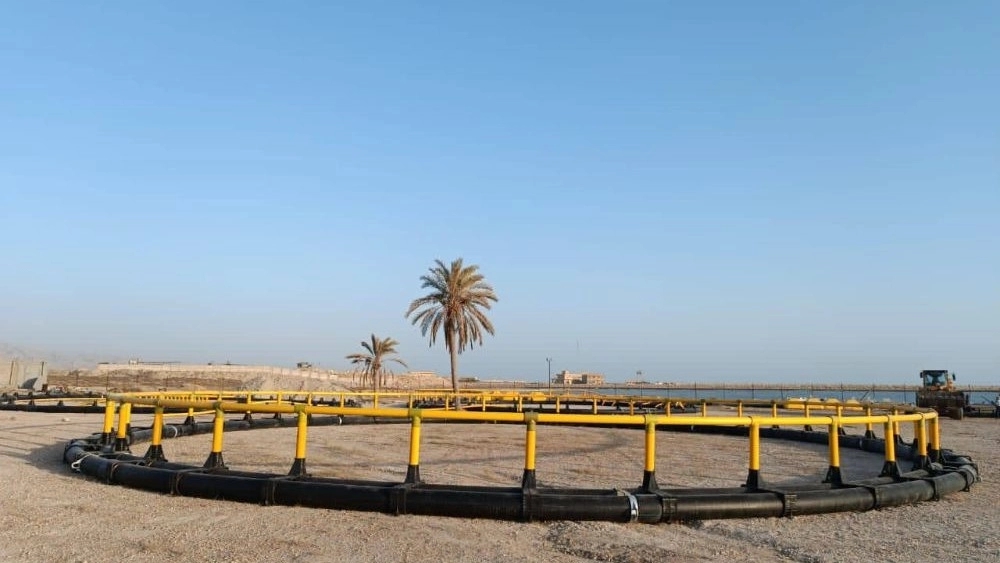


Exploratory plan for fish farming in cages 1402
Exploratory plan for breeding fish in cages is one of the most important steps in starting this business, which acts as a road map. In this article, we intend to introduce you to all the details of this briefing plan so that you can enter this industry with more confidence.
What is fish farming in a cage?
Fish breeding in cages is one of the new and popular methods in the fisheries industry, which has grown significantly in Iran in recent years. This method has attracted the attention of many fish farmers due to its many advantages, including high productivity, cost reduction, and optimal use of water resources. In this method, fish are kept in floating cages in open water and grow and breed in completely controlled conditions.
Why is an explanatory plan important?
A business plan is essential for any business, especially in the field of fish farming in cages. This plan is considered as a road map for the implementation of the project and includes all the financial, technical, and marketing information and analysis needed to start the work. In fact, the briefing plan will help you enter this business more accurately and confidently and face fewer challenges in the work process.
Next, in this article, you will learn how to set up a cage fish farming business plan with all the details and key points to successfully launch your business.
The main components of the briefing plan for fish farming in cages
1. General specifications of the project
In this part of the explanatory plan, you should state the general characteristics of your project, including the construction site, the type of fish to be raised, the production capacity, as well as the preliminary forecasts in terms of water and space resources. This basic information will draw the initial map of your project.
2. Market study and needs assessment
One of the important components in any justification plan is the analysis and investigation of the target market. You should determine the demand for farmed fish by researching and analyzing the fish market situation in the country and region. Also, you should be aware of competitors and market needs so that you can make better decisions in the future.
The most important goal of this section is to know the needs and requests of the market, which will help you to present your products properly.
3. Technical analysis and equipment selection
In this part of the briefing plan, the equipment needed for breeding fish in cages should be examined and selected. The main equipment includes floating cages, water purification systems, filters, oxygenation systems and fish feeding equipment. Choosing the right and up-to-date equipment can have a great impact on productivity and production quality.
For example, choosing cages with a structure resistant to weather conditions and hard water can prevent early failures and increase the useful life of the cages. It is also important to use advanced water purification systems to improve water quality and reduce maintenance costs.
4. Cost estimation and profitability forecast
One of the key parts in the justification plan is the estimation of initial costs and the forecast of profitability. You should estimate all costs, including equipment purchase costs, running costs (such as labor, food, energy, and maintenance costs), land lease or purchase costs, as well as the costs associated with issuing permits and obtaining legal documents.
According to these costs, you should make an accurate forecast of the profitability of the project. These predictions should be based on real analysis of the market and fish production rate. For example, if the amount of production in a certain period is known and the market is ready to accept these products, you can calculate your net profit based on the selling price of fish.
5. Analysis of risks and countermeasures
In this section, it is necessary to analyze the various risks that may arise in the process of breeding fish in cages. These risks may include adverse weather conditions, fish diseases, market fluctuations and price changes. For each of these risks, you must provide countermeasures and prevention solutions.
For example, advanced systems can be used to monitor fish health and control diseases. Also, to reduce atmospheric risks, resistant covers for cages can be used to prevent damage to fish from storms and strong waves.
6. Marketing and sales strategy
In this section, you should outline the marketing and sales strategies for your farm products. Choosing a target market, setting prices, promotional plans, and working with vendors and distributors are some of the things that should be covered in this section.
If your target market mainly consists of restaurants and wholesale markets, you need to develop proper advertising strategies to attract these types of customers. Also, checking the status of competitors and analyzing their strategies to determine competitive prices and attract customers is very important.
Different stages of fish breeding in cages
1. Research and investigation of water resources
The first step in the rationale for raising fish in cages is to check water resources and access to sufficient and healthy water. The sources of water that can help grow fish in cages should be identified and checked in terms of quality and quantity.
In this section, information about water temperature, oxygen level, pH and other water characteristics is collected. Based on this information, you can decide whether the existing resources are suitable for fish farming or need changes or modifications.
2. Selection and design of cages
In this part of the briefing plan, choosing the type of cages and their design is very important. Cages should be chosen that can easily be moved in water and at the same time are resistant to environmental damage such as storms and atmospheric fluctuations.
You should pay special attention to the size and depth of the cages. Cages should be designed in such a way that the fish grow in optimal conditions and avoid overcrowding.
3. Choosing the type of fish to breed
One of the important steps in the justification plan for breeding fish in cages is choosing the type of fish to breed. There are many different types of fish that are suitable for cage breeding, such as tropical fish, reef fish, or fish specifically designed for breeding in floating cage conditions.
You should choose the type of fish you want to raise based on the climatic conditions of the area, target market and production costs. Choosing the right type of fish can have a great impact on project costs and profitability.
4. Determining the workforce and management
At this stage of the feasibility plan, you should determine the labor required to raise fish in cages. It includes the number of employees, specialties and skills required for each part of the process.
Correct management of human resources and careful monitoring of the production process is of great importance. Your work team must be effectively coordinated so that all activities including fish care, feeding, health monitoring and water management are done properly.