In today's world, it is impossible to develop urban and civil infrastructure without access to high-quality stone materials. Sand production factories and stone mines are the beating heart of this industry. But what makes a hard mineral rock to become uniform and standard sand for concrete or asphalt? The answer lies in powerful and engineered equipment called shredders and granulators.
The correct choice of mining equipment not only has a direct impact on the quality of the final product, but also ensures the profitability and efficiency of the production line. In this comprehensive article, we in the Razzaq Jahannama stone crusher workshop collection are going to introduce you to zero to one hundred equipment of a stone crusher workshop. If you intend to launch or upgrade your product line, this article is your road map.
1. Shredding machines (the most basic equipment)
Crushing operation is the first and most vital step in mineral processing. At this stage, the huge stones extracted from the heart of the mountain are transformed into smaller sizes during different stages. Depending on the hardness of the stone and the dimensions of the desired inlet and outlet, different devices are used.
jaw crusher; The giant of the first stage
When it comes to the initial crushing of large stones, no other machine can match the Jaw Crusher. As its name suggests, this device has a function similar to the human jaw. The stones are placed between two plates (one fixed and the other moving) and are crushed under very high pressure.
Key Features of Jaw Crusher:
- Suitable for mines and workshops: This device is usually placed at the beginning of the production line to prepare the parent stones for the next steps.
- Suitable energy consumption and low depreciation: The simple but powerful design of this device has made its maintenance costs lower than other models. Its wearing parts are made of manganese steel, which have high resistance.
- High maneuverability: It has the ability to crush the hardest stones such as granite, quartz and basalt.
Cubit crusher (impact); Master of sand
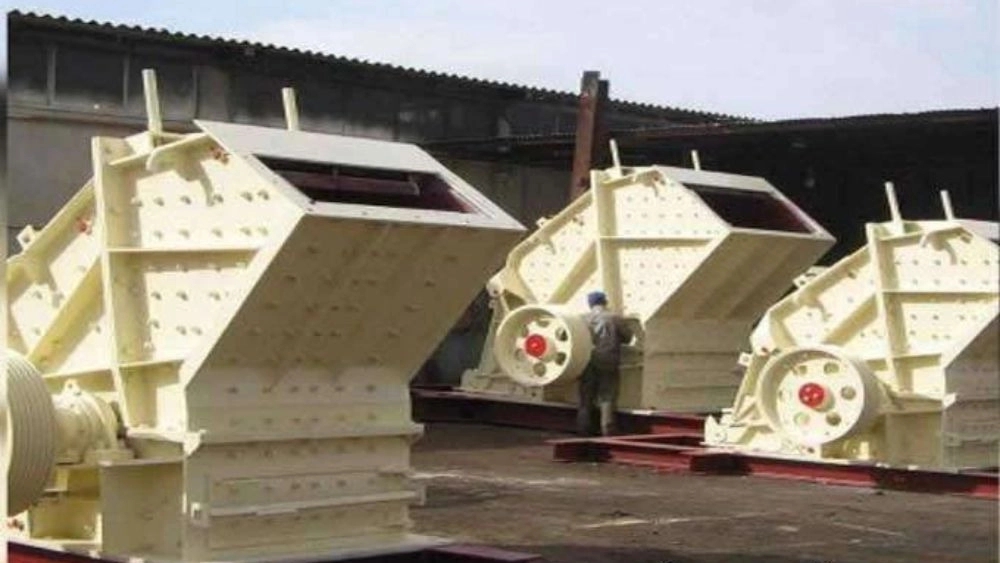
After the stones have shrunk a little in the first stage, it is time for secondary crushing. This is where Impact Crusher comes into play. The mechanism of action of this device is based on impact. The machine's rotor rotates at high speed and knocks the stones against the walls of the anvil.
Why is qubit widely used in urban workshops?
- Production of high quality sand: Stones coming out of Qubit have a polygonal and sharp shape, which is ideal for concrete and asphalt production.
- Grading adjustment: By adjusting the hammers and anvils, the output dimensions can be controlled. is.
cone crusher (hydrocone); Hard stone specialist
For secondary and even tertiary crushing of very hard and abrasive stones, cone crusher or hydrocon (Cone Crusher) is the best option. In this device, the cone-shaped core rotates inside the body, and by changing the distance between the core and the body (mantle and kankyo), the stones are crushed.
Advantages of using hydrocon:
- Uniform granulation: If you are looking for materials with uniform dimensions, Hydrocon will give you the best output.
- Suitable for high production: This machine has a very high production capacity and is vital for large factories.
- Hydraulic system: The presence of hydraulic systems in this machine ensures the adjustment of the output opening as well as the safety of the machine against the entry of hard objects (such as iron).
The technical team of Razzaq Jahannama Stone Crusher Workshop always recommends that before buying a stone crusher, you must analyze the hardness of your ore in order to choose the most suitable device.
2. Granulation machines
Crushing rocks is only half the battle. In order for the final product to be salable, it must be separated and cleaned according to size. This is where granulation and washing machines show their role.
Vibrating sound; The heart of separation of materials
Vibrating Screen is responsible for sieving the crushed materials. With continuous vibration, this device separates the stones based on the size of its nets.
- Different size sand separation: Screens determine which stones are classified as sand (0 to 6 mm), pea, almond or oversize (larger than standard).
- Single layer, double layer or three layer: Depending on the customer's needs for the variety of products, the screen can have several layers of mesh with different meshes. Larger materials remain on the upper mesh and smaller materials fall to the lower floors.
salty sand; Goodbye to Gol Valai
In the production of standard sand, the presence of soil and mud is a big negative point because it reduces the adhesion of cement. Sand Washer has the task of washing sand and separating small impurities.
3. Transmission devices
A stone crusher production line is similar to a circulatory system in which materials must constantly flow. Transmitting devices make this vital flow possible.
conveyor belt; Arteries of the production line
Conveyor Belt is responsible for transferring stone between different devices (for example, from a stone crusher to a sander) and finally depositing the final product.
- In different dimensions and capacities: The length and width of the conveyors are designed based on the production tonnage and placement of the devices on the site.
- Using high-quality tires in the conveyor is very important to prevent tearing and premature wear. Companies like Razzaq Jahannama Stone Crusher Workshop understand the importance of using durable polymer and rubber parts in these sectors.
Feeder (vibrating or crank); Regular feeder
The crusher should not be left empty and should not be overfilled. Feeder, which is usually placed under the entrance hopper, has the task of uniformly feeding the stone to the jaw crusher.
- Preventing wear and tear of devices: Sudden entry of a large amount of load into the crusher can cause device suffocation or serious damage to the shaft and bearings. By adjusting the input flow, the feeder increases the useful life of the crusher.
- Feeders are made in two types: vibratory (for small and medium stones) and rotary (for large and very large stones).
4. Important accessories
In addition to the main devices, there are a series of peripheral equipment that are necessary for the correct and safe operation of the workshop.
- Hopper (input hopper): It is a tank where trucks unload the mine load so that the feeder can feed from under it.
- Dust collection device: In mines and workshops near residential areas or to protect the health of personnel, it is necessary to use dust collection systems to absorb dust caused by crushing. Motors are responsible for current control and protection of electric motors.
- Chassis and metal structure: All heavy equipment must be installed on strong chassis so that strong vibrations during work do not cause them to move or damage.
- Material storage silos: Used for temporary storage of produced materials and easier loading of cargo trucks.
In the selection and maintenance of these parts, especially the polymer and rubber parts used in conveyors and impactors, consulting with the experts of Razzaq Jahannama Stone Crusher Workshop can greatly reduce your repair costs.
5. Specialized devices (if required by the workshop)
Sometimes the conditions of the project or the type of customer order require more specific equipment.
- Mobile stone crusher (mobile): If your project is short-term or you need to move the machine along the project route (such as road construction), mobile stone crushers installed on a wheeled chassis are the best option.
- Sand batching: To produce ready-mixed concrete on site, a batching plant is needed to mix stone materials with cement and water.
- Recycling machine Construction materials: In urban demolition projects, these machines crush construction debris and turn it into reusable materials that are both economical and environmentally friendly.
The importance of spare parts and polymer materials in crushing equipment
One of the main challenges of the managers of sand workshops is the supply of high-quality spare parts. Wear is inevitable in this industry, but the rate of wear can be controlled. The use of parts with suitable alloys, as well as the use of engineered polymer parts in parts such as polymer nets, conveyor rollers and bumpers can multiply the useful life of the equipment.
Relying on modern technical knowledge and accurate understanding of the needs of the mining industry, the Razzaq Jahannama crusher workshop group offers solutions that are not only in the polymer industry but also in the supply and optimization of parts related to industrial machinery. Choosing the right raw materials in the manufacture of wear parts is the border between profit and loss in a stone crusher plant.
Quick recap: What does a complete production line look like?
If we want to summarize the whole process at a glance, a standard stone crusher workshop usually includes the following chain:
Feeder + mother crusher (jaw) + secondary crusher (qubit or hydrocon) + vibrating screen + multiple conveyors + salt sand
Setting up a sand production line requires smart investment. Buying a cheap but low-quality device will impose heavy repair costs on you in the long run. Always check the quality of the chassis, the type of bearings, the alloy of the hammers, and the quality of the conveyors.
We hope this article has given you a clear view of mining equipment. To get more information in the field of industrial raw materials and polymers that play a complementary role in these industries, you can count on the expertise of Razaq Jahannama Crusher Workshop. Our goal is to promote technical knowledge and improve the efficiency of the country's industries.