

In today's age when the visual experience of movies and series has reached unprecedented levels of quality, ignoring the audio part means losing more than half of the enjoyment of watching. A standard home theater audio system can transform the movie-watching experience from a purely visual activity to a full audio immersion. But next to this cinematic experience, a group of enthusiasts are looking for absolute fidelity to the original recorded sound; This is where the Hi-Fi (High Fidelity) philosophy comes in.
This comprehensive article will be your guiding light on the path to an in-depth understanding of the technologies, critical components, and subtle differences between home theater systems and pure Hi-Fi audio systems. Our goal is to provide complete knowledge for selecting a system that will not only meet your movie viewing needs, but also ensure years of listening to music of the highest possible quality. To get the best equipment and specialized advice in Tehran, you can always trust the expertise of the experts of Z Audio Store.
The difference between home theater and Hi-Fi
Before getting into the technical details, it is important to understand the basic distinction between the two concepts of home theater sound system and Hi-Fi systems. Although these two systems both aim to reproduce sound, they have fundamental differences in prioritizing design and engineering.
Home theater: multi-channel immersion
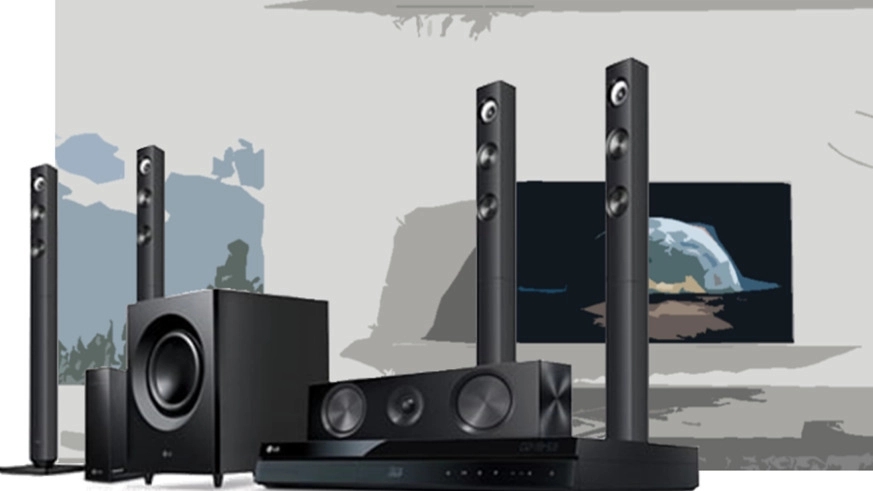
The main goal of the home theater sound system is to recreate the sound environment of a large movie theater in the limited space of the home. These systems are based on multi-channel architecture such as 5.1, 7.1, or more advanced 3D formats (such as Dolby Atmos and DTS:X). The main focus is on creating ambient effects, the depth of the sound field, and the correct transfer of the location of the sounds (such as a helicopter passing overhead). In these systems, high output power and the ability to decode cinematic digital formats are prioritized. Home theater amplifiers (AVRs) usually have multiple output channels and advanced digital processors (DSPs) to handle this volume of audio information.
Hi-Fi (High Fidelity): Fidelity to the original source
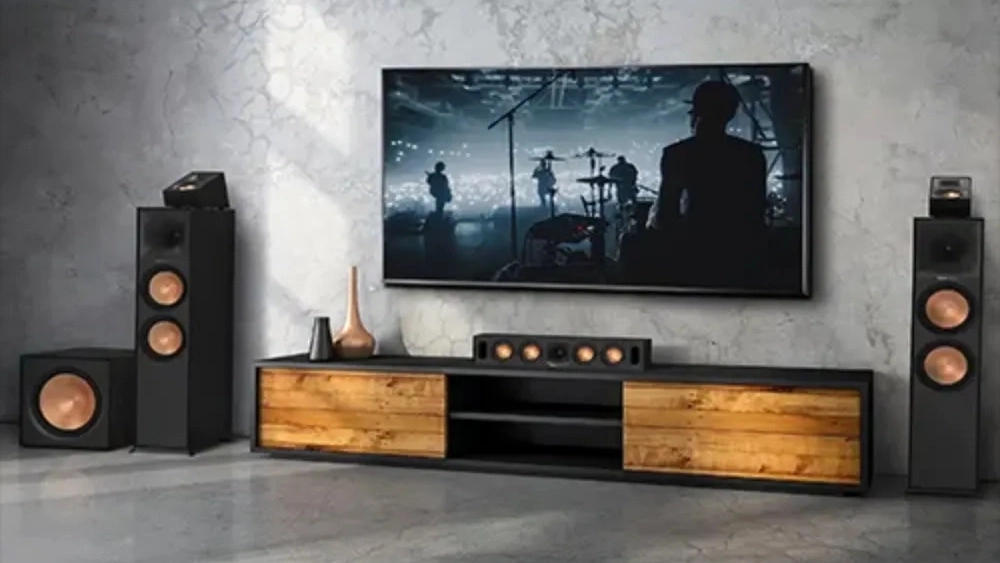
Hi-Fi به معنای "وفاداری بالا" است و به سیستمی اطلاق میشود که کوچکترین تغییر یا تزئینی در سیگنال صوتی اصلی ایجاد نکند. The main priority in Hi-Fi systems is accuracy of frequency resolution, linear frequency response, minimal distortion (THD) and accurate reproduction of sound dynamics (from the quietest whisper to the loudest scream). Hi-Fi systems are usually based on stereo channels (2.0 or 2.1), where the focus is on the unique quality of each individual component, especially speakers and two-channel (stereo) amplifiers. Many music lovers prefer to use a Hi-Fi audio system to listen to studio albums.
Overlapping: Hybrid systems
Today, with the advancement of technology, the boundaries have become less clear. Many modern receivers combine advanced home theater capabilities with build quality and improved Hi-Fi internals. Z audio store always offers the best hybrid models that are suitable for both watching movies and enjoying classical or jazz music.
Critical components of a complete audio system
A professional home theater sound system or Hi-Fi consists of four main components, each of which plays a vital role in the final sound quality. Ignoring the quality of each component will lead to the creation of an audio bottleneck and reduce the performance of the entire system.
1. Speakers: the beating heart of the system
Speakers are undoubtedly the most important part of an audio system; They are the only elements that convert electrical energy directly into acoustic (sound) energy. The choice of speaker should be based on the type of system and environment.
Types of speakers:
- Bookshelf Speakers: They are ideal for smaller spaces or as surround speakers in a home theater sound system. Their sound quality is excellent in the middle and high frequencies, but they need a subwoofer to fully cover the low frequencies.
- Floorstanding Speakers: These are the backbone of two-channel Hi-Fi systems as well as the main speakers (Front L/R) in the home theater. Due to the larger volume of the cabinet and the presence of dedicated drivers for bass frequencies, they have the ability to produce deeper bass and a wider dynamic range.
- Center Speakers (Center Channel): It is the most vital speaker in the home theater sound system, because more than 70% of dialogues are broadcast from this channel. The quality of construction and the sameness of the drivers with the main speakers (L/R) is necessary to maintain the integrity of the sound in the horizontal axis.
- In-wall/In-ceiling speakers: A great choice for those looking for a minimal and modern look, especially in Dolby Atmos settings.
When choosing, pay attention to the sensitivity, impedance and frequency response of the speaker. These parameters should be compatible with the output power of your amplifier.
2. Amplifier (Amplifier/Receiver): driving force
The amplifier is responsible for amplifying the electrical signal received from the source (radiator) and converting it into enough power to move the diaphragms of the speaker.
- Home theater receivers (AVR): These devices pack a bunch of functionality into one box: multi-channel amplifiers, image and sound processors, decoding of digital formats (such as DTS HD Master Audio or Dolby TrueHD) and multiple inputs.
- Stereo (Hi-Fi) amplifiers: In the realm of pure Hi-Fi, often Separate amplifiers (preamp and power amp) or two-channel integrated amplifiers are used, focusing on noise reduction and providing clean and controlled power for the two main channels. The quality of the power transformer in this section determines the final sound quality.
3. Subwoofer: Bass deepener
The subwoofer is responsible for reproducing very low frequencies (below 80 Hz). In a home theater sound system, the subwoofer plays a decisive role in understanding cinematic explosions, vibrations and thuds (LFE channel). In Hi-Fi systems, too, the subwoofer is used to complete the bass lost in the book speakers, but its setting should be such that it does not create extra or shaky bass and is completely integrated with the rest of the speakers.
4. Source Player: The beginning of the audio chain
This device provides the main signal. It can be a Blu-ray Player, a Network Streamer, or even a Turntable for vinyl enthusiasts. In the digital world, the ability to play high-quality files (Lossless Audio such as FLAC or DSD) in modern players is crucial to preserve the originality of Hi-Fi sound.
Advanced audio technologies
The audio industry is constantly evolving and understanding these technologies is essential for smart shopping.
Immersive Audio decoding
Modern home theater audio formats such as Dolby Atmos and DTS:X go beyond traditional channels. They use audio objects that determine their exact position in three-dimensional space (including height). This requires the use of ceiling speakers or up-firing speakers that project the signal to the ceiling.
Reinforcement technologies
Amplifiers are classified according to their working class. Class A/B amplifiers are popular in Hi-Fi systems due to their high fidelity and low distortion, although they are less energy efficient. On the other hand, Class D amplifiers are quickly gaining ground in home theater receivers due to their very high efficiency and lower heat generation. The choice should be based on your preference between "pure sound quality" and "multichannel capabilities and energy efficiency".
Role of DAC (Digital to Analog Converter)
In any modern audio system, be it home theater or Hi-Fi, a high quality DAC plays a vital role. This part converts the zero and one signal received from the digital source into an analog wave that is supposed to be amplified by the amplifier. A poor DAC cannot deliver clear and accurate sound even with the best speakers. Many streaming devices and more advanced AVRs have high-resolution DACs to support studio files.
System selection based on room space and budget
Expensive audio equipment may perform worse in a poor room than average equipment in an optimal environment. The acoustics and physical dimensions of the space directly affect the performance of your Home Theater Sound System and Hi-Fi.
The effect of room space on speaker selection
Matching the budget to your needs
Smart budgeting requires prioritization.
- Priority in home theater: If you spend more on movies and games, invest first in a powerful receiver with today's decoding capabilities and a pair of original speakers and a quality subwoofer. The center and surround speakers can be upgraded at a later stage.
- Priority in pure Hi-Fi: Here, the budget should be split equally between the source (radiator/DAC) and speakers. The amplifier should also be powerful enough to fully drive the speakers of your choice. A general rule is that your speakers and amplifier should not be too far apart; A very powerful amplifier for small speakers is a waste of money and vice versa.
For detailed advice on budget allocation among the various components of a home theater audio system or an ideal Hi-Fi set, expert guidance at Z Audio Store is always at your disposal.
Cables and connectors - the last link of confidence
Many beginners ignore the quality of cables, when these connections are the last chance to maintain signal integrity.
In the home theater audio system world, high-standard HDMI cables (such as HDMI 2.1) are essential for transmitting 4K/8K video signals and object-based audio formats (such as Atmos). The speaker cables must be pure copper and have a suitable cross-section for the power of your amplifier so that signal loss does not occur over long distances.
In the field of Hi-Fi, cables can play a greater role in the "tone" of the sound (although this is always debatable). Using RCA or XLR cables with strong shielding, especially between the preamp and power amp, can eliminate ambient noise and electromagnetic interference that is easily heard in sensitive amplifiers. For high-end Hi-Fi systems, even the type of cable insulation can affect audio detail.
Conclusion: Investment in listening experience
Choosing a home theater sound system or a Hi-Fi set is a complicated but very rewarding process. This is not a consumer purchase; Rather, it's an investment in years of enjoying your favorite movies, music, and content. Whether you're looking for full cinematic immersion with 3D technologies or absolute fidelity to a studio recording with a stereo Hi-Fi audio system, a deep understanding of the components, technologies and how they interact with your room space is the key to success.
To ensure that the equipment you choose is fully compatible with the specific needs of your space and the quality threshold you are looking for, expert advice is essential. Our technical experts at Z audio store in Tehran, with their deep knowledge in the field of home theater sound system and Hi-Fi equipment, are ready to guide you in choosing the best speakers, amplifiers and audio sources to create a professional standard audio experience in your home.