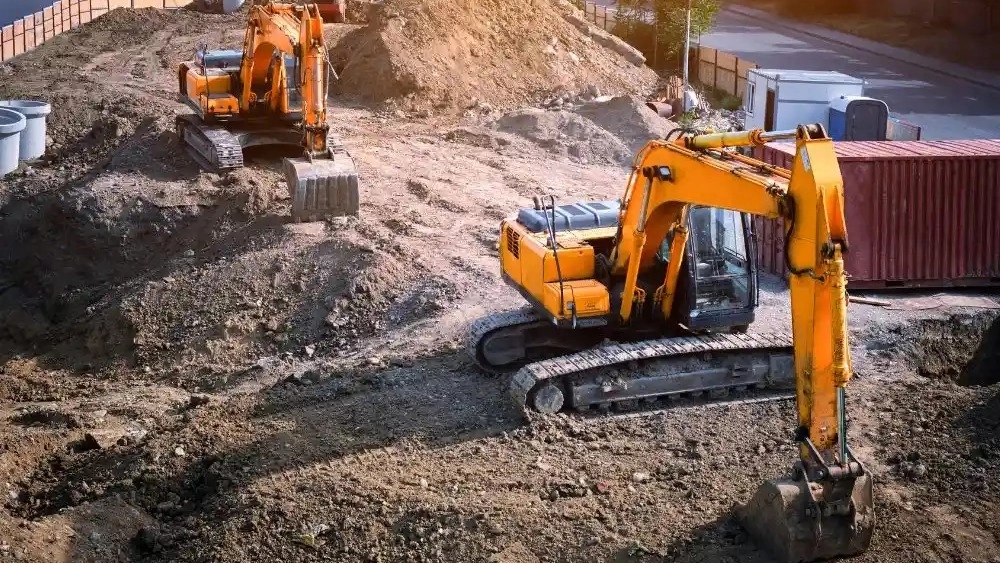
In the modern world of construction, with the increase in urban density and the need to build high-rise buildings and multi-story parking lots, deep excavations have become one of the most challenging civil engineering steps. Pitfalls, damage to nearby buildings and life hazards are the nightmare of any construction project. The final solution to overcome this crisis is to design and implement a professional guard structure for deep pits. These structures not only make the walls stable, but also ensure the safety of your workshop and capital. If you are looking for a professional and flawless implementation, expert teams like Tajik Drilling Site can be your reliable companion on this risky path.
In this specialized article, we will examine in detail the types of guard structures, implementation methods, critical safety points and the importance of choosing a specialist contractor. Our goal is to provide information that will help you choose the best method for pit stabilization.
Why do we need a professional guard structure for deep pits?
Soil naturally tends to slide and drift, especially when its lateral support is removed during excavation operations. In deep pits (usually more than 6 meters deep), the lateral pressure of the soil increases greatly. Without a proper bracing system, disaster is inevitable.
Using a professional guard structure for deep pits has several reasons:
- Prevention of soil drift: Restraining the lateral pressure of the soil and preventing walls from falling into the pit.
- Protection of nearby buildings: Preventing settlement, cracking and destruction of neighboring structures that can lead to heavy lawsuits.
- Personnel safety: Creating a safe environment for workers and engineers inside the pit.
- Reducing costs caused by Accidents: Prevention is always cheaper than compensation.
Experienced contractors like the executive team at Tajik Excavation Site know very well that each project has its own geotechnical conditions and requires a unique design.
Various methods of implementing the guard structure in deep excavations
Choosing the right method to implement a professional guard structure for deep pits depends on factors such as the depth of the pit, the type of soil, the overhead of nearby buildings and the project budget. In the following, we introduce the most common and efficient methods.
1. Nailing method (Soil Nailing)
Nailing is one of the most widely used methods in stabilizing deep urban pits. In this method, steel rebars (nails) are placed in the pit wall at specific intervals and are fixed in place by injecting cement slurry.
- Advantages: High implementation speed, possibility of implementation in a limited space, flexibility during implementation.
- Disadvantages: Necessity of permission from the neighbor to penetrate the underground of the adjacent property (in some cases), sensitivity to the presence of underground water.
Specialists of Tajik Excavation Site by mastering nailing techniques, guarantee accurate execution in accordance with the world standards so that you have strong and stable walls.
2. Anchorage method
The anchoring method is very similar to nailing, but with a fundamental difference: in anchoring, prestressing force is used. After being placed in the borehole and injection, the cables or strands are stretched to apply an active force to the soil wall.
- Application: For very deep pits and where the control of deformations and displacements is very critical.
- Difference with nailing: Anchorage is an active system while nailing is considered a passive system.
Correct implementation of anchoring requires advanced equipment and high technical knowledge. Using a professional guard structure for deep pits in the anchoring method requires special expertise, which is clearly seen in the resume of professional teams such as the Tajik Group.
3. Top-down method or construction from top to bottom (Top-Down Construction)
This is a revolutionary method in urban construction. In the top-down method, unlike the traditional method, the roof slabs and columns are installed first, and then the excavation is done under them.
- Advantages: very high speed (possibility of working simultaneously in negative and positive floors), eliminating the need for a temporary guard structure, very high rigidity of the structure.
- Challenges: complexity of design and implementation, need for special ventilation and lighting equipment in negative floors.
If your project is in a dense area with limited workshop space, consulting with the experts of Tajik Excavation Site in the field of top-down method can be a solution.
4. Truss Retaining Structure Method
The truss method is one of the most traditional and at the same time the most reliable methods for medium to relatively deep pits. In this method, vertical and inclined metal members act as trusses and bear the pressure of the soil.
- How to execute: First, wells are dug and the upright member is installed. Then, with phased excavation, the oblique and horizontal members are welded.
- Advantages: Simplicity of implementation, no need to enter the neighboring land.
- Disadvantages: Occupying the space inside the pit by the truss members, which may hinder the implementation of the foundation.
The optimal design of the truss to reduce the interference with the main structure is an art that the designers of professional guard structure for deep pits should master.
5. Diaphragm Wall
For massive projects such as subway stations or very tall towers, the diaphragm wall is an ideal option. This reinforced concrete wall is implemented in situ before excavation and simultaneously plays the role of a guard structure and a permanent retaining wall.
6. Sheet Piling
In loose lands or places where the underground water level is high, hammering metal plates (shields) into the soil is an effective method. This method is mostly used in marine projects or canalization, but it is also used in some construction pits.
Executive steps and supervision of the guard structure
Implementing a professional guard structure for deep pits is not a linear process, but a cycle of design, implementation and monitoring. The key steps are:
- Geotechnical studies (soil testing): Determination of soil parameters such as adhesion, angle of internal friction and specific weight for accurate design.
- Engineering design: Using advanced software such as PLAXIS or ABAQUS to model soil and structure behavior.
- Step-by-step implementation: Strictly observing the order of excavation and installation of guards (Paneling).
- Monitoring: Installation of mapping cameras and instruments for real-time observation of changes in the shape of walls and nearby buildings.
Technical team of Tajik Excavation Site uses precise monitoring tools to monitor the smallest soil movements to prevent any accidents. This level of precision is the difference between a typical implementation and a professional guard structure for deep pits.
Common challenges in the implementation of the guard structure of deep pits
Even with the best designs, unpredictable conditions underground can be challenging. Knowing these challenges is essential for risk management.
Dealing with urban facilities
Water, gas, electricity and telecommunication cables that are not recorded in city maps are a big problem. The contractor must make the necessary inquiries before starting the excavation and act with full caution. The experience of the executive team is the first word here.
Change of soil layers
Soil testing may indicate compact layers, but during implementation we may encounter loose veins or underground cavities (blind aqueducts). An expert in professional guard structure for deep pits should have the ability to quickly review the design and provide corrective solutions (such as reinforcement injection).
Legal problems with neighbors
It is necessary to obtain a notarized consent for nailing and anchoring from the neighbors. Managing public relations and providing valid technical and insurance guarantees can facilitate this process. Tajik Excavation Site helps employers in removing these obstacles by providing legal and technical advice.
Groundwater management
Drainage and lowering the water level (Dewatering) is an integral part of stabilization in waterlogged areas. Failure to control pore water pressure can cause the instability of the entire system.
The importance of choosing an expert contractor: why the Tajik excavation site?
Executing a professional guard structure for deep pits is not something that can be left to unskilled or inexperienced crews. The smallest mistake in welding, injection or calculations can lead to an irreparable disaster.
Tajik excavation site as one of the leading authorities and contractors in this field, offers the following features:
- Elite engineering team: composed of senior geotechnical and structural engineers with a history of designing and implementing complex projects.
- Modern equipment: Access to advanced drilling, shotcrete and injection machines that guarantee speed and quality.
- Full compliance with HSE: Adherence to safety, health and environment principles at all stages Project.
- Strong resume: Successful implementation of dozens of deep excavation projects in harsh urban conditions.
- Competitive price: Providing value engineering solutions to reduce costs without sacrificing safety.
When it comes to Professional guardrail construction for deep pits, trusting known names is an investment in peace of mind.
Key points for employers and builders
If you are planning to start a deep excavation project, put these items on your checklist:
- Civil liability insurance: Be sure to cover the project with valid insurance with clauses related to excavation.
- Daily inspections: Ask the supervising engineer to provide detailed daily reports on the condition of the walls and the guard structure.
- Surface water management: It is vital to direct rainwater and sewage away from the edges of the pit. The penetration of water behind the wall can increase the pressure and collapse. Contact injection: In the nailing and anchoring method, ensuring that the space between the rebar and the soil is completely filled with grout is the main condition for load transfer.
The cost of implementing a professional guard structure
The cost of implementing a professional guard structure for deep pits varies and depends on factors such as the surface area of the wall, the chosen method (nailing, truss, etc.), the price of iron and concrete, and the location of the project. Although the initial implementation costs may seem a bit higher, compared to the billions in pitfall damages, this cost is negligible. To get an accurate cost estimate and free consultation, you can visit Tajik excavation site and contact the experts.
Safety in excavation: the red line of the project
No project is worth risking human lives. Observing the safe distance of the material depot from the edge of the pit, installing environmental protections, using safety hats and shoes, and having standard access stairs are basic principles. In the implementation of Professional guard structure for deep pits, safety is not an option, but a requirement. Excavation incidents usually occur without prior warning; Therefore, preparation and prevention is the only way to save.
conclusion
Deep trenching is the gateway to the construction of massive and modern structures, but safe passage through this gateway requires knowledge, experience and appropriate tools. Professional guard structure for deep pits guarantees the stability of the project and the security of your capital. From nailing and anchoring methods to trusses and top-down, each method has its own advantages and disadvantages that should be analyzed by experts.
Don't forget that choosing a contractor is your most important decision at this stage. The specialized team of Tajik Excavation Site, with a combination of modern engineering knowledge and operational experience, is ready to complete the most complex excavation projects with the highest safety and quality factor. Don't let underground risks stop your project; Build the foundations of your structure on solid ground by choosing professionals.
For consultation, project visit and execution plans, contact Tajik excavation site today and experience the difference in quality and safety.