


Today, the plastic and polymer industry has become one of the most important pillars of production and development in the world. In the meantime, the sale of agricultural and industrial nylon, as one of the main needs of the market, plays a key role in preserving products, safe packaging and increasing production efficiency. Whether you are a farmer who is worried about his greenhouse products against cold and sun, or a craftsman who is looking for durable packaging for his goods, choosing a reliable manufacturer is vital. With years of experience in the field of producing all kinds of polyethylene films, Atlas Polymer Company is proud to offer the best services in the field of production and sale of wide, greenhouse and industrial nylons to our dear customers. In this article, we will examine the features, uses and important points in buying these products.
What is agricultural nylon and why is it important?
Agricultural nylon, often known as greenhouse nylon or wide nylon, is one of the most widely used materials in the modern agricultural industry. The main purpose of using nylon silage (Silage Film): is used to pack animal fodder and prevent them from spoiling. Tensile strength and puncture resistance are very important in this type of nylon.
Industrial nylon and its role in production lines
Besides the agricultural sector, the sale of agricultural and industrial nylon in the field of industries and factories has also taken a large share of the market. Industrial nylon is a group of polyethylene films that are used for the final packaging of products, protection of goods in storage and safe transportation. Polymer Atlas company, understanding the needs of various industries, has started producing all kinds of industrial nylons with high resistance.
Applications of industrial nylon
- Nylon Shrink (Shrink Wrap): These nylons have the property of shrinking against heat. When nylon is placed around the product (such as mineral water packs or industrial parts) and heats up, it shrinks and completely adheres to the product. This will protect the product from dust and moisture and make it easier to transport. Stretch film (Stretch Film): Stretch pallets are a type of elastic nylon that is wrapped around product pallets to prevent cartons and products from falling when moving with a forklift. High adhesion and elasticity is one of the prominent features of Atlas polymer stretch products.
- Cucumber and bulk nylons: They are used for packing fruits and vegetables or small industrial parts. These nylons must bear high weight and not tear.
- Bubble nylon: It is used to protect fragile and sensitive goods against impact. Although it has a different structure, it is included in the general category Sale of agricultural and industrial nylon.
The importance of additives in nylon production (Additives)
One of the customer points of these covers is to create a controlled environment for plant growth. Sales of agricultural and industrial nylon have grown significantly in recent decades because farmers have realized that without the use of protective coatings, the risk of damage to crops by atmospheric factors is very high.
Agricultural nylons produced in the workshop of Atlas Polymer Company are produced using first-class petrochemical raw materials. These nylons can be ordered in different widths (from 1 meter to 20 meters and more) and with various thicknesses. One of the most important features of these nylons is the ability to add special chemical additives to improve their performance.
Types of nylons used in agriculture
In the agricultural and industrial nylon sales market, the variety of products is very large. شناخت این انواع به شما کمک میکند تا بهترین انتخاب را برای زمین زراعی یا گلخانه خود داشته باشید:
- Greenhouse Film: This type of nylon is used to cover the roof and walls of the greenhouse. The most important factor in buying this product is the percentage of UV or UV protection. Atlas polymer greenhouse nylons are produced with different percentages of UV (from 3% to 10%) to ensure the longevity of the nylon against the sun.
- Nylon Mulch (Mulch Film): These nylons are stretched on the surface of the soil and the plant is removed from it. Its main use is preventing water evaporation, fighting weeds and regulating soil temperature. The sale of agricultural and industrial nylon in the mulching sector has gained double importance due to the water crisis in the country.
- Soil disinfection nylon: Before planting, farmers need to disinfect the soil. Using thin and wide nylons to cover the soil after spraying, makes the disinfectant gases remain in the soil and have more effect.
- Nylon silage (Silage Film): It is used to pack animal fodder and prevent them from spoiling. Tensile strength and puncture resistance are very important in this type of nylon.
Industrial nylon and its role in production lines
Besides the agricultural sector, the sale of agricultural and industrial nylon in the field of industries and factories has also taken a large share of the market. Industrial nylon is a group of polyethylene films that are used for the final packaging of products, protection of goods in storage and safe transportation. Polymer Atlas company, understanding the needs of various industries, has started producing all kinds of industrial nylons with high resistance.
Applications of industrial nylon
- Nylon Shrink (Shrink Wrap): These nylons have the property of shrinking against heat. When nylon is placed around the product (such as mineral water packs or industrial parts) and heats up, it shrinks and completely adheres to the product. This will protect the product from dust and moisture and make it easier to transport. Stretch film (Stretch Film): Stretch pallets are a type of elastic nylon that is wrapped around product pallets to prevent cartons and products from falling when moving with a forklift. High adhesion and elasticity is one of the prominent features of Atlas polymer stretch products.
- Cucumber and bulk nylons: They are used for packing fruits and vegetables or small industrial parts. These nylons must bear high weight and not tear.
- Bubble nylon: It is used to protect fragile and sensitive goods against impact. Although it has a different structure, it is included in the general category Sale of agricultural and industrial nylon.
The importance of additives in nylon production (Additives)
One of the points that customers should pay attention to when visiting the agricultural and industrial nylon sales centers is the presence of additives in the nylon structure. In the workshop of Atlas Polymer Company, according to the customer's request and the climatic conditions of the region, the following additives are added to the raw materials:
- Anti-UV additive: This is the most important additive for greenhouse nylons. Without this material, the plastic will dry and become brittle in the sun and will turn into powder in less than a few months.
- Infrared additive (IR): This additive prevents the heat from escaping inside the greenhouse during the night. In the cold nights, when visiting centers for the sale of agricultural and industrial nylon, they should pay attention to the presence of additives in the structure of nylon. In the workshop of Atlas Polymer Company, according to the customer's request and the climatic conditions of the region, the following additives are added to the raw materials:
- Anti-UV additive: This is the most important additive for greenhouse nylons. Without this material, the plastic will dry and become brittle in the sun and will turn into powder in less than a few months.
- Infrared additive (IR): This additive prevents the heat from escaping inside the greenhouse during the night. In cold winter nights, nylons with IR save energy and prevent plants from freezing. Anti-Fog Additive: Water droplets formed by condensation on the inner roof of nylon can act like a magnifying glass and burn plant leaves or cause fungal diseases. This additive causes the water droplets to spread and flow in a thin layer.
- Anti-virus and bacterial additive (AB): These substances prevent the entry and reproduction of pests and diseases into the greenhouse environment and reduce the need for spraying.
Features of nylons produced in Atlas Polymer Company
Why should we go to the Atlas polymer brand for the sale of agricultural and industrial nylon? The answer lies in the quality of production and commitment to the customer. In our production workshop, all steps from mixing materials to extrusion and final packaging are done under the strict supervision of experts.
1. Using first-class raw materials
We do not use waste or recycled materials of poor quality in the production of our products (except at the customer's request for second grade nylons). First-class nylons have high transparency, extraordinary elasticity and excellent tear resistance.
2. Ability to produce in custom dimensions
Many customers need specific widths to cover their sheds or greenhouses. Atlas Polymer Company has the ability to produce wide to very high width nylons in single and multiple layers. Sale of agricultural and industrial nylon in this collection has no limitations in terms of dimensions.
3. Strict quality control
Tensile test, impact test and sunlight resistance test are among the tests that are periodically performed on the products so that the customer can rest assured about the quality.
Wide nylon and construction applications
In addition to agriculture, wide nylons are also widely used in the construction industry. Construction contractors use these nylons to cover concrete (concrete curing), cover facades of semi-finished buildings to prevent wind and rain, and also as waterproofing at the foundation of the building. Sales of agricultural and industrial nylon for construction purposes usually includes black or transparent nylons with high thickness that have good physical resistance. In Atlas Polymer Company, these types of nylons are available at a competitive price and in bulk.
The impact of nylon quality on final costs
Maybe at first glance, the price of buying nylon seems to be the only important factor, but buying low-quality nylon can bring heavy costs. Imagine buying a cheap nylon greenhouse with no warranty. If this nylon is torn in the middle of the growing season, not only will the cost of repurchasing the nylon be imposed on him, but the product inside the greenhouse may also be completely destroyed. In the industrial sector, the use of weak nylon shering can lead to tearing of the packaging during transportation and damage to the original product.
Therefore, referring to a reputable agricultural and industrial nylon sales center such as Atlas Polymer, is actually a kind of investment to preserve your original capital. We do not sacrifice the quality for the price, but we try to get the best price to the consumer by removing the middlemen.
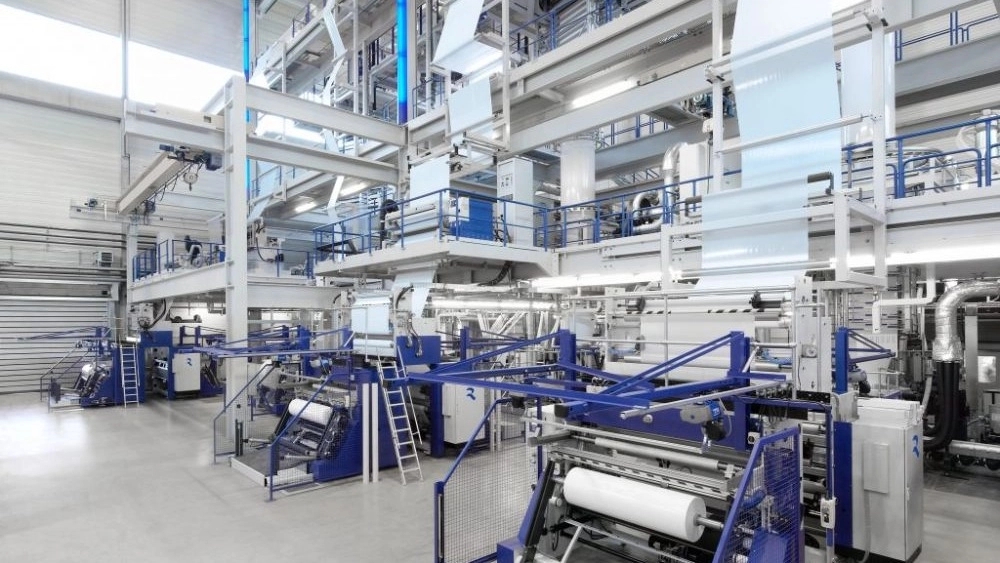
The stages of nylon production in the workshop
Familiarity with the production process can help to better understand the quality. In the workshop of Atlas Polymer Company, the production process is as follows:
- Mixing materials: Light polyethylene granules (LDPE) are mixed with certain percentages of color masterbatches and UV additives, etc. Accuracy in this step is very important because the uniform distribution of the additives is the guarantee of the final quality. Melting and extrusion: The mixed materials enter the extruder and melt at high temperature. The spirals of the device push and compress the materials.
- Blowing and shaping: Molten materials are released from the ring mold and rise up in the form of bubbles with the wind. The amount of wind blows determines the width and thickness of the nylon. This step is very decisive in agricultural and industrial nylon sales because the thickness must be uniform throughout the nylon surface.
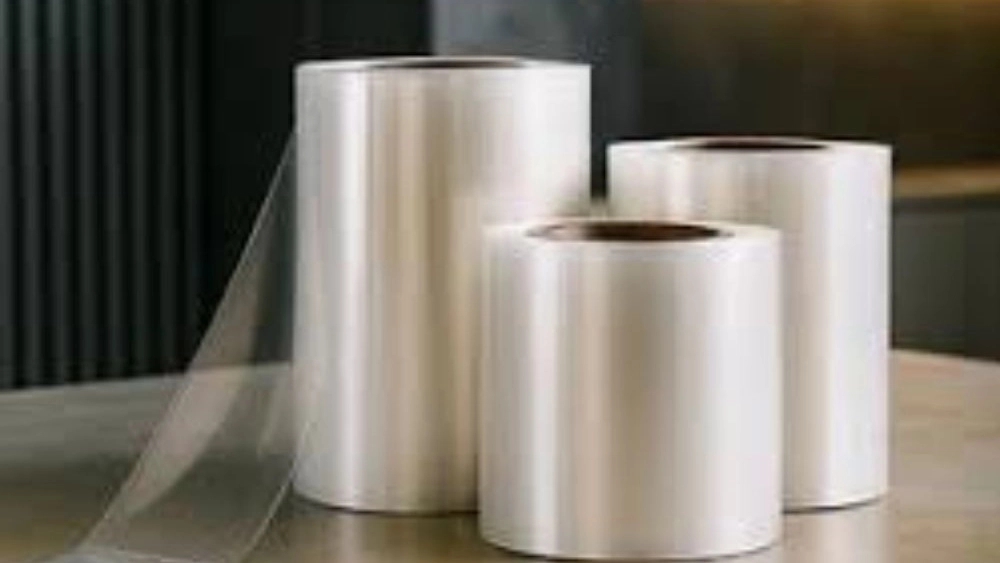
- Drying and rolling: The nylon bubble is cooled at the top of the tower and then collected by rollers. Finally, the nylon is wrapped in neat rolls.
Important points in buying agricultural and industrial nylon
Before making a purchase and contacting the Agricultural and Industrial Nylon Sales department, it is better to specify the following so that our experts at Polymer Atlas can provide you with the best advice:
- Exact application: Do you want for greenhouse or packaging? For what type of product?
- Required dimensions: What should be the width and length of the roll?
- Thickness: Nylon thickness is measured in microns. Higher thickness means more resistance.
- Duration of shelf life: How many seasons or years do you expect nylon to last? This determines the required UV percentage. Nylon color: Nylons can be transparent, green, yellow or black. Each color has special optical properties.
Why is buying direct from the factory beneficial for you?
The market for sale of agricultural and industrial nylon is full of intermediaries to preserve your original capital. We do not sacrifice the quality for the price, but we try to get the best price to the consumer by removing the middlemen.
The stages of nylon production in the workshop
Familiarity with the production process can help to better understand the quality. In the workshop of Atlas Polymer Company, the production process is as follows:
- Mixing materials: Light polyethylene granules (LDPE) are mixed with certain percentages of color masterbatches and UV additives, etc. Accuracy in this step is very important because the uniform distribution of the additives is the guarantee of the final quality. Melting and extrusion: The mixed materials enter the extruder and melt at high temperature. The spirals of the device push and compress the materials.
- Blowing and shaping: Molten materials are released from the ring mold and rise up in the form of bubbles with the wind. The amount of wind blows determines the width and thickness of the nylon. This step is very decisive in agricultural and industrial nylon sales because the thickness must be uniform throughout the nylon surface.
- Drying and rolling: The nylon bubble is cooled at the top of the tower and then collected by rollers. Finally, the nylon is wrapped in neat rolls.
Important points in buying agricultural and industrial nylon
Before making a purchase and contacting the Agricultural and Industrial Nylon Sales department, it is better to specify the following so that our experts at Polymer Atlas can provide you with the best advice:
- Exact application: Do you want for greenhouse or packaging? For what type of product?
- Required dimensions: What should be the width and length of the roll?
- Thickness: Nylon thickness is measured in microns. Higher thickness means more resistance.
- Duration of shelf life: How many seasons or years do you expect nylon to last? This determines the required UV percentage. Nylon color: Nylons can be transparent, green, yellow or black. Each color has special optical properties.
Why is buying direct from the factory beneficial for you?
The market of selling agricultural and industrial nylon is full of middlemen who sell the product from hand to hand and sell it at a higher price. Buying directly from Atlas Polymer Company has the following advantages:
- Lower price: Eliminating middlemen will significantly reduce the total price.
- Quality assurance: You are directly with the manufacturer and we will be responsible in case of any problem.
- Customization: It is possible to produce nylon exactly according to your needs and requested dimensions.
- Technical advice: Our experts have the necessary technical knowledge and They can guide you in choosing the best product.
Multi-layered nylons and modern technology
Today, with the advancement of technology, nylon production machines are able to produce 3-layer and 5-layer films. In this technology, each layer can have different properties. For example, the outer layer is UV-resistant, the middle layer is tear-resistant, and the inner layer has anti-fog properties. Sales of multi-layer agricultural and industrial nylon in Atlas Polymer have been well received because these nylons are much more durable and efficient than old single-layer nylons.
Sustainability and environment
One of the global concerns is the issue of plastic waste. High-quality nylons last longer and need to be replaced later, which helps reduce waste. Also, polyethylene nylons are recyclable. Polymer Atlas is committed to environmental principles and tries to have minimal waste in the production process. Customers can also return nylons to the recycling cycle after the end of their useful life.
Factors affecting the price of nylon
The price in the agricultural and industrial nylon sales market is always fluctuating. The main reasons for these fluctuations are:
- The price of petrochemicals: The base price of polyethylene in the commodity exchange, which is dependent on the price of world currency and oil, is the main price determining factor.
- The amount of additives: Additives such as UV are expensive. The higher the percentage of these materials, the higher the final price of nylon.
- Quality of raw materials: The use of first-grade materials has a higher price than second-grade materials.
- Thickness and weight: Nylons are sold by the kilo. More thickness means more weight and therefore higher cost per square meter.
To inquire about the price of the day, you can always contact the sales unit of Atlas Polymer Company.
Frequently asked questions about buying nylon
In our many years of experience in the field of selling agricultural and industrial nylon, similar questions are asked by customers. Here we answer some of them:
1. Can the nylon of the greenhouse be repaired?
Yes, there are special adhesives for repairing small nylon tears that have good resistance to the sun. But if the tear is extensive, it is recommended to replace the nylon.
2. What is the difference between single-layer and three-layer nylon?
Three-layer nylons have more physical resistance and longer life, and the distribution of additives is done better in them.
3. What is the minimum order?
Since we are a manufacturer, sales are usually done in complete rolls or tonnage. But for detailed information about the minimum size that can be ordered, contact the sales office.
Summary and closing remarks
Industry Sale of agricultural and industrial nylon is a dynamic and vital industry for the country's economy. Choosing the right nylon can make the difference between profit and loss in an agricultural or industrial project. Atlas Polymer Company is ready to meet your needs in the field of polyethylene films by using advanced machines, modern technical knowledge and the use of the best raw materials.