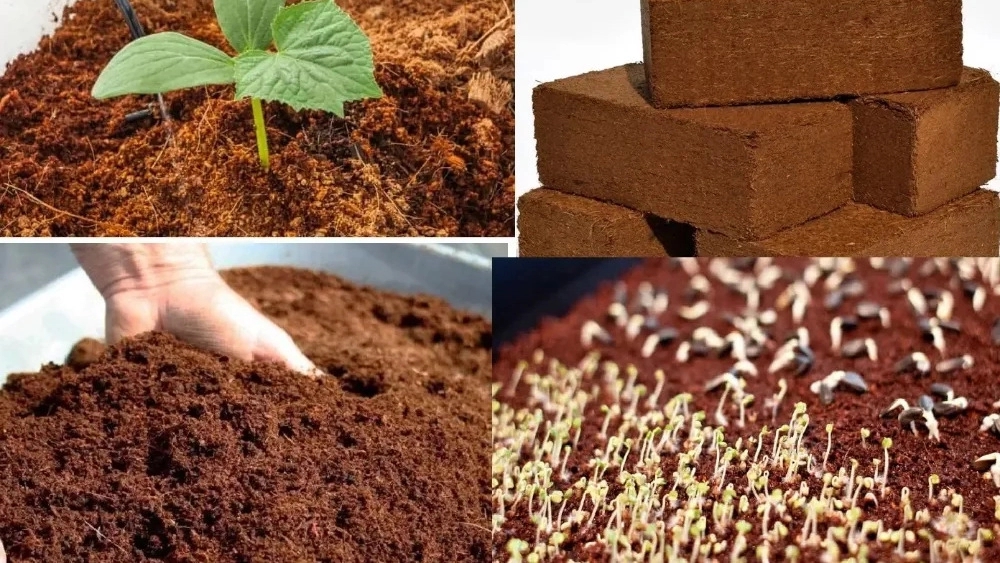


In the world of modern agriculture and especially greenhouse cultivation, choosing the right cultivation medium is one of the most key decisions. Made from coconut husk fibers, cocopeat has become one of the most popular growing media around the world due to its unique properties. Among the global producers, Sri Lankan coconut is known as the highest quality and best type. This article examines the reasons for the superiority of Sri Lankan cocopeat, its advantages for greenhouse cultivation, and introduces Nidesht Cocopeat Company as a reliable supplier of this product.
What is cocopeat and how is it produced?
Coco Peat, also known as Coco Peat, Coconut Peat or Coconut Bed, is made from coconut husk fibers. Its production process includes the following steps:
- Coconut husk collection: Coconut husk, which is a by-product of the coconut industry, is collected.
- Crushing and fiber extraction: The husks are crushed and the fibers are separated from it.
- Washing and processing: The fibers are washed and subjected to special processes to remove salt and harmful substances from it.
- Drying and compression: Cocopeat is dried and compressed into blocks that make it easy to transport and store.
Why Sri Lankan coconut is the best choice?
Sri Lanka is one of the best areas for coconut cultivation in the world due to its ideal climate and rich soil. This has made the Sri Lankan coconut to have a unique quality. The most important reasons for the superiority of Sri Lankan coconut are:
1. High quality of coconut fiber
Sri Lankan coconuts have strong and durable fibers due to growing in rich soil and humid climate. After processing, these fibers create cocopeat with a porous and stable structure, which is ideal for plant root growth.
2. Standard and hygienic processing
Cocopeat factories in Sri Lanka usually use modern equipment and standardized processes. Complete washing and removal of salt and harmful substances is done carefully, which results in cocopeat with low EC and balanced pH.
3. Variety in size and texture
Sri Lankan cocopeat is produced in different grades, from fine to coarse, which allows choosing the most suitable texture for all types of plants.
4. Free from pests and diseases
Controlled thermal and chemical processes in the production of Sri Lankan cocopeat free it from any pests, diseases and weed seeds.
Benefits of using cocopeat in greenhouse cultivation
Using cocopeat as a growing medium in greenhouses has several advantages that make it a superior choice:
1. Excellent water retention
Cocopit can hold up to 8-10 times its weight in water. This feature is very valuable in greenhouse cultivation where controlled irrigation is very important.
2. Proper root ventilation
The porous structure of cocopit allows sufficient air exchange around the root, which prevents root rot and accelerates plant growth.
3. Balanced pH
Sri Lankan cocopeat typically has a pH between 5.5 and 6.5, which is ideal for most greenhouse plants and reduces the need for additional pH adjustment.
4. Low EC and non-toxicity
Sri Lankan quality cocopeat has low electrical conductivity (EC) and does not contain toxic substances such as tannins that can be harmful to plants.
5. Compatibility with the environment
Cocopit is a completely natural and renewable product. Using it instead of peat moss, which is extracted from non-renewable resources, is an important step towards sustainable agriculture.
6. Reusability
With proper disinfection, cocopeat can be used for several cultivation periods, which saves costs.
Applications of cocopeat in various types of greenhouse cultivation
Sri Lankan cocopeat is widely used in various greenhouse cultivation systems:
1. Hydroponic cultivation
In hydroponic systems, cocopeat is used as the main substrate or in combination with perlite and vermiculite. Its ability to store water and nutrients makes plants continuously fed.
2. Pot cultivation
For growing potted plants in the greenhouse, cocopeat is a good substitute for soil. Lightness, excellent ventilation and the absence of pests are among its advantages.
3. Cultivation
Cocopit is an ideal substrate for the production of seedlings due to its uniform and sterile texture. Fast and healthy rooting takes place in this substrate.
4. Mushroom cultivation
In mushroom greenhouses, cocopeat is used as an auxiliary substrate in combination with other materials and provides the required humidity.
How to properly use cocopeat in the greenhouse
To get the most out of Sri Lankan coconut, it is necessary to observe the following points:
1. Preliminary preparation
Compressed cocopeat blocks should be opened with suitable water (preferably low EC water). Usually, each 5 kg block is opened with 60-70 liters of water and becomes about 70 liters of wet cocopeat.
2. pH and EC control
After opening the cocopeat, measure its pH and EC. If needed, it can be brought to the desired range by washing or adding regulating materials.
3. Appropriate nutritional program
Cocopit by itself has few nutrients, so a suitable nutritional program should be designed with complete and water-soluble fertilizers.
4. Irrigation management
Due to the high water holding capacity, irrigation intervals in cocopit are longer than other substrates. It is recommended to use a drip irrigation system.
5. Disinfection between cultivation periods
For reuse, cocopeat should be sterilized with steam or suitable disinfectants to prevent the transmission of diseases.
Comparison of cocopeat with other culture media
To better understand the benefits of cocopeat, it is useful to compare it with other common greenhouse growing media:
Cocopit vs. Pete Moss
Cocopeat vs. Perlite
Cocopeat vs. Vermiculite
Introduction of Nidasht Cocopit Company: reliable supplier of Sri Lankan Cocopit
In the Iranian market, Nidasht Cocopit Company is known as one of the most reliable suppliers of Sri Lankan quality coconut. With years of experience in the field of import and distribution of agricultural products, this company is now proud to offer the best Sri Lankan coconut with quality assurance to Iranian farmers and greenhouses.
Benefits of buying from Nidesht Cocopit Company
- Guaranteed quality: All imported products are sourced directly from the most reliable Sri Lankan producers and are subjected to strict quality tests.
- Product variety: Nidesht Cocopit offers a variety of cocopeats including pressed blocks, ready-made cocopeats, cocochips and packaged cocopeats in different sizes.
- Consultation Specialized: The technical team of the company is ready to provide free advice on choosing the right type of cocopeat, how to use it and the nutritional program.
- Competitive price: By eliminating intermediaries and direct import, Nidesht Cocopeat Company offers very competitive prices.
- After-sales support: Nidesht Cocopit offers its customers full after-sales support, and in case of any technical problems, its expert team is ready to help.
Products of Nidasht Cocopit Company
- 5 kg compressed block cocopeat: the most widely used type for large greenhouses
- prepared cocopeat in 50 liter bags: suitable for small and medium greenhouses
- Cocochips: to improve ventilation in combination with cocopeat
- fine-grained cocopeat: ideal for planting seedlings and Coarse-grained cocopeat cuttings: suitable for plants with larger roots
Key points in choosing quality cocopeat
To ensure that you buy quality cocopeat, pay attention to the following points:
- Manufacturing origin: Make sure it is of Sri Lankan origin.
- Reputable brand: Products from reputable Sri Lankan brands such as "Cocogreen" or "Ceyhinz" usually have guaranteed quality.
- Quality testing: Request EC, pH and purity test reports from reputable laboratories.
- Packaging: The packaging should be healthy and waterproof.
- Production date: The fresher coconut is of better quality.
The future of cocopeat in Iranian agriculture
With the increasing growth of greenhouse cultivation in Iran and paying attention to sustainable agriculture, the use of cocopeat as a cultivation substrate is expanding. It is expected in the coming years:
- The area under greenhouse cultivation will increase significantly with the use of cocopeat.
- New technologies will be developed in the processing and packaging of cocopeat.
- Further research will be done on the optimization of fertilizer formulation in cocopeat-based systems.
- The export of greenhouse products grown in cocopeat will increase.
conclusion
Sri Lankan coconut is undoubtedly the best choice for greenhouse cultivation in Iran. Unparalleled quality, numerous advantages and compatibility with the environment have made it an ideal substrate. To achieve the best results, it is very important to choose a reliable supplier like Nidesht Cocopit. This company is a reliable companion for Iranian greenhouse owners by providing quality products, expert advice and full support.
By choosing Cocopit Sri Lanka and cooperating with Nidesht Cocopit Company, you can maximize the productivity of your greenhouse and produce products of excellent quality. The future of Iran's agriculture depends on the use of modern technologies and quality raw materials, and Sri Lankan coconut will play an important role in this development.