
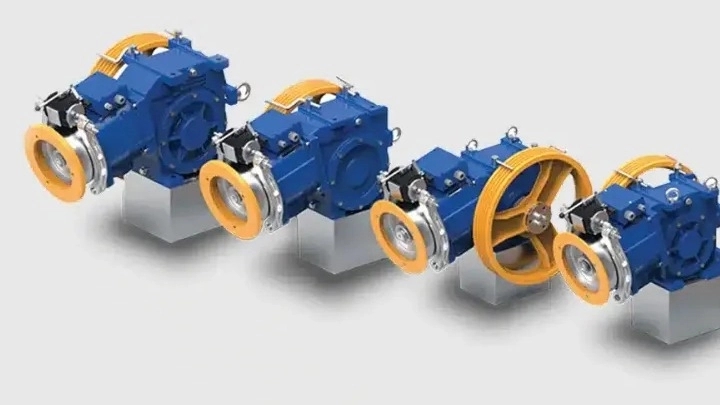
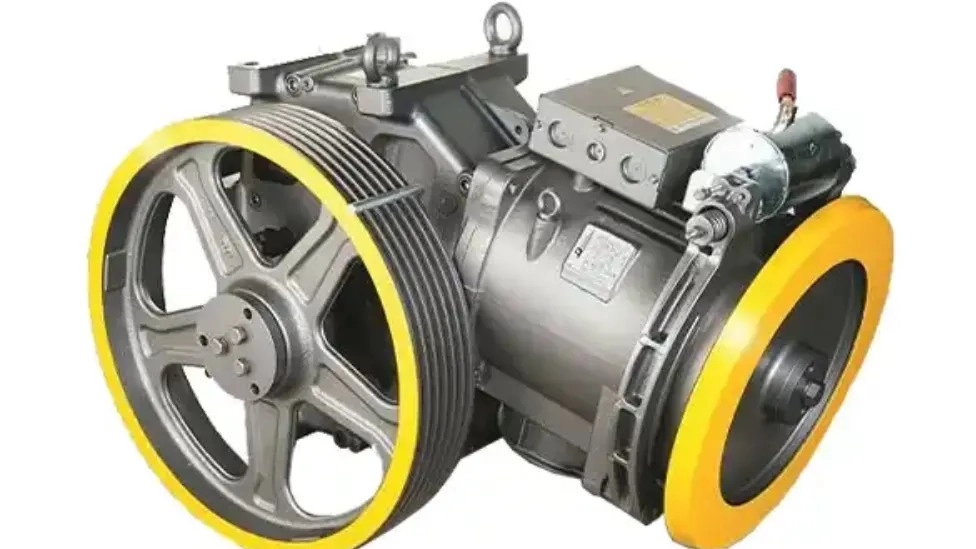


is the supplier of the driving power of the electric motor elevator. Elevator motors are divided into several categories. For example, hydraulic motors are used in hydraulic elevators. In general, types of elevator motors are produced in two categories: gearless motors and gearbox motors. The general structure of these two engines is almost similar and the main difference is in their performance and power. In gearless motors, the driving force is transferred through the direct connection of the rotor to the traction pulley, and in the gearbox motors, the idler pulley is used to transfer the driving force. Currently, another type of elevator motors called magnetic motors have been designed, which have not yet reached general use. "Elevator gear motor"
In this type of elevator motor, the driving force is transferred to the elevator cabin by a traction pulley and gear to go up or down. In this type of engines, the gearbox is the interface between the engine and the cabin, which creates the necessary flexibility. The presence of gears will increase the power of these engines. The power input to the gearbox motor will cause the rotor to rotate, and the rotation of the rotor will also cause the gearbox connected to the rotor to rotate. The gearbox in these engines is connected to the rotor by a rod. With the rotation of the gearbox, the gears move, and with the rotation of the rotors connected to the gearbox, the gearbox pulley starts to rotate and moves the towing wire in the same direction as the engine rotation. In general, the movement of this set causes the displacement of the cabin as well as the balance weight of the elevator. Among the features of these motors, we can mention high power, 85% efficiency, and being cheap compared to other types of elevator motors. These engines are divided into single-speed and two-speed categories.
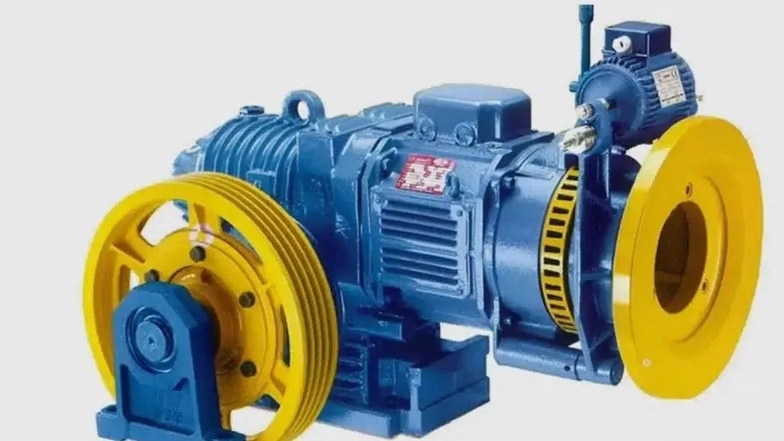
Single-speed gearbox engine (VVF)
In this type of engine, the engine speed is constant and the cabin moves at a constant speed. When the cabin approaches the floor level, a negative acceleration is created in it through braking. As the speed decreases, the cab will eventually stop at floor level. In this system, the speed of the engine is controlled by an electric circuit and it slowly increases the speed from zero to maximum and vice versa in a short period of time. By changing the voltage and frequency of the motor, the speed of the motor will change continuously and the impulses caused by the speed change will be minimized. In this system, the initial acceleration impulses of the elevator and its braking are felt by the passenger. Two-speed gearbox motor
For that reason, this type of elevator motor is called two-speed, which has two coils and two speeds for movement. At the beginning of the movement of this engine, fast speed is used. To limit the current of these motors, they use a series resistor, which gradually decreases the field of this resistor, which will cause the elevator to slowly accelerate. Near floor level, the motor will operate with the slow winding and the high winding will be out of circuit. As you approach the level of the desired floor, the speed decreases little by little.
Finally, the cabin will stop at the level of the floor by cutting off the power and using the brake. In order to reduce primary and secondary acceleration impulses as well as stop shocks, they use a metal wheel called a flywheel that is connected to the engine. The impulses and shocks of this engine are milder than the single-speed engine. In addition, in the elevator system equipped with two-speed gearbox motors, it is also possible to reach higher speeds.
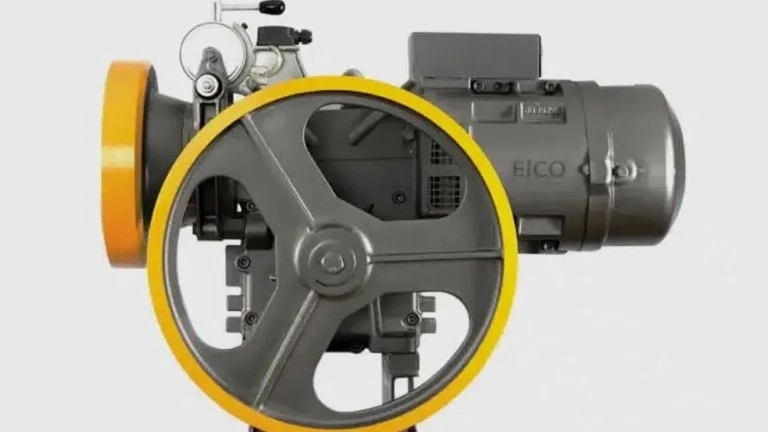
"Gearless motor (without gearbox)"
This type of elevator motor does not have a gearbox or gearbox, and the speed change is done in the internal structure of the motor. In these motors, the rod connected to the motor rotor is directly connected to the blade. The rotation of the rotor will cause the blade to move. The movement of the flap will follow the left or right movement of the tow wire. As a result, in addition to reducing energy, gearless motors can quickly change speed. By reducing the travel time between two stops, these types of motors are the most suitable option for elevators that need high speed or deal with heavy traffic.
"Hydraulic elevator motor"
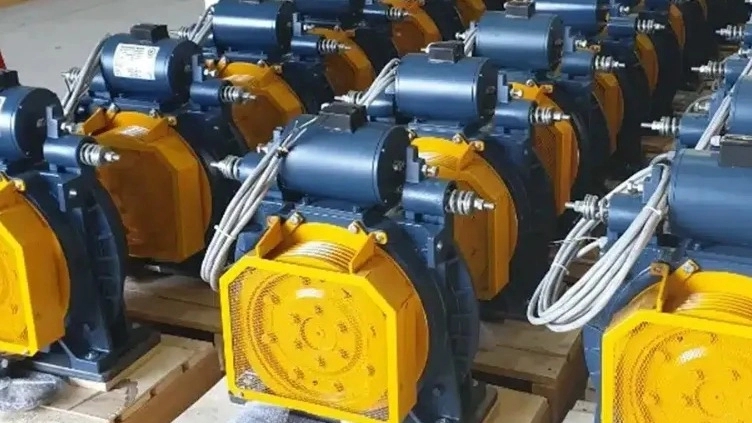
"Hydraulic motor immersed in oil"
This type of elevator motor is completely covered with oil and hydraulic fluid and is actually placed in the elevator power unit. These engines are completely silent and can bring smooth and quiet movement to the cabin. In addition, the energy consumption of oil-immersed motors is very low, so they are very cost-effective. Because these engines are completely immersed in hydraulic oil, they can withstand high temperatures and high pressures. Therefore, these motors can also be used in car elevators. "Dry hydraulic motor or out of oil"
Among other types of elevator motor, we can mention these motors that are placed next to the hydraulic oil chamber and are not placed inside it. Therefore, compared to the previous type, it can withstand less pressure, because high pressure and heavy weight can often increase the temperature and cause the engine to burn. A dry or air-cooled hydraulic motor is usually used in hydraulic lifts.