

برای دریافت مشاوره تخصصی، بازدید پروژه و استعلام قیمت با مشاورین ما تماس بگیرید. ما کمک میکنیم بهترین انتخاب را متناسب با فضا و بودجه خود داشته باشید.
introduction; Why upgrading traditional pools has become important today
A large part of the country's fish farms still operate with traditional ponds. These pools are usually designed with the goals of the past; When low density, high water consumption and manual management were acceptable.
But the situation has changed today:
Increase in the price of feed
Limited water resources
The need to produce more in less space
Higher market sensitivity to product quality
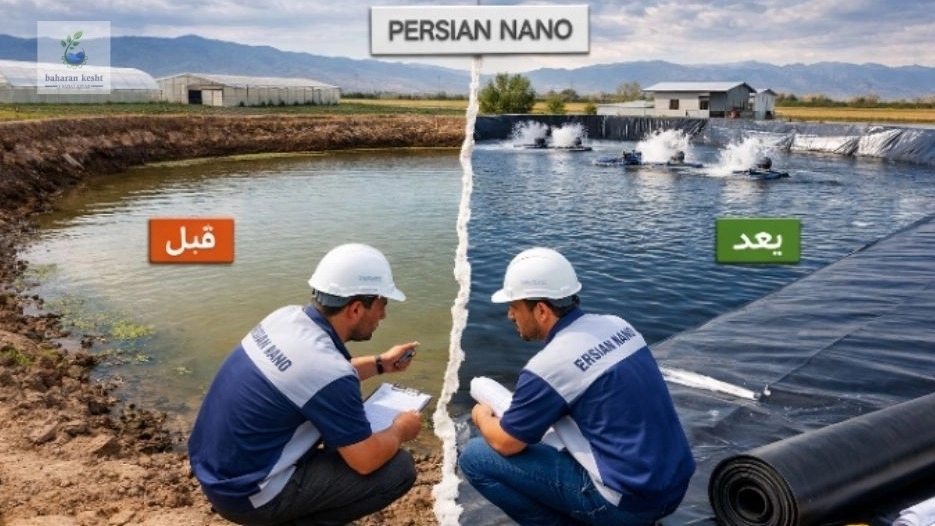
In such a situation, many investors move towards upgrading the existing infrastructure instead of building a new pool. The concept of "semi-nano pool" was formed precisely from this need.
What is a semi-nano pool and how is it different from a traditional pool?
Semi-nano swimming pool is a stage between the traditional system and a completely nanotechnology swimming pool.
In this model, the original structure of the pool is maintained, but its performance is improved through engineering modification.
The main features of the semi-nano pool:
Better control of water quality
Decreasing the direct contact of water with the soil
Hydraulic circulation improvement
Easier waste management
Possibility of increasing production density
The goal is to convert the existing pool into a controllable and sustainable system, without incurring the cost of a full build.
Why not all traditional pools need to be replaced
One of the common mistakes is to think that old pools need to be completely destroyed. The experience of Persian Nano implementation projects shows that in many fields:
The land is suitable
Pool dimensions are standard
General infrastructure is available
The main problem is usually the functional design, not the structure itself.
Therefore, engineering modification can increase the efficiency several times.
Technical steps of upgrading the traditional pool to semi-nano
The first stage - pool engineering assessment
Before any action, the following should be checked:
Slope of the pool floor
Type of soil
Earth subsidence
Input and output water quality
type of fish and production purpose
In Persian Nano's approach, the upgrade decision is made only after the technical analysis of the project.
The second stage - correcting the geometry and slope of the floor
The biggest problem of traditional swimming pools is the accumulation of organic matter in the bottom.
Modifications include:
Create standard slope
Remove dead spots
Direction of excrement to the central exit
This is the basic stage of increasing the biological efficiency of the pool.
The third stage - implementation of engineering coating (semi-nano layer)
In this section, the direct contact of water with the soil is reduced.
Results of this action:
Determination of water quality
Decreasing the growth of pathogens
Preventing water wastage
Better control of biological parameters
This step is the most important difference between the semi-nano pool and the traditional model.
Fourth stage - optimization of water circulation and aeration
After structural modification, functional system is improved:
Principal placement of fans
Improvement of water flow
Increasing the uniformity of oxygen
In many projects, this modification causes a noticeable reduction in losses.
Step 5 – Preparation for future development
The semi-nano pool should be able to be upgraded in the future:
Increasing density
Adding smart equipment
Gradual conversion to full nano system
This is the development-oriented view of Persian Nano projects.
Economic benefits of semi-nano upgrade over new pool construction
The key benefits are:
Reduction of initial capital
Shorter stoppage of production
Faster return of capital
Decreasing executive risk
Use of existing infrastructure
For many investors, upgrading is the best balance point between cost and productivity.
What are the best farms for semi-nano upgrades?
This model is most effective if:
Do you have an active in-ground pool
?Chronic damage is observed
Water quality is unstable
You intend to increase production without land development
Full construction budget not available
When is an upgrade not recommended?
Upgrading does not make sense in the following circumstances:
Severe structural damage
Serious sitting of the earth
Completely changing the breeding model
The need for multiple production jumps
In these cases, building a new pool will be a more logical decision.
The role of Persian Nano in semi-nano improvement projects
Persin Nano's approach is based on three principles:
Pre-execution analysis
Designing according to the economic purpose of the farm
Stepwise upgrade instead of imposing a heavy cost
For this reason, many projects have reached higher efficiency without long stoppage of production.
Final summary
Upgrading the traditional pool to semi-nano is a smart intermediate solution; Not going back to the old ways and not requiring heavy investment.
This approach allows the farmer to:
Maintain the existing infrastructure
Control biological function
Create sustainable production
Pave the path towards advanced systems
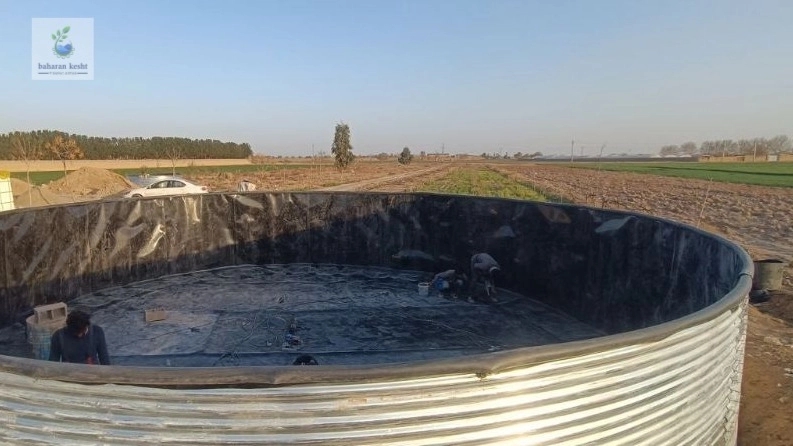
In today's economic conditions, the most successful fish breeding projects are not necessarily the largest; Rather, they are projects that have intelligently upgraded their infrastructure
راههای ارتباطی ما: