
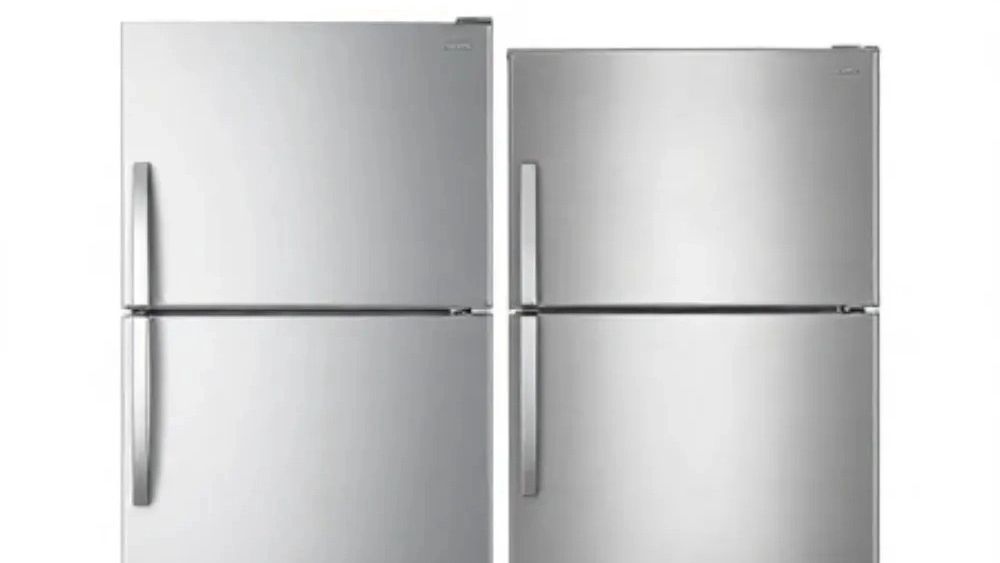
Why is it important to know the difference between domestic and industrial refrigerators?
Knowing the difference between domestic and industrial refrigerators is not just a technical issue; Rather, it directly affects costs, device life, and food preservation quality. If you buy a home refrigerator for a dairy store or supermarket, both the life of the device will decrease and the possibility of food spoilage will increase. On the contrary, if you buy an industrial refrigerator for home use, you will face a lot of noise, high electricity consumption and take up a lot of space.
So knowing the difference between domestic and industrial refrigerators in performance and durability will help you:
- Reduce maintenance costs
- Maintain food safety and quality
- Use the device in the right conditions
- Extend the real life of the refrigerator
The difference in structure and design in domestic and industrial refrigerators
One of the first differences between domestic and industrial refrigerators is in their design and appearance and technical structure. If you look at the body, doors and interior of these two types of refrigerators, you will realize that each one is designed with a specific purpose.
Body design and materials used
In home refrigerators, a more beautiful design is usually used in harmony with the kitchen decoration. Colors, handles, digital displays and modern appearance are very important to attract the attention of the home consumer. On the contrary, in industrial refrigerators, the focus is more on durability, strength and continuous operation rather than luxury appearance.
- The body of industrial refrigerators is usually made of thick stainless steel.
- The body of home refrigerators is often made of painted sheets and is lighter.
This issue is one of the most important differences between domestic and industrial refrigerators in terms of durability and resistance to impact, moisture and frequent washing.
Internal capacity and number of shelves
- Industrial refrigerators have stronger shelves and bear more weight.
- Inner arrangement in an industrial refrigerator is usually simpler but more practical.
- In a home refrigerator, more attention is paid to order, variety of space and additional facilities such as fruit drawers.
The same difference in interior design makes using a home refrigerator not a good option in professional environments.
The difference between the performance of domestic and industrial refrigerators in the cooling system
Besides the appearance and structure, the difference between domestic and industrial refrigerators is very important in the cooling system and the way the engine works. The operation of the refrigerator, the constant temperature and the speed of cooling the food, all depend on the type of cooling system and compressor.
Compressor power and cooling speed
In industrial refrigerators, stronger compressors are used, because they have to cool a larger volume of air and food in a shorter time. This issue makes the difference between domestic and industrial refrigerators in the speed of reaching the desired temperature quite noticeable.
For environments such as supermarkets, restaurants or dairies, this performance difference is very critical, because the refrigerator door is opened and closed many times during the day, and if the cooling system cannot compensate the temperature quickly, the quality of the food will decrease.
Internal temperature stability
In home refrigerators, the opening and closing of the door is usually less and is associated with a limited amount of food. For this reason, their cooling system is designed for relatively calmer conditions. As a result, if you place the home refrigerator in a crowded environment, its temperature will not be well controlled.
The difference between domestic and industrial refrigerators in terms of durability and lifespan
One of the main concerns of buyers is the lifespan of the device. The difference between domestic and industrial refrigerators is clearly revealed in this section, because the operating conditions of these two types of refrigerators are completely different.
Daily performance
Industrial refrigerators are designed for 24-hour continuous operation. In many businesses, turning off the refrigerator overnight or during the day is not possible at all, so the internal components must withstand long-term operation.
On the contrary, home refrigerators are always on, but their working pressure is lower, the door opens less often and they are usually in an environment with a suitable temperature. This difference in use is one of the important reasons for the difference between domestic and industrial refrigerators in terms of durability and depreciation.
Strength of parts and resistance to harsh conditions
As a result, if you use a home refrigerator in an industrial or store environment,:
- The compressor heats up faster and gets damaged
- The door rubber and connections wear out sooner
- Energy consumption increases and frequent breakdowns occur
These cases clearly show that the difference between domestic and industrial refrigerators in durability is not just a simple detail, but a key point in choosing the right one.
The difference in energy consumption in domestic and industrial refrigerators
Another issue that should be addressed in the review of the difference between domestic and industrial refrigerators is energy consumption and energy labels. Many buyers think that an industrial refrigerator always consumes much more than a home refrigerator, but the reality is a little different.
Energy and efficiency label
In industrial refrigerators, the main focus is on uninterrupted performance and strong cooling, but many reputable brands have tried to optimize energy consumption while maintaining performance. Therefore, the difference between domestic and industrial refrigerators in electricity consumption depends on the type of brand, technology and capacity of the device.
Electricity cost in actual use
Generally:
- In the same volume and capacity, the consumption of an industrial refrigerator is more than that of a home refrigerator due to a stronger compressor.
- But in professional use, using a home refrigerator instead of an industrial one can cause more costs in the long run due to the high pressure on the compressor, failure and reduced efficiency.
In this way, the difference between domestic and industrial refrigerators in energy consumption should be examined along with the type of use and actual usage volume, not just based on the number on the energy label.
The difference between domestic and industrial refrigerators in terms of noise and comfort
One of the things that many users pay attention to is the volume of the refrigerator. In the home environment, the high noise of the refrigerator can be annoying, but in the work environment, the focus is more on performance.
The sound level of a household refrigerator
Home refrigerators are designed to create minimal noise in the environment. The compressor, fan and other parts are as silent or low-noise as possible, because the comfort of the family is a priority.
Sound level of industrial refrigerator
In industrial refrigerators, more noise is produced due to the use of stronger compressors and larger fans. This issue is one of the differences between domestic and industrial refrigerators, which does not make using an industrial refrigerator in the home kitchen a suitable choice. For environments such as restaurants, shops and large kitchens, this level of sound is usually acceptable, but it can be annoying at home.
The difference in applications and places of use of domestic and industrial refrigerators
To better understand the difference between domestic and industrial refrigerators, we must look at their practical uses and applications in different environments.
Uses of home refrigerator
- Apartments and private houses
- Suites and small offices
- Limited use in low-consumption shops (for staff drinking and personal consumption only)
Home refrigerator is designed for orderly arrangement, beautiful appearance and daily use in limited volume.
Uses of industrial refrigerator
In these environments, the refrigerator should:
- Open and close several times a day
- Store a large amount of food
- Have a stable and reliable temperature
For this reason, the difference between domestic and industrial refrigerators in design and performance is completely coordinated with their type of use.
Can a home refrigerator be used instead of an industrial refrigerator?
This is the question of many business owners; Especially those who are just starting out and want to save money. Regarding the difference between home and industrial refrigerators, the short answer is: for serious and professional use, this is not recommended.
Consequences of misuse
If you use a home refrigerator instead of an industrial refrigerator in a store or restaurant:
- The compressor is under pressure and breaks down sooner
- The temperature inside the refrigerator does not remain constant and the food is damaged
- There is a possibility of sudden failure and loss of a large amount of food
- In the long run, the cost of repairing and replacing the device will be more than buying a proper industrial refrigerator
Therefore, taking into account the difference between domestic and industrial refrigerators, it is better to choose a refrigerator suitable for your use from the very beginning.