
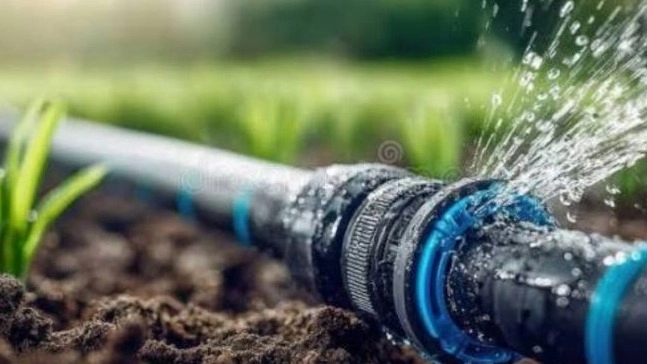
The importance of choosing the right pipe size in the drip irrigation system
Choosing the size of polyethylene pipe does not only mean buying a pipe with a certain diameter, but it is also a result of accurate hydraulic calculations. If the pipe size is chosen too large, the initial cost and installation will increase without improving the efficiency of the system. On the other hand, if the pipe size is small, the pressure drop will be severe, the water flow will decrease, and at the end of the line, the plants will face water shortage.
Relationship between flow rate, flow rate and pressure drop
In the design of the irrigation network, the speed of water flow in the pipes should be in the optimal range (usually between 1 and 2 meters per second). A speed lower than the permissible limit causes sedimentation, and a higher speed increases friction and pressure drop. The best size of polyethylene pipe for drip irrigation is the size that maintains this balance. Hydraulic calculations are done by considering the length of the pipeline, the number of drippers and the height of the ground to determine the appropriate size.
Uniformity of water distribution
One of the main goals of drip irrigation is the uniformity of irrigation. Pressure fluctuations along the main and secondary lines can lead to uneven irrigation. The use of polyethylene pipes of the right size and quality, along with standard connections, ensures that the water pressure remains constant in all parts of the farm and that each plant receives the amount of water it needs.
Common sizes of polyethylene pipes in irrigation and their applications
In drip irrigation systems, pipes are divided into two main categories: "Main Line" and "Lateral Line". Each one needs a different size.
Main Lines
The main pipes carry water from the source (pump or tank) to the branches. These pipes must withstand a high flow rate.
- 1 inch (25 mm) size: Suitable for small farms, home gardens and low capacity systems.
- 1.5 inch (40 mm) and 2 inch (50 mm) sizes: most commonly used sizes for medium farms and orchards. These sizes offer a good balance between cost and performance.
- Size 3 inches (75 mm) and above: Used for large industrial farms, extensive irrigation networks and main transmission lines.
Laterals
The side pipes to which the irrigation strips or drip pipes are connected carry a lower flow rate.
Important note: In Zamzam Pipe Khodadadi, in addition to smooth pipes, drip irrigation tapes are also available with different diameters and drip intervals, which are a perfect complement to polyethylene pipes.
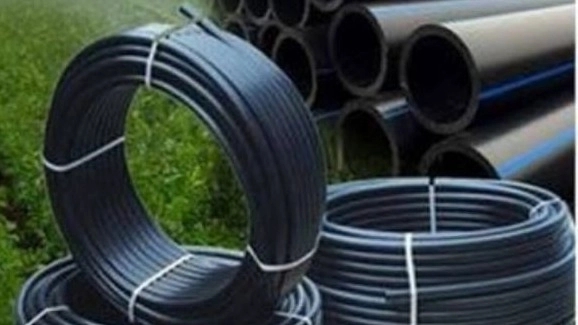
Effective factors in determining the best pipe size
To accurately choose the best size of polyethylene pipe for drip irrigation, the following factors should be considered:
1. Required flow rate (volume of water)
The most important factor is the volume of water that must be transferred per unit of time. The flow rate is calculated based on the number of droppers and their output capacity. The greater the flow rate, the need for a pipe with a larger diameter to reduce the pressure drop.
2. Pipeline length
The longer the pipe, the greater the friction and pressure drop. For long lines, it is recommended to use a larger pipe size than usual to minimize the pressure drop at the end of the line.
3. Crop type and cultivation pattern
The distance between trees or crop rows is effective in determining the length of the side lines and the number of branches. In orchards with tall trees, longer laterals are usually used, which require pipes of a larger diameter.
4. slope of the land
In sloping lands, the difference in height causes the pressure to change at different points. In this case, a more precise hydraulic design is needed and it may be necessary to use pipes with thicker walls or different sizes in different places.
Why polyethylene pipe?
Using polyethylene pipe (PE) in drip irrigation is superior to other materials for several reasons:
- Corrosion resistance: Polyethylene is resistant to chemicals in water and soil and does not rust.
- Flexibility: Installation of polyethylene pipes is easy on uneven ground and requires fewer connections.
- Long service life: These pipes have a useful life of 50 years and are resistant to UV rays (with the addition of carbon mesh).
- Reasonable cost: The ratio of cost to efficiency has made polyethylene pipe an economic option.
The role of Zamzam Pipe Khodadadi business in providing high quality pipes
Choosing the right size is half the way, but the quality of the pipe is the other half of the success of the irrigation system. Zamzam Pipe Khodadadi Trading offers the following services with years of experience in the pipe and fittings industry:
1. Specialized technical advice
Zamzam Pipe Khodadadi commercial technical team helps farmers and engineers to choose the best size of irrigation pipe and tape based on the size of the farm, the type of product and the required flow rate. This advice will prevent you from buying extra or inappropriate pipes.
2. Guarantee of quality and standard
All polyethylene pipes offered in this business have national standard marks and international certificates. The use of first-class raw materials (PE80 or PE100 grade) ensures that the pipes are resistant to pressure and environmental conditions.
3. Product variety and stock
From small 1-inch pipes to large 4-inch pipes and above, all the sizes needed for drip irrigation are available in Zamzam Pipe Khodadadi warehouses. Also, irrigation strips with different thicknesses and distances are provided to complete the irrigation system.
4. Competitive pricing and bulk purchasing
By eliminating middlemen and buying directly from reputable manufacturers, Zamzam Pipe Khodadadi Trading offers very competitive prices for bulk purchases. This issue is especially important for large irrigation projects that require large amounts of pipes.
Key points in the installation and maintenance of polyethylene pipes
After purchasing high-quality pipes from Zamzam Pipe Khodadadi Trading, it is necessary to observe the following installation tips to increase the life of the system:
- Proper bedding: The ground must be smooth and free of sharp pebbles so as not to damage the pipe wall.
- Using a filter: Installing a suitable filter (sand or mesh) at the beginning of the system will prevent clogging of the drippers. System.
- Periodical washing: Washing of secondary and main lines to remove sediments and suspended particles.
conclusion
Choosing the best size polyethylene pipe for drip irrigation is a decision that has a direct impact on water productivity, plant growth, and farmer profitability. This choice should be made based on accurate hydraulic calculations and according to the specific conditions of the farm. Zamzam Pipe Khodadadi Trading is a reliable companion for farmers on the way to modernize irrigation systems by providing high quality products, free technical advice and competitive prices. By trusting Zamzam Pipe Khodadadi products, you will not only guarantee the quality and durability of your irrigation system, but also save water and harvest a higher quality and more productive crop. To receive advice and order polyethylene pipes and irrigation tapes, contact the commercial experts of Zamzam Pipe Khodadadi right now.
لوله پلی اتیلن و نوار تیپ آبیاری قطره ای زمزم پایپ
برای سفارش و استعلام قیمت لطفا تماس بگیرید