
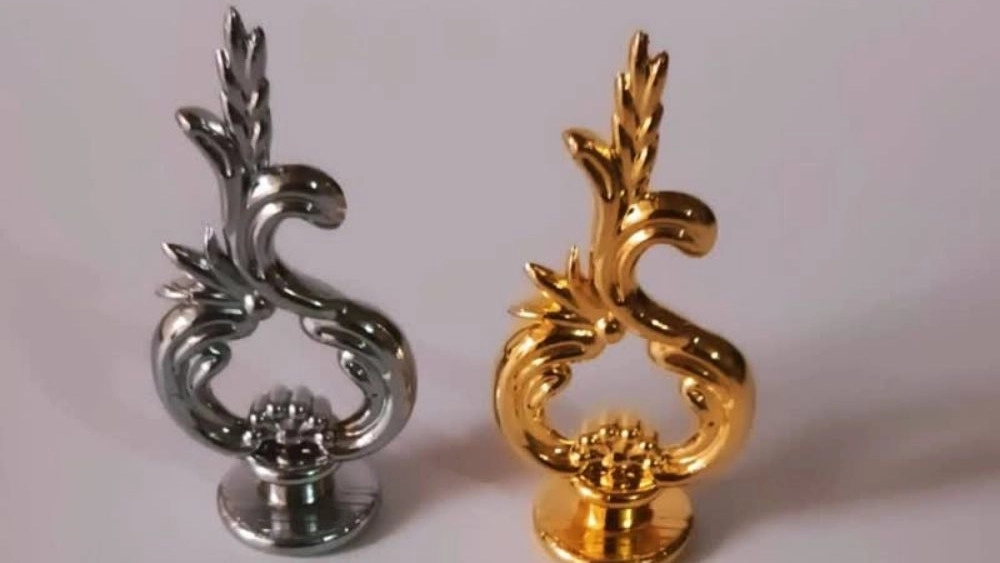
In the industry of decorative dishes, one of the most important concerns of producers is choosing the right type of fittings for the base of dishes. Every dish, especially chocolate, pastry, fruit and decorative resin products, needs a standard and high-quality base for stability and beauty. In such products, it is very important to know the difference between resin fittings and metal fittings in the base of decorative dishes; Because the wrong choice can affect the final quality of the product as well as customer satisfaction.
In this article, we discuss the differences between resin fittings and metal fittings in a comprehensive and practical way, and check in which situations each one is more suitable.
Getting to know the role of fittings in the base of decorative dishes
Iraq in decorative dishes is a piece that has a structural and decorative role at the same time. In many cases, this fitting forms the base of the dish, and in addition to maintaining the weight of the dish, it also plays an important role in its beauty. For this reason, the choice of the type of fittings should not be random and it is necessary to carefully check the material, design, weight, durability and harmony with the container.
What is a resin patch?
Resin fitting is a piece that is produced using resin, reinforcing materials and special molds. Today, this type of fittings is widely used in making crystal bases, chocolate bars, resin container bases, and decorative products.
Resin fittings usually have a beautiful appearance, light weight and high variety. Due to its flexibility in molding, this fitting allows for the production of complex, creative and fully customized designs, which is very important in the decorative market.
What is metal fittings?
Metal fittings are produced using alloys such as brass, zamak, iron or aluminum. This type of fittings has a long history in the industry of making decorative dishes and is mostly seen in traditional, classic and heavy dishes. Many royal pedestals or old luxury crystal vessels are made with metal fittings.
The manufacturing process for metal fittings is more complex than resin, as it involves casting, metal forming, machining, and plating. These fittings are available in gold, silver, bronze and antique colors.
Complete and practical comparison
Appearance and aesthetic difference
One of the most important aspects of comparison is the appearance and design style. Although both types of fittings can be beautiful, they convey a different style and feel.
Resin fitting is suitable for modern, fantasy and minimal styles. Due to the ability to clarify, color and add crystal effects, this fitting can be made perfectly in accordance with resin containers. For this reason, it has a special place in today's resin dishes and decorations.
Metal fittings have a classic, heavy and royal look. This fitting is suitable for dishes that are supposed to convey a sense of luxury and originality, such as brass, crystal and old catering products.
Difference in weight and portability
One of the points of difference between resin fittings and metal fittings in the base of decorative dishes is their weight.
Resin fittings are much lighter and this makes the containers easier to carry, especially in products such as chocolate bars, decorative vases and tableware that have a lot to move around.
On the other hand, metal fittings have more weight. Although this weight contributes to the strength of the product, it may make transportation difficult for some users.
The difference in strength and resistance
In terms of strength, metal fittings are usually more resistant and are a safer option for large, heavy or functional containers.
But resin fittings are also durable if they are produced in a standard way and use high-quality resin, and are fully suitable for light and medium containers.
If a product is constantly exposed to pressure, impact or high weight, metal fittings are a better choice. But for decorative containers, resin or light uses, resin fittings have a great performance.
Differences in moisture resistance
Resin fittings are very resistant to moisture, steam and washing and will never rust.
Metal fittings may rust or change color if their plating is damaged over time.
For this reason, in humid cities, resin patching has a more reliable performance.
Difference in production cost and final price
In terms of cost, resin fittings are usually cheaper and more economical. The main reason for this difference is the simpler production process as well as the lower cost of raw materials.
On the other hand, metal fittings have a higher production cost due to the need for casting, polishing and electroplating. This issue causes the final price of products with metal fittings to be higher.
For manufacturers who intend to supply economic products or mass production, resin fitting is a more suitable choice.
Differences in the production process
The production process of resin fittings includes simple molding, mixing resin and additives, pouring into the mold and final finishing. This method is faster and more flexible.
While the production process of metal fittings includes the steps of casting, metal melting, machining, surface finishing and electroplating. Each step is time-consuming and expensive, and it will be more difficult to change the design.
This difference is one of the most important things in choosing the right fittings for manufacturers of decorative dishes.
The difference is in the possibility of customization
Resin fittings are superior in terms of customization.
This fitting can be produced in any design, shape, color or dimension. You can even create special effects such as glossiness, transparency or mixed colors.
But in metal fittings, creating complex or custom designs requires special molds and high cost. Also, it is more difficult and time-consuming to change the design in serial production.
For this reason, resin artists and manufacturers of decorative dishes usually prefer resin fittings.
Differences in coordination with different decorative dishes
Resin fittings have the best harmony with resin and transparent containers and make the design integrated.
Metal fittings are more suitable for traditional, classic and crystal dishes and give a luxurious effect to the product.
Therefore, choosing the type of fitting should be done based on the style of the product and its audience.
When is resin patching a better and smarter choice?
Resin fitting is an ideal choice in the following cases:
Resin and modern products
Light decorative dishes
High circulation production
Markets where price is very important
humid environments
Products requiring exclusive or special design
These conditions have made resin fittings more popular in today's market.
When is metal fittings a more suitable option?
Metal fittings are suitable for products that require very high strength or must have a royal effect. Large and crystal dishes, bronze dishes and classic decorative products usually become more beautiful and standard with metal fittings.
summary
Knowing the difference between resin fittings and metal fittings in the base of decorative dishes helps manufacturers make an informed and professional choice. Both types of fittings have their own advantages, limitations and applications. Resin fittings are a suitable choice for modern, light and customized products, while metal fittings are more useful for heavy, luxury and classic dishes.
Finally, the best choice is obtained when the type of container, design style, budget, target audience and product application are considered.