
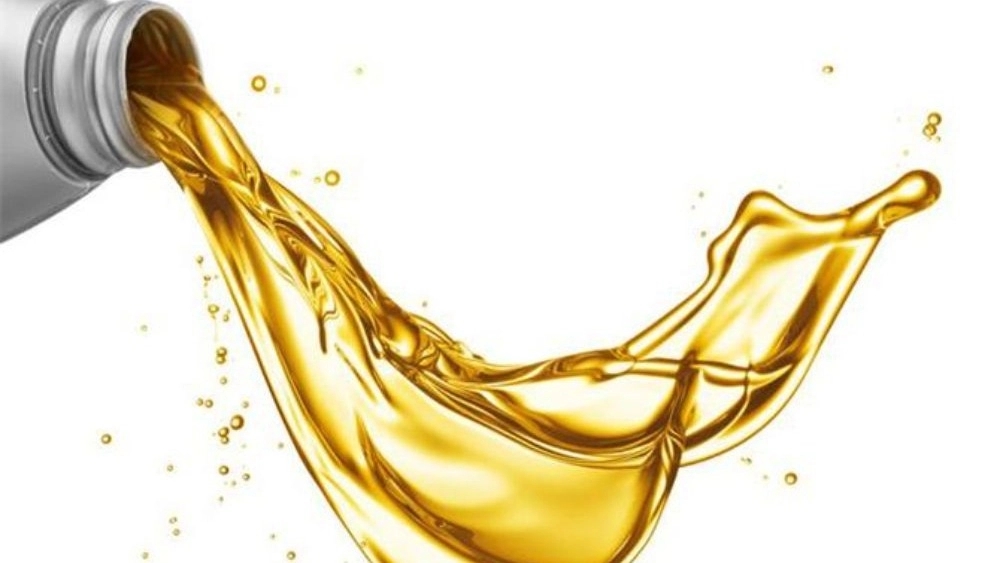
At the heart of every modern industry, from massive power plants to small machine shops, runs a vital fluid that ensures smooth operation, reduced wear, and energy transfer: **Industrial Oil**. This transparent or colored liquid is more than a simple substance; Rather, it acts as blood in the veins of machinery and guarantees the life of the equipment. If you have an industrial activity in Tehran or anywhere in Iran, knowing the types of oils, greases and their technical characteristics is the key to success and reducing maintenance costs.
In this comprehensive article compiled by the expert team of **Azarpaya Company** in Tehran, we examine the world of lubricants in depth. We cover basic concepts to the most specialized technical points so you can make the best choice for your equipment.
What is industrial oil and why is it vital?
**What is industrial oil?** Simply put, industrial oil is a liquid that is used to reduce friction between moving surfaces, cool parts, prevent rust, and keep the internal components of machinery clean. Unlike automotive engine oil, which is a complex mixture of additives, industrial oils are often designed based on specific needs. Some are only for lubrication, some for power transmission (such as hydraulic systems) and others for cooling at very high temperatures.
The importance of industrial oil can be summarized in two points:
Types of industrial oils and their specialized uses
The variety of industrial oils is huge and the wrong choice can be disastrous. In the following, we will review the most important types of industrial oils supplied by Azarpaya Company in Tehran:
1. Hydraulic oil: the beating heart of pressure systems
Hydraulic systems play a major role in cranes, presses, plastic injection machines and road construction machinery. **Hydraulic oil** must have the following characteristics:
* **High Viscosity Index:** Low viscosity change in temperature fluctuations.
* **Anti-foam properties:** Prevents the formation of air bubbles that weaken the pressure.
* **Oxidative stability:** Resistance to decomposition due to heat and high pressure.
* **Water Separation Ability:** If moisture enters, it separates water to prevent corrosion.
2. Heat transfer oil: temperature management in sensitive industries
In industries such as petrochemicals, refineries and industrial furnaces, temperatures exceed the operating temperature of conventional oils. **Heat Transfer Oil** (Thermal Oil) is designed for closed systems to transfer heat without boiling or freezing at very high temperatures (sometimes up to 350°C). These oils must not oxidize or form deposits, because clogging of pipes can lead to explosion or complete stoppage of the production line.
3. Compressor oil: breaths of industrial machines
Compressors compress air or gas and this process produces a lot of heat. **Compressor oil** has two functions: lubricating the pistons or spirals and cooling the compression chamber.
* **Piston compressors:** need oil with a high ignition temperature.
* **Scroll and screw compressors:** require oil with precise viscosity and high chemical stability.
* **Gas compressors:** have special oils that do not react with pressurized gases.
4. Gear oil or Vaskazin: Protection against heavy pressures
Gearboxes and gearboxes are under very high contact pressure. **gear oil** or Vaskazin must contain EP (Extreme Pressure) or anti-pressure additives. These additives create a protective layer at metal-to-metal contact points to prevent rib crushing and surface fatigue. Choosing the viscosity grade (such as ISO VG 68, 100, 220, etc.) for gears is very important.
5. Turbine oil: accuracy and stability at high speeds
Heat, gas and water turbines in power plants work at very high rotation speeds (several thousand revolutions per minute). **Turbine oil** must be extremely clean, free of suspended particles and have rapid water separation properties. Any contamination can irreparably damage the sensitive turbine bearings.
6. Transformer oil: electrical insulation and cooling
This oil has a dual role: electrical insulation between the windings and the core, and heat transfer from the core to the reservoir. **Transformer oil** must have very high dielectric strength, high flash point and no moisture. Regular tests of trans oil (such as dielectric and gas bubble test) are required for the health of the power grid.
Types of industrial grease: when oil is not enough
Sometimes liquid oil is not suitable due to leakage or lack of retention in the friction area. In these cases **types of industrial grease** are used. Grease is actually a combination of base oil, metal soaps (such as lithium, calcium or aluminum) and additives.
* **Calcium base greases:** Water resistant, suitable for wet bearings.
* **Litem base greases:** All-purpose, resistant to temperature and water.
* **Polyurea base greases:** Long life and high thermal resistance, suitable for high speed bearings.
* **Heavy greases:** For chassis of cars and heavy mining equipment.
Azarpaya company supplies a wide range of industrial standard greases for different temperature and load conditions.
Petroleum-based industrial oils: the main root
Most common industrial oils are obtained from crude oil derivatives. These **petroleum-based industrial oils** (Mineral Oils) are the most widely used type of lubricants due to their low production cost and easy availability. They are produced from the process of distilling and refining crude oil. However, in very harsh conditions (very high or low temperatures, strong oxidizing environments), synthetic oils are a better alternative. However, for 80 to 90 percent of industrial applications, high-quality mineral oils meet the needs.
Viscosity: the most important technical characteristic
When you ask what is **viscosity of industrial oil**, you should think about the "thickness" or resistance of the oil to flow. Viscosity is the most important parameter in oil selection.
* **Low Viscosity:** The oil is thinner, flows faster and has less internal friction, but may not form an adequate protective layer.
* **High Viscosity:** The oil is thicker, creates a thicker film but creates more resistance to movement and causes an increase in temperature.
ISO VG standard (International Organization for Standardization Viscosity Grade) is the most common classification system. For example, ISO VG 46 oil is a medium viscosity hydraulic oil, while ISO VG 220 is a high viscosity gear oil. Choosing the wrong viscosity can lead to premature wear or high energy consumption.
Why do we add additives to oil?
Base oil alone (whether mineral or synthetic) has limited properties. In order for an oil to last in harsh industrial conditions, additives must be added to it. These chemicals have specific duties:
Without these additives, industrial oils will degrade and lose their effectiveness in less than a few hours under real working conditions.
The role of Azarpaya company in Tehran: reliable supplier and technical consultant
In the turbulent market of lubricants, it is a big challenge for technical managers to distinguish the original quality from fake or inappropriate oil grade. **Azarpaya Company** with its headquarters and warehouse in Tehran, as one of the leading suppliers of industrial oil and grease, takes this burden off your shoulders.
Why Azarpaya?
* **Guarantee of product authenticity:** All our products have certificates of authenticity and laboratory analysis.
* **Expert advice:** Our technical team will help you choose the best oil based on the type of machine, working conditions (temperature, load, speed) and working environment.
* **Product diversity:** From hydraulic and vascasine oils to turbine and transformer oils, all international and domestic reputable brands are available.
* **After sales service and oil analysis:** We are not the only seller; We are your maintenance and repair partners. By analyzing used oils, we can predict the health of your devices and identify failures before they occur.
conclusion
Choosing the right **industrial oil** is not an expense, but a smart strategy to reduce repair costs, increase productivity and work safety. From **hydraulic oil** to **heat transfer oil** and **industrial greases**, each has its own technical language. By understanding concepts such as viscosity and the vital role of additives, you can make better decisions.
To get a free consultation, inquire about the price and buy all types of industrial oils and greases of the highest quality, contact **Azarpaya** in Tehran. We are committed to keeping the blood flow of your industry healthy and dynamic with our technical knowledge and years of experience in Iran's industry.