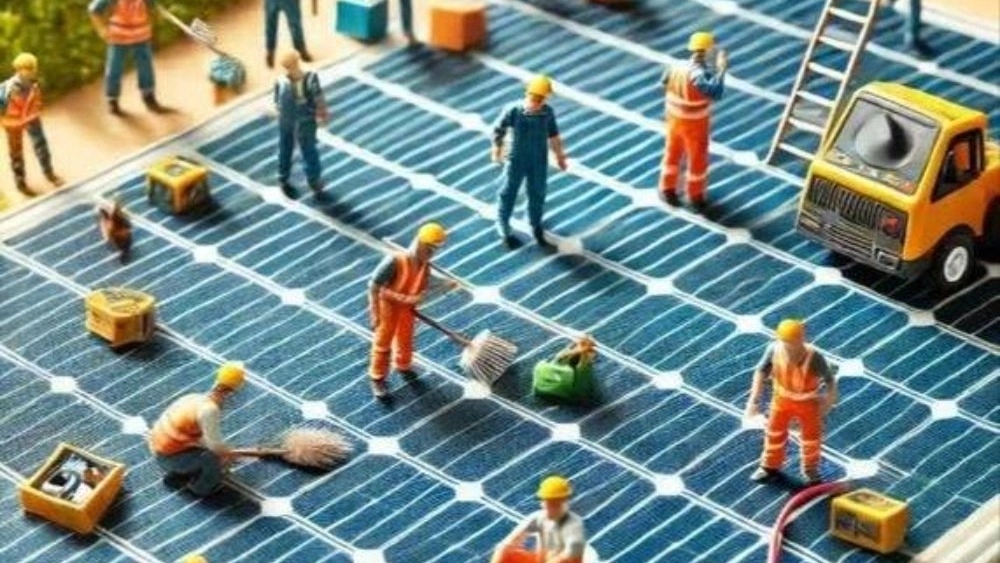
In today's world, due to the continuous increase in energy costs, environmental concerns and the reduction of fossil resources, the approach towards clean and renewable energy has turned from a luxury choice to an unavoidable necessity. Among all the available options, **solar energy** is known as one of the best solutions for supplying electricity to homes and industries due to its availability, decreasing initial costs and high efficiency. Many people are still torn between the benefits and challenges of this technology, but the fact is that with the advancement of technology, installing solar systems has not only become affordable, but also increases property value. In this comprehensive and specialized article, we will carefully review the **advantages of using solar energy** and the **solar panel installation** process so that you can make a smart decision for a green and economic future with full knowledge.
Transformation in household economy using solar energy
One of the most tangible and important reasons for the tendency towards solar energy is its direct effect on the family economy. Although the initial cost of purchasing and installing photovoltaic systems may seem high at first glance, long-term calculations show that this investment has a very attractive return on investment (ROI).
Significant reduction in electricity bills
By **installing solar panels** on the roof or outdoor space of the property, you practically become a small power plant. These systems produce the electricity you need daily and you can sell the surplus to the national electricity grid and earn money or store it in batteries. In many areas, even with the normal consumption of a household, solar electricity production can reduce the need to buy electricity from the grid to zero or at least 70%. This means the elimination or drastic reduction of monthly bills, which is considered a great economic boon due to inflation and the increase in energy tariffs in recent years.
Maintaining property value and increasing sales appeal
Many real estate market studies have shown that homes with solar energy systems sell faster and at a higher price. Today's buyers are looking for homes that have lower running costs and are environmentally responsible. Therefore, using solar energy as a modern and profitable option will increase the property value of your property and can offset part of the initial installation costs when the property is sold.
Independence from energy price fluctuations
Being connected to the national electricity network exposes you to price fluctuations and possible power outages. By having a solar system equipped with a battery (hybrid or off-grid system), you gain energy independence. During a nationwide power outage, your system will continue to work and ensure your comfort. This peace of mind has an intangible but very high value.
Environmental and social benefits of clean energy
Beyond the economic saving, the **advantages of using solar energy** have wider dimensions in preserving the environment and society's health. Changing lifestyle towards sustainability is a shared responsibility for current and future generations.
Reducing carbon footprint and air pollution
Fossil fuels such as coal, oil and gas are the main source of greenhouse gas and carbon dioxide production, which lead to global warming and climate change. Solar energy is a completely clean source and does not produce any pollution while generating electricity. With **solar panel installation** on a large scale, our contribution to reducing greenhouse gas emissions will be significantly reduced. This helps to improve air quality, reduce respiratory diseases and preserve the natural ecosystem.
Conserving natural resources for future generations
Fossil fuel resources are limited and will run out one day. But the sun is an unlimited and stable source that will shine for us for billions of years. By switching to solar energy, we prevent the depletion of natural resources and ensure that future generations also benefit from sufficient and cheap energy. This is a moral and human action to preserve the planet.
Reduce noise pollution
Unlike diesel power plants or wind turbines that produce a certain sound, solar panels operate completely silently. This feature makes them an ideal option for installation in dense residential areas, hospitals and educational centers, without causing noise pollution.
Technical and engineering process of solar panel installation
To enjoy all the **advantages of using solar energy**, it is very important to know the technical steps of **solar panel installation**. This process is not complicated, but it requires high precision and expertise. A wrong installation can reduce the efficiency of the system by 30% or even create a fire hazard.
1. Site evaluation and design
Before any action, expert engineers should check your site. Factors such as the angle of sunlight, the presence of shade (trees, nearby buildings), the orientation of the roof (south facing is the best direction in the northern hemisphere) and the structural resistance of the roof are determined at this stage. Based on these data, the system design is done.
2. Selection of quality equipment
The main equipment includes solar panels (modules), inverter (DC to AC power converter), battery (if needed), structure (supporting structure) and special cables. The quality of these parts directly affects the life and efficiency of the system. It is recommended to use monocrystalline panels with high efficiency and smart inverters with valid warranty.
3. Installation of structures and panels
Installation of galvanized or aluminum structures on the roof or ground is the first physical step. Then the panels are carefully mounted on the structure. The installation angle should be such that it absorbs the most sunlight throughout the year. Connections must be completely tight and insulated against wind and rain.
4. Electrical connection and commissioning
After the physical installation, cabling and connecting the panels to the inverter and the building's power grid is done. At this stage, safety and functional tests are performed and the system is activated. Online monitoring (in smart systems) allows you to see the amount of electricity production in real time.
Challenges and solutions to deal with them
With all the **advantages of using solar energy**, there are some challenges to be aware of. Understanding these challenges will help you find the right solutions to overcome them.
High initial cost
Although the price of equipment has decreased in recent years, there is still an initial capital required for purchase and installation. Solution: Using bank facilities, government subsidy schemes or rental systems where you don't pay any fees and only benefit from the electricity produced. Also, the return on investment occurs in the first 3 to 5 years, and during the 25-year lifespan of the panels, electricity will be practically free.
Dependence on weather conditions
Solar panels produce less electricity at night and on cloudy days. Solution: Using hybrid systems that are combined with the national power grid or storage batteries. Also, the correct design of the system, taking into account peak consumption on sunny days, ensures the supply of demand on cloudy days.
Need enough space
Sufficient space on the roof or ground is needed to generate significant electricity. Solution: Using high-efficiency panels that produce more electricity in a smaller area. You can also use the open spaces around the building or parking lots to install solar canopies.
The future of solar energy and new technologies
The solar energy industry is growing rapidly and new innovations are coming to market every day. Bifacial glass panels that absorb light from both sides, micro inverters that do not disrupt the entire system if one panel fails, and lithium batteries with greater capacity and longer life are examples of these developments. Also, the integration of solar panels with building materials (BIPV) allows the panels to be used as part of a building facade or roof, which is very aesthetically appealing.
Summary and call to action
Finally, **advantages of using solar energy** is more than a temporary trend and is a structural transformation in the way energy is produced and consumed. By **installing solar panels**, you not only save your money, but also play a role in preserving the environment and ensure your energy security. Although there are challenges such as the initial cost, but with proper planning and selection of quality equipment, these obstacles can be easily overcome.