
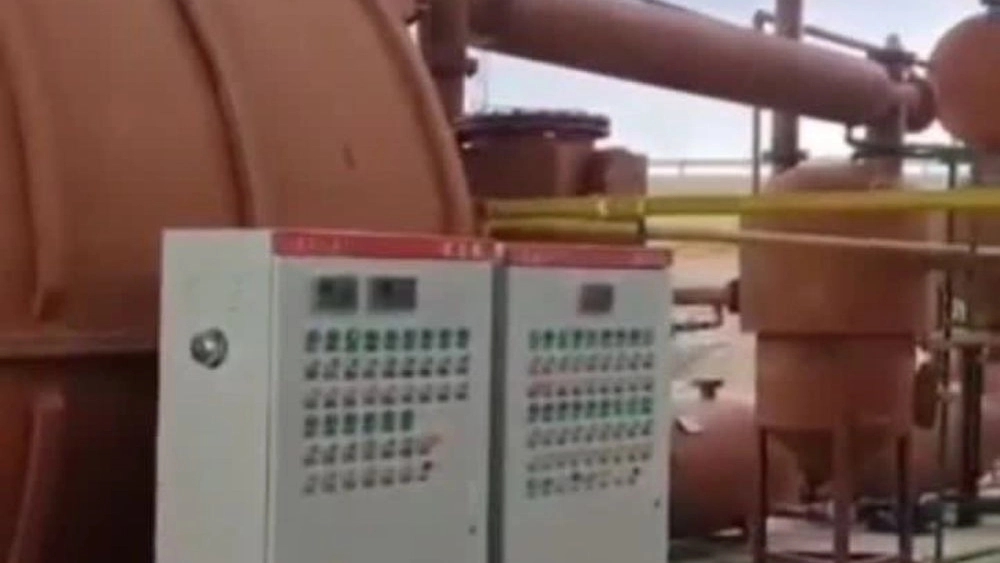
In recent years, industrial waste management, especially rubber waste, has become one of the most important environmental and economic challenges. The high volume of used tires, which are left mainly from cars, transportation industries and industrial machinery, can become a source of soil, water and air pollution if not properly managed. In such a situation, using new recycling technologies and turning waste into valuable materials has become very important.
One of the most important new methods in this field is rubber pyrolysis technology. Using thermal decomposition under controlled conditions, this technology converts used tires into usable products such as pyrolysis oil, recycled carbon black, and fuel gas.
In Jolfa industrial zone, several projects are being implemented for the development of recycling and refining industries of polymer materials. In the meantime, the project of designing and setting up the rubber pyrolysis line by Ares Polymer Refinery is one of the important examples of industrial development in this region. With the aim of managing rubber waste and turning it into valuable materials, this project plays an important role in the development of circular economy and reducing environmental pollution.
In this article, the process of building and setting up the rubber pyrolysis line in Jolfa, industrial design stages, required equipment and the role of the Aras polymer material refining group in the implementation of this project are examined.
What is rubber pyrolysis technology?
Rubber pyrolysis is a chemical and thermal process in which worn tires are decomposed in an environment without the presence of oxygen and at high temperature. In this process, the complex structure of the polymers in the rubber is broken and turned into simpler compounds.
The main products of rubber pyrolysis are:
- Pyrolysis oil
- Recycled carbon black
- Combustible gas
- Recycled steel wire
These products can be used in various industries such as industrial fuel production, chemical industries, rubber production, energy production and steel industries.
In industrial projects such as the project implemented by Ares Polymer Materials Refining, the design of the pyrolysis system is done in such a way that the highest energy efficiency and the highest economic efficiency are achieved.
The importance of establishing a rubber pyrolysis line in Jolfa
Jolfa region is considered one of the important industrial and commercial hubs in the northwest of the country due to its special geographical location and location in the Aras Free Zone. The development of recycling industries in this region can help reduce environmental pollution in addition to creating added value.
Setting up a tire pyrolysis line in Jolfa brings many advantages, including the following:
- Principal management of rubber waste
- Production of industrial raw materials
- Creation of employment in the region
- Reduction of dependence on fossil energy sources
- Development of advanced recycling industries
In the meantime, Aras Polymer Refinement Group has been able to play an important role in the development of this industry in Jolfa region by focusing on the development of new technologies for polymer refinement.
The stages of designing the rubber pyrolysis line
Designing an industrial rubber pyrolysis line requires several technical, engineering and environmental studies. This process is usually done in several main steps.
Feasibility study
The first step in the implementation of the pyrolysis project is to conduct feasibility studies. At this stage, various factors are checked, including:
- Availability of raw materials
- Economic capacity of the project
- Industrial infrastructure of the region
- Environmental standards
In the project implemented by Ares Polymer Material Refining, detailed feasibility studies have been carried out before the start of implementation.
Process engineering design
In the process engineering design section, the overall structure of the pyrolysis line and the arrangement of the equipment are determined. At this stage, engineers define the necessary units and devices according to the type of raw materials, required capacity and production goals. Process design includes the following:
- Determination of pyrolysis furnace capacity
- Type of thermal system
- Type of reactor (rotary, fixed or semi-continuous)
- Type of distillation system
- Design of gas filtration unit
- Prediction of energy recovery system
- Calculation of optimal temperature and pressure for reaction
- Design of gas and oil circulation path
In the project carried out in Jolfa, Aras Polymer Materials Refining Group, with a precise engineering approach, has designed the pyrolysis system in such a way that both the energy efficiency is high and the least amount of pollution is produced. Using modern engineering simulation methods, this complex has optimized the temperature conditions and designed the reaction path with minimal energy loss.
Selection of industrial equipment
After the complete design of the process, the equipment selection stage begins. The selection of equipment for a pyrolysis unit is very important, because the quality of the equipment directly affects the quality of the final products. The most important equipment includes the following:
Pyrolysis furnace
The pyrolysis furnace is the main heart of the unit. These furnaces should be made of high heat resistant steel and have a strong insulation system. Choosing the furnace capacity also plays an important role in the productivity of the line.
Distillation unit
Oil and gas produced from the reactor must enter the distillation unit. In this section, different vapors are separated and placed in suitable storage tanks. The design of the distillation column was carried out in the Aras polymer material refining project with the aim of improving oil quality.
Filtration and pollution control unit
One of the important parts of any pyrolysis line is the control of pollutants. The use of multi-stage filtration systems allows exhaust gases to be completely purified and meet environmental standards.
Storage tanks
Final products including pyrolysis oil, carbon black and gas should be stored in standard tanks. These tanks are usually made of stainless steel and are equipped with safety systems.
Construction and installation of rubber pyrolysis line
After selecting the equipment, the executive operation begins. The standard model of pyrolysis line construction includes the following steps:
Land and infrastructure preparation
The first step includes preparing the equipment installation space. The surface of the ground should be reinforced and proper concreting should be done to bear the weight of the devices. Also, the creation of electricity supply routes, gas piping and industrial water supply is done at this stage.
Installation of devices
After the infrastructure is prepared, the devices are installed at the designated location. The installation of the pyrolysis furnace and the distillation unit must be done with great care, because the smallest error can disrupt the system's performance.
Connecting pipes and control systems
At this stage, all pipes, fittings and cables are installed according to the engineering drawings. Control systems include:
- Pressure indicators
- Temperature control
- Gas controllers
- Safety systems
Digital and intelligent control systems have been installed in the Ares polymer material refining project so that the operator can manage the condition of the furnace at any moment.
Initial test
After the installation is completed, initial tests are performed. These tests include checking:
- Furnace performance
- Thermal system efficiency
- Distillation quality
- Potential leakage rate
- Accuracy of sensor performance
All tests must be approved by the engineering team to enter the official launch phase.
Setting up the pyrolysis line
Setting up the pyrolysis unit is one of the most important parts of the project implementation. At this stage, the technical team tests the system with a small amount of raw materials, and after ensuring the correct operation, the production capacity is gradually increased. In the Aras Polymer Materials Refining Complex, the start-up process was carried out with the presence of experts and the system entered the operation phase with the least energy loss.
Advantages of the pyrolysis line designed in Jolfa
The project implemented in Jolfa has several advantages, some of the most important of which include the following:
- Use of low-consumption technology
- Reduction of environmental pollution
- Production of high quality products
- Possibility of energy recycling
- Full support by the Aras Polymer Materials Refining Group
This project, combining modern technology and precise engineering design, is a remarkable example of the development of recycling technology in the northwest region of the country.
The role of Aras polymer material refining in the implementation of the project
Aras Polymer Materials Refining Group, as one of the important activists in the recycling industry in Aras Free Zone, has played a key role in the design and launch of this line. This group has implemented this project completely by using domestic experts and using the world's standards.
Some of the key actions of this collection include the following:
- Conducting feasibility studies
- Designing engineering documents
- Providing main equipment
- Implementation and installation of devices
- Executing quality control tests
- Training operators
- Technical support in the production phase
This process shows that the project implemented in Jolfa is not just a production line, but the result of a wide industrial and engineering collaboration.
summary
The construction of the rubber pyrolysis line in Jolfa is an example of industrial development based on new recycling technologies. With the implementation of this project, Aras Free Zone has taken an important step in the direction of industrial waste management, production of valuable materials and development of circular economy.
Aras Polymer Materials Refining Group, as the executor of this project, has played a key role in the design, construction and operation of this line, and by using today's technical knowledge, it has been able to create a stable, low-consumption and profitable unit.
This project shows that the development of the recycling industry in the country can lead to valuable results with a combination of technical knowledge, proper management and environmental approach.