
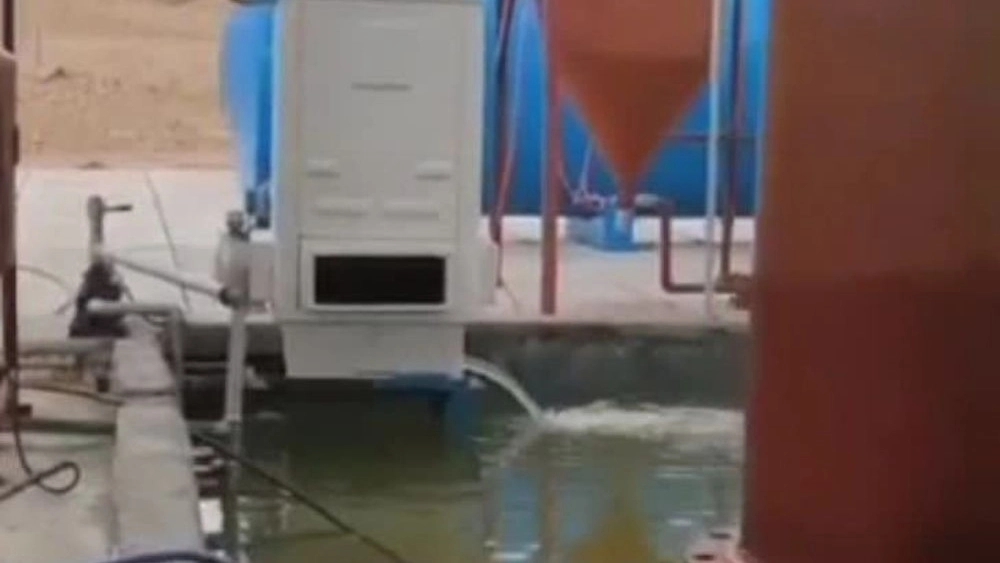
Rubber waste is one of the most important environmental problems in the world. With the ever-increasing growth of transportation industries and the increase of cars, the volume of used tires has also increased. These wastes are difficult to decompose if left in the environment and can remain for years and cause many problems. Therefore, the use of new technologies for the recycling of rubber waste has become particularly important.
In the Jolfa region, the implementation of the large pyrolysis project by Aras Polymer Refinery is the starting point of an industrial revolution in the field of rubber waste management. In this article, a complete review of this project, the role of the executive group, economic and environmental benefits, and the detailed steps of its implementation are discussed.
Introducing the rubber pyrolysis project in Jolfa
The rubber pyrolysis project in Jolfa is one of the largest industrial projects in the field of recycling polymer materials in the northwest of the country. This project is designed with the aim of creating a complete recycling cycle of used tires and turning them into industrial base materials.
Several important factors have played a role in choosing Jolfa to implement this project:
- Strategic location of Aras Free Zone
- Easy access to raw materials
- Existence of expert forces
- Possibility of industrial infrastructure development
- Supportive policies of Aras Free Zone
Aras Polymer Refinery Group has been able to coordinate this project with today's world standards with detailed planning and engineering management.
Why is this project important in Julfa?
Jolfa is one of the growing industrial areas in the country. The implementation of recycling projects in such areas, in addition to creating employment, also causes sustainable development and pollution reduction. The rubber pyrolysis project in Jolfa has several key advantages:
These advantages have made the design and launch of this unit by the Ares Polymer Materials Refining group to be recognized as a successful industrial project.
How does rubber pyrolysis work?
The outputs of this process are:
- Pyrolysis oil (as industrial fuel)
- Combustible gas (can be used to power the line)
- Recycled carbon black
- Steel wire
Project implementation steps by Aras polymer material refining
Executing the pyrolysis project is a multi-step process that must be done with high precision. Aras Polymer Materials Refining Group used a regular and engineered program in the implementation of this project, which includes the following steps:
First stage: preliminary studies and assessment of conditions
At this stage, the expert team has done a complete investigation of Jolfa region, access to raw materials, infrastructure and industrial needs. Also, economic and environmental analysis has been done to determine the capacity of the line.
Second stage: engineering and process design
Design engineering documents include 3D maps, flow diagrams, capacity calculations and reactor type selection. The Ares polymer material refining collection has used advanced simulation software in this section.
The third stage: preparation and construction of equipment
The key equipment of this project are:
- Pyrolysis reactor
- Heat furnace
- Distillation systems
- Filtration unit
- Storage tanks
- Control systems
All equipment complies with thermal and safety standards.
The fourth stage: installation and implementation of the project
After transferring the equipment to the project site in Jolfa, the installation operation has started. This step includes:
- Furnace installation
- Industrial plumbing
- Installation of electrical system and precision instruments
- Construction of supporting structures
This part of the project was carried out under the supervision of the technical team of the Aras polymer material refining group.
The fifth stage: testing and setting up
At this stage, the system is tested in several stages to ensure the correct functioning of all parts. After final approval, the line is put into operation.
Technical and industrial benefits of the project
Setting up a rubber pyrolysis line in Jolfa has several advantages that have made this project attract the attention of polymer and recycling industry activists.
High yield of products
The intelligent design of the line has increased the quality of pyrolysis oil and carbon black.
Reducing energy consumption
The energy recovery system installed in the line allows the produced gas to be used again to supply energy to the furnace.
Benefit from modern technology
This project is compatible with international standards and uses equipment resistant to high heat.
Fully supported by Aras Polymer Materials Refinement
As the project manager, this group is also responsible for staff training, equipment maintenance, and technical support.
Environmental impacts of the project
In addition to the economic value, the pyrolysis project in Jolfa has many positive environmental effects:
- Preventing the accumulation of rubber in nature
- Reducing greenhouse gas production
- Preventing the burning of tires by some unauthorized industries
- Reducing air pollution
- Supporting sustainable development
These things have made this project known as one of the successful examples of green management in the region.
The role of Aras polymer material refining in the development of pyrolysis industry
This group is not only a project manager, but plays the role of a developer in the field of recycling technology. The important actions of this collection include:
- Technical knowledge transfer
- Indigenous design of equipment
- Increasing process efficiency
- Improving the quality of output products
- Providing industrial solutions for waste management
Due to these activities, Aras Polymer Materials Refining Group is considered one of the active brands in the polymer recycling industry in the country.
summary
The rubber pyrolysis project in Jolfa, which was designed and implemented by Aras Polymer Materials Refining Group, is a successful example of the application of new technologies in the recycling industry. Using modern technologies, accurate design and proper management, this project has been able to turn rubber waste into valuable materials and play an important role in the development of circular economy and reducing environmental pollution.
This pyrolysis unit is not only of economic value for the Jolfa region, but it is also a model for the implementation of similar projects throughout the country.