
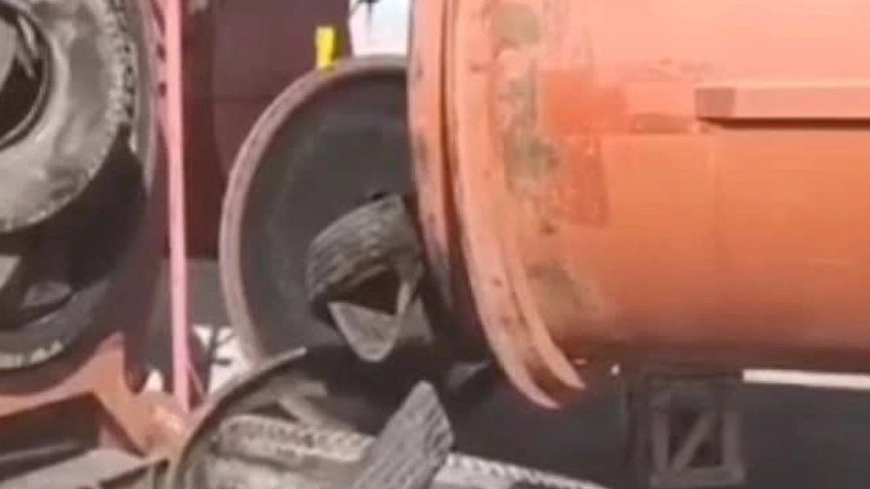
The increase of rubber waste and the environmental consequences of their release has become one of the serious problems of industries and urban management. In recent years, the importance of new waste recycling approaches, especially rubber waste, has received special attention in the world and especially in Iran. The implementation of technological projects in the field of rubber recycling by groups such as Aras Polymer Materials Refinement not only reduces pollution and environmental damage, but also provides the basis for the production of valuable materials and sustainable employment.
In this article, along with the expert analysis of the process of designing and setting up the pyrolysis line by Aras polymer material refining in Jolfa, we discuss the technical requirements of the project, the positive economic and environmental effects, and the role of this complex in promoting the country's recycling industry.
Necessity of pyrolysis technology in rubber recycling industry
Due to the polymer structure and special physical properties, rubber wastes are difficult to decompose in nature, and in case of accumulation, they create serious risks for soil, water and the health of living beings. Considering the high production of used tires in the country, the need for technological and economic solutions to recycle them is strongly felt.
Pyrolysis technology is one of the most advanced methods of rubber recycling, which extracts products such as pyrolysis oil, carbon black, combustible gas, and steel wire by thermal decomposition of rubber polymers in an oxygen-free environment. In addition to helping to reduce environmental problems, this method provides part of the industries' need for cheap and sustainable raw materials.
By investing in the pyrolysis line in Jolfa by Ares Polymer Materials Refining, this technology has entered the field of industrial recycling in a structured and scientific way.
Investigating the pyrolysis line design process by refining Aras polymer materials
Designing an efficient pyrolysis line requires full knowledge of raw material properties, operating conditions, safety standards, production capacity, and environmental requirements. With a knowledge-based approach and a specialized team, the Aras Polymer Materials Refining Group implements the following steps in the design of the pyrolysis line:
1. Technical and economic evaluation
At the beginning of the work, an economic-engineering analysis is performed on the way to supply raw materials, optimal capacity of the line, profitability and economic impact of the project. Market studies for output products such as pyrolysis oil and carbon black are also considered.
2. Choosing the right technology
According to the needs of the project and the final capacity, the type of reactor (rotary or fixed), furnace form, thermal system and process control are determined. Ares polymer material refining selects and implements the best engineering option by using modern technology and material simulation software.
3. Compilation of executive plans and arrangement of equipment
Drawing 3D mechanical, piping and electrical plans as well as optimizing the factory space for equipment installation is one of the most important measures of this stage in the refining of Aras polymer materials.
4. Compliance with environmental and safety requirements
In the design of the line, compliance with national and international standards regarding pollutant disposal, dust control, advanced gas filtration and human power protection are taken into account. Advanced notification and fire extinguishing systems are also considered.
5. Supplying equipment from reputable brands
Ares Polymer Materials Refining buys key equipment, including furnaces with advanced insulating coating, temperature control systems, product separation unit and storage tanks from the most reliable domestic or foreign manufacturers.
The process of building and installing the pyrolysis line in Jolfa
Once the drawings and technical requirements are finalized, the operational stages of implementing the pyrolysis line at the Jolfa site will begin. These steps are:
Infrastructure preparation
Includes ground leveling, concreting, creating suitable access routes for transporting equipment and preparing industrial halls.
Transfer and installation of equipment
In this section, the main units including pyrolysis furnace, reactor, distillation system and storage units are transferred to the project site and installed in place. All processes are carried out under the supervision of safety and quality control engineers.
Plumbing and electricity supply
Industrial piping systems include steam, oil, gas lines, and the return path of waste materials. Electrification and installation of electrical panels and precision instruments are carried out in compliance with the highest safety standards.
Implementation of monitoring and control systems
Online monitoring software and automatic temperature and pressure control systems enable process management and increase efficiency for Aras polymer material refining pyrolysis lines.
Testing and trial setup
After the installation is completed, performance, leakage, product efficiency, and pollutant control tests are performed using real raw materials to ensure the quality and safety of the line.
Features of the pyrolysis line made by refining juniper polymer materials
- Upgradable capacity: The design is such that increasing or decreasing the production capacity by changing technical details is easily possible.
- High productivity in products: Using optimal technology improves the quantity and quality of pyrolysis oil and carbon black.
- Optimized energy consumption: Recycling the produced gas and using it in the thermal process minimizes the intensity of energy consumption.
- Strict compliance with environmental standards: multi-stage filtration lines and liquid and solid waste management have made the line completely environmentally friendly.
Economic and industrial effects of the project on Julfa region
The development of rubber pyrolysis line by Aras polymer material refining in Jolfa has wide positive consequences for the region:
- Creating direct and indirect employment for the residents of the region
- Increasing industrial income from the export of pyrolysis products to domestic and foreign industries
- Strengthening the industrial position of the Aras Free Zone in the field of advanced recycling
- Reducing urban and industrial waste management costs
Environmental sustainability and social responsibility of Aras polymer material refining
Refining of polymer materials of Aras considers itself committed to improving the environment and complying with social responsibility, except from the economic point of view:
- Preventing the burying of thousands of tons of rubber waste in nature
- Reducing polluting gases and global warming
- Culture and education for better management of rubber waste in the region
- Cooperation with scientific and knowledge-based centers to promote optimal technology
This collection formulates and implements comprehensive rubber waste management strategies in accordance with the sustainable development policies of the region.
The position of Aras polymer material refining in the recycling industry of Iran
With the operationalization of the pyrolysis line in Jolfa, Aras polymer material refining complex has been able to gain an important position among the companies active in the country's recycling industry. Some of the achievements of this collection are:
- Knowledge-based design of pyrolysis lines and transfer of technology to other industrial areas
- Standardization of rubber recycling operations and increased production efficiency
- Indigenization of parts and specialized equipment related to pyrolysis lines
- Training of skilled and efficient human resources in the recycling industry
Future horizons and the development of recycling projects under the leadership of Aras polymer material refining
Increasing the capacity of pyrolysis lines, using new technologies such as advanced automation and industrial internet of things, and developing the next added value links such as carbon black refining units and production of green fuels, are among the medium and long-term goals of Aras polymer material refining.
Creating a coherent network of rubber recycling lines in the whole country with Jolfa's successful model will be a vision of a stable, green and value-creating industry for the future of Iran.
summary
The project of designing and setting up a rubber pyrolysis line by Ares Polymer Refinery in Jolfa is considered a turning point in the principled management of rubber waste and the promotion of the country's polymer recycling industry. By combining modern knowledge, modern equipment and development, economic and environmental attitudes, this project has been able to provide a stable platform for producing valuable products and preserving the environment.
The successful experience of this project is a model for other industrial activists to realize value creation in the environment and economy of the country by relying on local technical knowledge.