
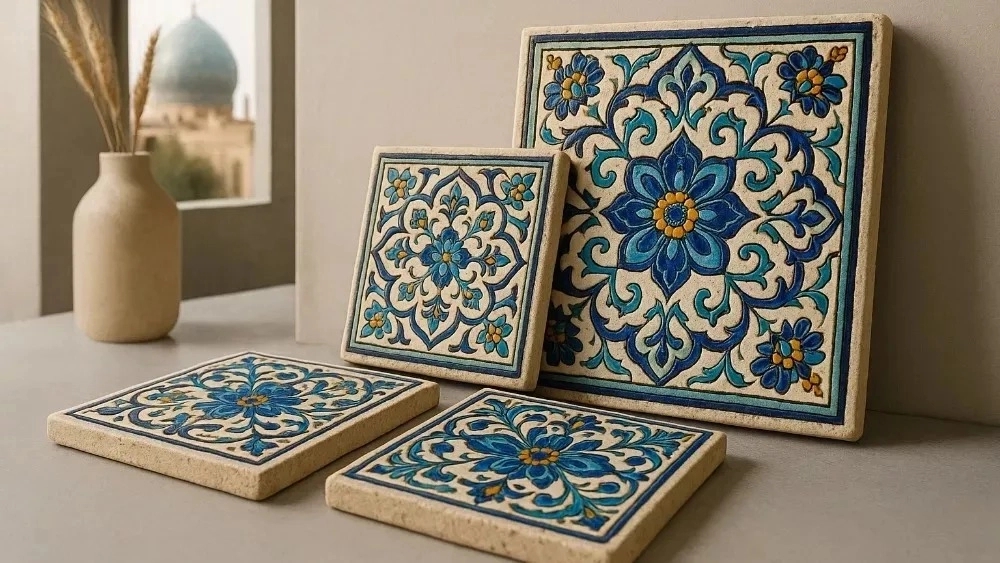
The traditional seven-color tile is one of the most important symbols of Iranian art and culture, which has given a special effect to Iranian architecture with its elegance, precise coloring and original designs. In this article, we will discuss the production of seven-colored and traditional tiles from different angles, and by examining the processes, importance and characteristics of this art, we will examine the role of the Atosam brick and tile company in preserving and promoting this original art.
An introduction to traditional seven-color tiles
The traditional seven-color tile is a type of handmade and colorful tile that is made using the seven main colors and traditional Iranian designs. These tiles are used as one of the prominent manifestations of Iranian art in decorating mosques, historical places, houses and cultural buildings. The thought and art used in the production of seven-color tiles express the unique combination of colors, shapes and Iranian culture that has always attracted many audiences.
The importance of traditional seven-color tiles in Iranian architecture
Traditional seven-color tile, unlike machine-made and modern examples, represents Iran's cultural and historical identity. These types of tiles with vivid and shiny colors and designs that are designed based on elaborate and slim motifs, give the buildings a special beauty and glory. Therefore, the production of traditional seven-color tiles is known as a way to preserve this cultural heritage and the association of authentic Iranian art.
Production steps of traditional seven-color tiles
1. Pattern design
The first step in the production of seven-color tiles is the design of traditional motifs. These designs include geometric shapes, flowers, slime lines and mythological figures, which must be carefully and skillfully prepared manually or digitally.
2. Selection of raw materials
High-quality raw materials, including quality clay, natural colors and special glazes, are the basis of tile production. The quality of the raw materials has a direct effect on the durability and beauty of traditional seven-color tiles.
3. Tile shaping
At this stage, the mixture of clay and raw materials is molded in the form of tile plates. Before drying, the tiles must be properly pressed and molded to have a specific size and thickness.
4. Glazing and painting
One of the most important steps in the production of seven-color tiles is glazing and the use of seven main colors. These colors include blue, green, yellow, red, white, brown and turquoise, which are carefully and artistically drawn on the tiles in different layers.
5. Final baking
After painting, the prepared tiles are baked in special ovens at a high temperature so that the glazes are stabilized and the colors remain shiny and stable.
The unique features of traditional seven-color tiles
Due to the special and manual production process, the traditional seven-color tile has special features that distinguish it from other types of tiles:
- Vivid and bright colors: The use of natural colors and seven main colors creates a unique and attractive effect.
- Durability and high resistance: With the selection of high-quality materials and accurate firing, these tiles have a long life and high resistance to environmental factors. The tile has been doubled.
- Variety in size and shape: The seven-color tile can be produced in different sizes and shapes, which is easily coordinated with the architecture of the environment.
The role of "Ajur and Kashi Atosam" company in the production of traditional seven-color tiles
Atosam brick and tile company is one of the pioneers in the production of traditional seven-color tiles in Iran, using artistic knowledge, professional experience and the use of high-quality raw materials. This company has been able to provide products with high quality and artistic value by maintaining the original principles of production, which are widely used in both traditional projects and contemporary architecture.
The salient features of this company are:
- Using skilled craftsmen and experienced artists in designing and painting tiles.
- Using high-quality and tested raw materials to guarantee the final quality of the product.
- Respecting the principles of Iranian aesthetics and culture in tile designs and patterns.
- Diversity in producing products and responding to different needs of customers with excellent quality.
Applications of traditional seven-color tiles in today's architecture
Despite the advancement of technology and the introduction of industrial tiles, the traditional seven-color tile still maintains its position as a special artistic element. These tiles are used in various spaces:
- Decorating mosques and historical places: preserving the originality and beauty of traditional architecture.
- Interior and exterior views of buildings: creating a beautiful and unique focal point.
- Cultural spaces and museums: showcasing Iranian culture and art.
- Gardens and green spaces: combining nature and art in harmony.
Important points in buying and choosing seven-color and traditional tiles
In choosing traditional seven-color tiles, it is important to pay attention to quality, precision in design and coloring, as well as the originality of the product. Choosing a long-established and reliable company like "Atosam Bricks and Tiles" guarantees receiving a quality product in accordance with artistic standards.
summary
The production of traditional seven-color tiles is a combination of art, culture and special techniques of the tile industry, which is considered the most valuable symbol of Iranian art. This type of tile has a special position in architecture and art industries due to its beauty, durability and many applications. Atosam brick and tile company, relying on original art and excellent raw materials, has been able to play a prominent role in the production and promotion of traditional seven-color tiles and transfer this valuable heritage to future generations.