
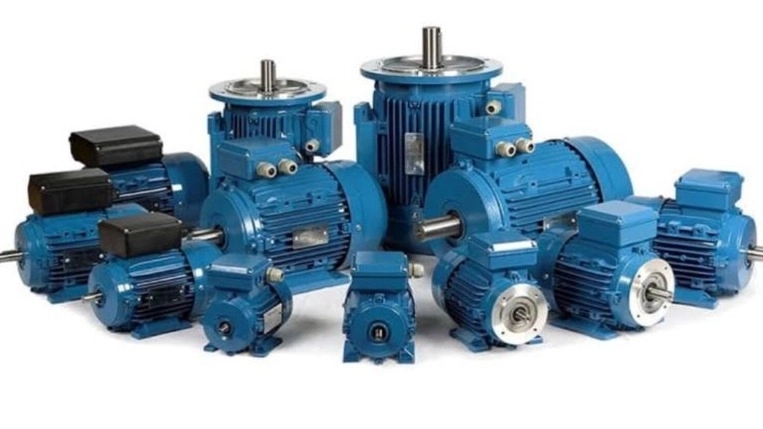
In the world of industry and production, the electric motor is the beating heart of every device and production line. The correct selection of this vital part not only has a direct effect on the performance of the device, but also plays a significant role in the energy costs, maintenance and lifetime of the entire system. One of the most important decisions faced by engineers, contractors and industrial buyers is the choice between 1400 rpm electric motor and 3000 rpm electric motor.
In this comprehensive and specialized article, we will examine carefully and impartially the difference between 1400 rpm and 3000 rpm electric motor. In this article, we will compare the power, torque, and power consumption, and we will help you choose the best option by providing practical technical tips. Also, the introduction of Darwish Pars Motor Company as one of the pioneers of Iran's electromotor industry, will help you make a safe purchase with the confidence and support of a reputable brand.
What is an electric motor and how is the rotation speed (rpm) determined?
Before we start the comparison, it is necessary to know what the concept of "revolutions per minute" (RPM) is. The rotation speed of the shaft of three-phase induction electric motors is directly dependent on the number of poles of the stator winding and the frequency of the network electricity.
The formula for calculating the simultaneous (thin) speed is as follows:
Ns=P120×f
Where:
- Ns: simultaneous speed (rpm)
- f: power frequency (50 Hz in Iran)
- P: number of poles
According to this formula:
- 2-pole electric motor (3000 revolutions): It has 2 poles. The simultaneous speed is 120 x 50/2=3000 rpm.
- 4 pole electric motor (1400 rpm): It has 4 poles. The simultaneous speed is 120x50/4=1500 rpm. (Actual speed is slightly less than 1500, usually around 1450-1470 rpm, known in the market as 1400 rpm).
This difference in the number of poles strongly affects the physical structure and mechanical performance of the motor.
Full comparison: power, torque and power consumption
In this section, we examine the three key factors mentioned in the title of the article separately.
1. Torque: rotational power at low speed
Torque is the motor's ability to perform mechanical work or rotate an axis under load. The relationship between power, speed and torque is inverse.
- 1400 rpm electric motor: Due to the lower rotation speed, it produces a much higher output torque than a 3000 rpm motor of the same power (e.g. 5.5 hp). This feature makes 1400 rpm motors ideal for applications that require high torque at low speeds. 3000 rpm electric motor: Produces less torque. These engines are suitable for applications that do not have a heavy initial load or require fast acceleration and high speed.
Technical conclusion: If your machine needs a lot of pressure to start moving or work under heavy load (such as stone crushers, mills or granule pumps), 1400 rpm electric motor is a better choice.
2. Power: constant output power
The important point here is that output power (horsepower or kilowatt) can be the same in both types of engines. That is, a 5.5 hp electric motor at 1,400 rpm and a 5.5 hp electric motor at 3,000 rpm, both produce 5.5 hp mechanical power in nominal conditions.
The difference is in how fast this power is produced. In other words, the 1400 rpm electric motor provides power at lower rpm but with more torque, and the 3000 rpm electric motor provides power at higher rpm but with less torque.
3. Electricity Consumption: efficiency and amperage draw
Many people think that 3000 rpm engines use more power, but the reality is a bit more complicated.
- Electrical consumption at rated load: If both motors work at their rated load, their electrical consumption is almost the same (taking into account motor efficiency).
- Effect of load on consumption: The problem arises when a 3000 rpm motor is used for an application that requires high torque. In this case, the motor is under pressure and its current (ampere) draw increases, which leads to heating of the coils and an increase in power consumption.
- Efficiency: In general, 1400 rpm electric motors sometimes have a slightly higher efficiency in general applications due to their larger structure and better distribution of the magnetic field, but this difference is not so significant in small dimensions (below 10 hp).
Key point: Higher power consumption is usually caused by bad motor selection (eg using a 3000 rpm motor where torque is not needed), not the nature of the motor.
Other technical and structural differences
In addition to the main parameters, there are other differences that are effective in maintenance and installation:
1. Dimensions and weight
- 1400 rpm electric motor: Due to having 4 poles, more space is occupied inside the stator. As a result, for the same power, 1400 rpm motors are usually bigger, heavier and more expensive than 3000 rpm motors.
- 3000 rpm electric motor: has a smaller and more compact structure. This feature is very advantageous for limited spaces.
2. Vibration and sound
- 3000 rpm electric motor: produces more vibration and noise due to the higher rotation speed. This issue requires special attention to the balance of the rotor and the quality of the bearings in applications sensitive to sound or delicate devices.
- 1400 rpm electric motor: It has a smoother, quieter performance and less vibration.
3. Useful life and depreciation
Common applications of any type of electric motor
To make the right choice, you need to know what each engine is made for.
1400 rpm electric motor applications (high torque, medium speed)
- Large water pumps (Centrifugal Pumps)
- Scroll and screw compressors
- Stone crushers and ball mills
- Press and extruder machines
- Heavy conveyor belts
- Industrial packaging machines
3000 rpm electric motor applications (high speed, low torque)
- light domestic and industrial water pumps (simple centrifuge)
- fans and blowers
- light turning machines (drills)
- welding machines
- light blade mills
- plastic injection machines (injection section)
Why is it important to choose a reliable brand like Pars Motor Darvish?
Darwish Pars Motor Company has proven its commitment to quality and service with years of experience in the electric motor industry.
Advantages of buying from Pars Motor Darvish:
- Complete product variety: Offering a wide range of 1400 and 3000 rpm electric motors with different powers (from 0.75 horsepower to hundreds of horsepower).
- Quality assurance of copper coil: Use of all-copper coil in all models for maximum efficiency and thermal resistance.
- Free expert consultation: Our technical team is ready to help you according to the type of machine and workload.
- Reliable warranty and after-sales service:
- Providing a written warranty and easy access to repair services.
- Competitive price: Providing high quality products at fair prices and eliminating middlemen.
To view the complete list of products and inquire about prices, you can visit our official website at pmelecteromotor.com Do it.
The ultimate guide to choosing: which one should I buy?
To make a final decision, answer the following questions:
- What kind of load does my machine carry? (Heavy and anti-torque or light and smooth?)
- Heavy -> 1400 rpm electric motor
- Light -> 3000 rpm electric motor
- Do I need to reduce the rpm with a gearbox?
- If yes, a 3000 rpm electric motor is usually a better choice because gearboxes are used to convert high speed into torque. are optimized above.
- How much is the installation space?
- Limited space -> 3000 rpm electric motor
- Enough space -> 1400 rpm electric motor (due to less depreciation)
- How important is the level of noise and vibration?
- Sensitive to sound -> 1400 rpm electric motor
Frequently asked questions
Can I use 3000 rpm instead of 1400 rpm electric motor?
Only if the machine load is light and does not require high initial torque. Otherwise, the 3000-rpm engine will overheat and fail prematurely.
Is the 1400 rpm electric motor always more expensive?
Yes, due to the consumption of more raw materials (wire and iron) and larger dimensions, the finished price of the 1400 rpm electric motors is usually higher.
What is the best electric motor brand in Iran?
There are various brands, but Darwish Pars Motor Company is one of the best options due to its high manufacturing quality and reliable after-sales service.
conclusion
Choosing between 1400 rpm and 3000 rpm electric motor is a technical decision that should be made based on the actual needs of the device, type of load and environmental conditions. Neither is absolutely "better"; Rather, each one is optimized for a specific application. 1400 rpm electric motor is suitable for high torque and low consumption, and 3000 rpm electric motor is suitable for high speed and small dimensions.
We at Pars Motor Darvish Company will help you to make the best decision by understanding these differences. By buying from us, you not only ensure the quality of the product, but also benefit from expert advice and warranty services.
Do you still have doubts about choosing between the electric motor of 1400 rpm and 3000 rpm?
Don't worry! The team of experts of Pars Motor Darvish Company are ready to offer the best and most affordable option after receiving the information of your device.
📞 Contacting technical advisors:
To receive free consultation and daily price inquiry, contact us now.
🌐 View products and order online:
For technical details, specifications and direct purchase, visit the website pmelecteromotor.com Refer.
📍 Address of the head office:
Islamshahr, Tehran
الکتروموتور ۱۴۰۰ دور و ۳۰۰۰دور پارس موتور درویش
برای سفارش و استعلام قیمت لطفا فقط تماس بگیرید