
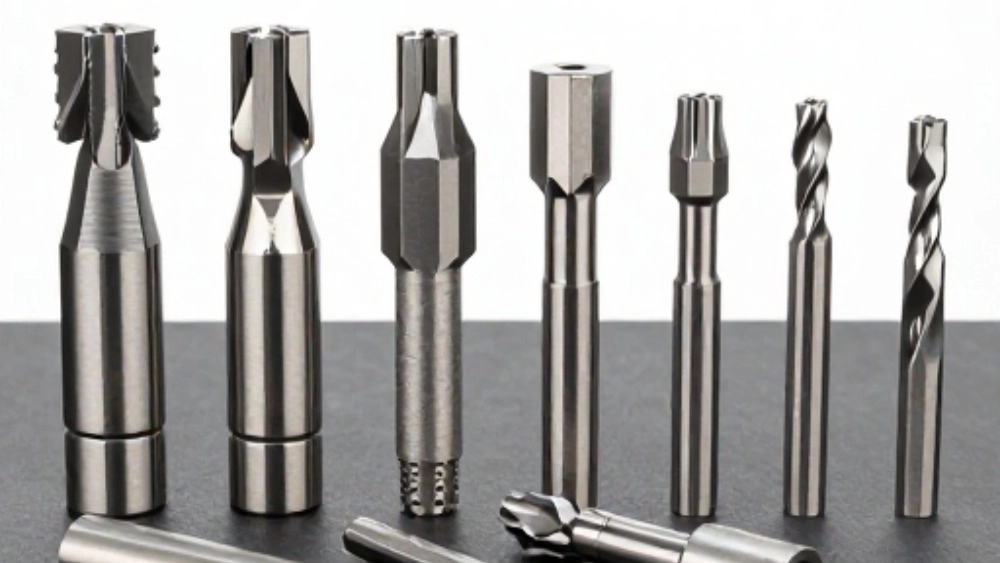
In the metalworking industry, the accuracy, speed and final quality of the work largely depends on the right choice of tools. For this reason, advice on the choice of tools for turning and milling can make a big difference between a successful purchase and an expensive choice. When the right tool is not selected correctly, not only the quality of the surface of the part will decrease, but also the life of the tool will decrease, the production time will increase and the side costs will increase.
If you work in a workshop, factory, production unit or even in custom projects, getting a tool selection consultation for turning and milling will help you to choose the best option based on the type of material, speed of cutting, required accuracy and machine conditions. In fact, choosing a tool is not just about buying a disposable pen; Rather, it is a technical and economic decision that affects the entire production process.
Furthermore, we will fully examine why advice on choosing tools for turning and milling is important, what tools should be chosen according to the work, what points are important when buying and how to increase productivity with a professional choice.
Why is tool selection advice for turning and milling important?
One of the most common mistakes in industrial workshops is choosing tools based only on price. While in many cases, the cheaper tool looks cost-effective, in practice it results in reduced accuracy, lower quality, and even damage to the part or machine. For this reason, advice on the selection of tools for turning and milling plays a key role in reducing purchasing errors.
When you use tool selection advice for turning and milling, you get several important benefits:
- More accurate selection based on the material of the workpiece
- Increasing tool life
- Reducing machine downtime
- Improving the quality of the final surface
- Reducing raw material waste
- Better cost control
- Increasing production speed
In many projects, this initial consultation makes the customer buy only the tool that exactly matches his needs, instead of buying several inappropriate tools. This means real savings, not only in the purchase price, but in the entire production process.
Widely used tools in turning and milling
In order for advice on choosing tools for turning and milling to give correct results, one must know the types of tools and their use. In the following, we review the most important tools.
1. Turning tool
Turning tools are commonly used for operations such as chipping, shaping, polishing, and chamfering. Including:
The selection of these tools should be done based on the type of part, the hardness of the material and the type of operation. In the tool selection consultation for turning and milling, it is usually recommended to carefully check the type of insert, cutting angle and material of the tool cover.
2. milling tool
Milling is used for creating grooves, leveling, shaping and polishing different surfaces. Common tools in this field include the following:
- Finger milling
- Floor milling
- Face milling
- Milling drill
- Carbide tools
- Mills for aluminum, steel or steel
In the advice of choosing a tool for turning and milling, it should be specified what is the distance of your machine, what is the type of spindle and what kind of material is the part made of. This information directly affects the choice of tools.
Important points in advice on choosing tools for turning and milling
If we want to advise on the selection of tools for turning and milling in a professional and practical way, we must consider several main factors.
Piecework material
The first and most important factor is the material of the piece. A tool suitable for steel is not necessarily suitable for steel, cast iron, aluminum or brass. Therefore, in the advice of choosing tools for turning and milling, it should be specified what alloy the part is made of.
Type of operation
Is your goal roughing or polishing? Is deep exfoliation necessary or just a thin layer removed? The answer to these questions in the tool selection consultation for turning and milling determines whether a more resistant, delicate or precise tool should be used.
Speed and accuracy required
Some projects require higher speed and others very high accuracy. In this situation, tool selection advice for turning and milling helps to create a balance between speed, tool life and quality.
Device type
Lathe and milling machines have different capabilities and limitations. Spindle power, torque, collet type, and tool holding system all factor into the final selection. If the tool is not compatible with the device, even the high-quality tool will not work properly.
Budget
Budget is also an important factor, but it should not be the only criterion. In the advice of choosing tools for turning and milling, it is better to check the cost along with the life and efficiency of the tool, not separately from it.
Common mistakes in choosing tools
Many people buy tools for turning and milling without consulting and then face the following problems:
- Choosing an inappropriate tool for the material of the piece
- Not paying attention to the tool cover
- Purchasing only based on price
- Ignoring the circumference and power of the machine
- Choosing the wrong diameter or length of the tool
- Using general tools for specialized operations
- Disregarding the brand and quality Build
If these mistakes are repeated, the final cost will be much higher than the initial purchase amount. For this reason, advice on the selection of tools for turning and milling is a smart investment, not an additional cost.
How does choosing the right tool increase productivity?
One of the main goals of tool selection advice for turning and milling is to increase productivity. When the right tool is chosen, the following benefits are achieved:
- Production speed increases
- Output quality becomes more uniform
- Tool wears out later
- Requires frequent replacement less
- Pressure on the machine is reduced
- Operator works more reliably
In fact, advice on the selection of tools for turning and milling does not end only with a better purchase, but also helps to better manage the entire production process.
Who needs advice on choosing tools for turning and milling?
This type of consultation is not only for large workshops. Different groups can use it:
- Turning and milling workshops
- Part production factories
- Industrial contractors
- Repair and maintenance units
- Production engineers
- CNC machine operators
- Buyers of industrial equipment
- Collections newly established
If you are planning to buy for the first time or if you want to optimize your current tool, tool selection advice for turning and milling can avoid wrong decisions.
Criteria of a professional consultation
In order for tool selection advice for turning and milling to be truly useful, it must be based on accurate information. A professional advisor will usually check the following:
- Part and alloy type
- Operation type
- Machine model
- Machine speed and power
- Required accuracy level
- Production volume
- Cooling conditions
- Customer budget
- Brands Available
- Possibility of supply and support
The more complete this information is, the better the result of advice on choosing tools for turning and milling.
Choosing the right tool for each application
For precision turning
In precision turning, the tool must have high stability, proper cutting edge and good dimensional accuracy. In such cases, tool selection advice for turning and milling usually focuses on precision inserts and standard holders.
For high speed milling
In high-speed milling, the material of the tool and its coating are very important. The tool must be able to withstand high heat and wear. For this reason, advice on the selection of tools for turning and milling is very decisive in this sector.
For hard materials
For hard steels, stainless steels and resistant alloys, high resistance tools should be selected. The wrong choice in this section will cause the tool to fail and fail prematurely.
For aluminum and soft metals
In soft metals, the tool should drain the chips well and avoid chip sticking. This point is also very important in the selection of tools for turning and milling.
The benefits of receiving advice from a specialized group
When you seek help from an expert group for tool selection advice for turning and milling, you usually get these benefits:
- Technical and accurate response
- Proposing tools according to real needs
- Cost savings
- Possibility to compare options
- Access to practical experience
- Reducing the risk of wrong purchase
- After purchase support
These items make the tool selection process simpler and more reliable.
summary
Finally, advice on choosing tools for turning and milling is one of the most important steps before buying industrial tools. Making the right choice doesn't just save money; It also improves production quality, tool life, work speed and final accuracy. If you want to choose the right tool based on the type of part, machine and your actual needs, be sure to use expert advice.
To receive advice on choosing tools for turning and milling and to check suitable options, you can apply now:
📞 +989123682955
If you are looking for a more accurate purchase, a more reliable choice and to reduce additional costs, this is the best time to get advice on the choice of tools for turning and milling.
Call now and increase the quality of your work with a professional choice.