
همین حالا تماس بگیرید!
پاسخ فوری و مشاوره رایگان در انتظار شماست.
Stone roads, access roads to mines, workshop roads and dirt roads full of pieces of stone and metal waste are among the most difficult conditions for tires of light, semi-heavy vehicles and even mining machinery. In such environments, a flat tire is not just a simple event; It can lead to stoppage of operations, increase in transportation cost, drop in fleet productivity and even create safety risk for the driver and support team. This is exactly where anti-puncture gel comes up as a preventive and economical solution. By creating a protective layer and automatically sealing the penetration of sharp objects, the anti-puncture gel helps the car not to break down at the same moment of a puncture and to continue the journey. When it comes to real performance in tough conditions, the quality of the material and its compatibility with the tire are decisive. By providing specialized gels for various applications, Pars Shiman has tried to provide a reliable solution for rocky and mineral paths; A solution that makes both economic sense and operationally helps reduce downtime. In this article, we will fully and practically examine what anti-puncture gel is, why it is more important in mineral roads, what advantages it creates, how it should be chosen and used, and why Pars Shiman anti-puncture gel can be a safe choice for the fleet and consumers.
What is anti-puncture gel and how does it work?
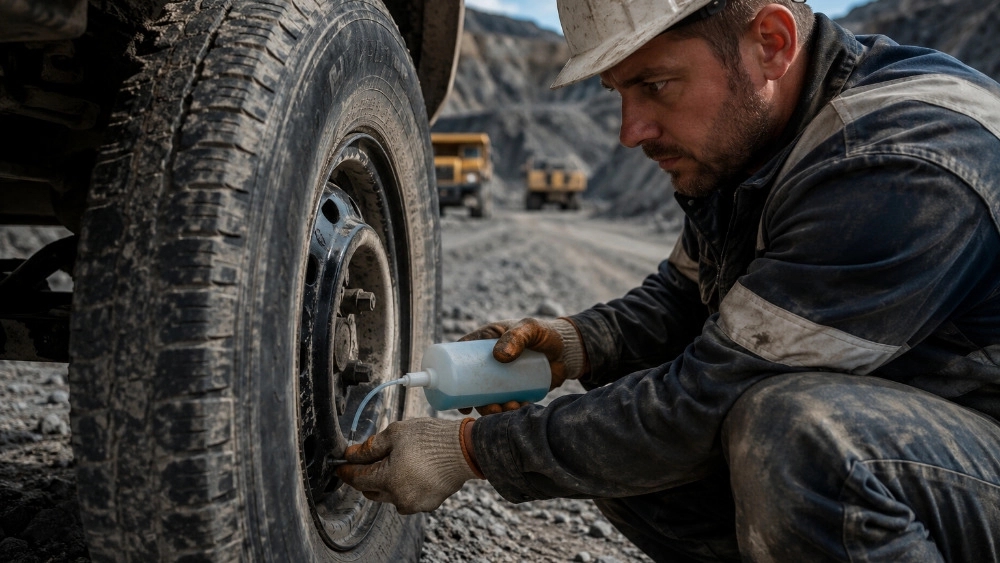
Anti-puncture gel is a sealant and internal sealant that is injected into the tire, and when a sharp object such as a nail, edged stone, metal spike or piece of wire penetrates, it automatically moves to the puncture site and fills the penetration path, preventing the rapid release of air. The performance of anti-puncture gel is usually based on controlled viscosity and rapid sealing properties; That is, the material should be so fluid that it spreads in the inner environment due to the rotation of the tire, and at the same time, it should be so sticky and stable that it creates a reliable seal at the damaged point. The key advantage of anti-puncture gel is that it is prepared for high-risk conditions from the start, rather than relying on post-puncture reaction, effectively turning common punctures into controlled or even ineffective leaks. Anti-puncture gel can be used for tubeless tires and tubular tires, but the consumption amount, injection method and compatibility with the tire structure must be carefully observed. Pars Shiman anti-puncture gel, focusing on stability in harsh conditions, tries to provide more uniform performance on rocky and mineral tracks where there is a lot of heat, impact and repetition of damage.
Why do rocky and mineral tracks multiply punctures?
On mining tracks, the tire faces a combination of destructive factors: angular stones that act like blades, metal pieces and industrial scraps, high load pressure, high temperatures from climbing and braking, and repeated crossing of uneven surfaces that hit the tire wall. Puncture in these routes does not happen only from the tread; Sometimes the tire wall or shoulder area is also damaged. In addition, when the vehicle is carrying a heavy load, the tire is under more stress, and even small punctures can cause pressure loss more quickly. Decreasing tire inflation in such an environment means increased fuel consumption, increased tire temperature, abnormal wear and finally the risk of bursting or losing the tire. For this reason, the use of anti-puncture gel on these routes as a preventive measure is more justified than on urban routes. Anti-puncture gel here plays the role of operational insurance: reducing the probability of stopping, reducing the need to change tires in remote areas and reducing the need for emergency services. When the fleet is working in the mine, every minute of downtime can be costly, and anti-puncture gel can greatly reduce this risk. Choosing a high-quality anti-puncture gel like Pars Shiman anti-puncture gel can be an effective decision for such scenarios.
Advantages of using anti-puncture gel on rocky and mineral tracks
The first advantage of anti-puncture gel is the significant reduction of sudden punctures. On rocky and wasteful roads, flats can occur several times a week or even daily, especially for mining support vehicles, vans, Nissans and light trucks that are constantly on the move. The anti-puncture gel makes many small and medium-sized holes immediately sealed and the driver does not even notice the puncture or experience very little pressure drop. The second advantage is increased safety. A sudden puncture on steep, dirt, and narrow roads can increase the risk of vehicle deflection or loss of control. The anti-puncture gel maintains the controllability of the car by preventing the rapid drop of the wind and reduces the risk of an accident. The third advantage is reducing the sleep time of the fleet. When you get a flat tire, it's time-consuming to find a safe place to stop, remove the wheel, repair or replace it, and then move on. In the mining environment, sometimes this process takes longer due to the lack of tools, dust, rain or the distance from the repair shop. Anti-puncture gel helps reduce the number of these stops and keep the fleet's work schedule more stable. The fourth advantage is the reduction of direct and indirect costs. The cost of tubes, punctures, tires, carrying spare tires, sending service and even the cost of lost time, all increase with the increase of punctures. Anti-puncture gel controls costs by reducing the frequency of punctures and is economical. The fifth benefit is helping to maintain tire health. Driving with low wind causes the tire to heat up and destroy the internal structure; But anti-puncture gel prevents some of these damages by keeping the pressure within an acceptable range. The sixth advantage is better efficiency in remote routes. In mines and workshop roads, access to puncture repair services is not always fast. Anti-puncture gel can play a supporting role so that the car can get to a more suitable place without the need for immediate repair. In the meantime, Pars Shiman anti-puncture gel, as a product that is considered for working conditions and hard roads, can be a good choice for users who need stable performance.
How does anti-puncture gel help reduce fleet costs?
If your fleet operates in mining or road construction and construction projects, the puncture fee is not just the puncture repair money. Each flat creates a chain of costs: vehicle downtime, delays in cargo or power shifting, increased fuel consumption due to undetected deflation, potential tire damage, and even safety and management costs. Anti-puncture gel shortens this chain by reducing the number of occurrences. The important thing is that the anti-puncture gel for the fleet is most effective when it is used in a planned and standard way; It means that the right amount should be injected for each tire size, the air pressure should be adjusted and the condition of the tire should be checked at certain intervals. In such a case, anti-puncture gel helps reduce the total cost of tire ownership. "Pars Shiman" can be a practical option for fleet managers and contractors by providing a consumption guide and focusing on quality; Because in mining operations, performance stability is more important than anything else.
What features should anti-puncture gel suitable for mineral roads have?
For stony and mineral tracks, not every ordinary anti-puncture gel is suitable. The material must be stable at high temperature, not separate from the tire during long rotations, not cause severe imbalance, and be compatible with the material of the tire and tube. It should also have the ability to seal common holes caused by sharp objects and not dry out or become biphasic over time. Some low-quality products may pill after a while or cause problems with the valve, resulting in pressure drop and new problems. For this reason, it is very important to choose a reliable brand. Pars Shiman anti-puncture gel with a specialized approach and quality control can be an option for users who experience mining routes. When choosing an anti-puncture gel, one should pay attention to the type of car, load weight, tire size, whether it is tubeless or with tubes, and the severity of the risk of a puncture. If these things are considered correctly, anti-puncture gel is not only an additional cost, but an investment to reduce risk.
The correct method of using anti-puncture gel in car tires
The effectiveness of anti-puncture gel depends on correct installation. First, the condition of the tire must be checked; A tire that has a large tear or structural damage will not be treated with anti-puncture gel and should be repaired or replaced. Then, the appropriate amount of anti-puncture gel is determined based on the tire size and the manufacturer's recommendation. The injection is usually done through the valve, and it is better to put the tire in the right condition so that the anti-puncture gel can enter well. After injection, it is necessary to adjust the tire pressure according to the car standard. Then, by driving for a short time at a controlled speed, the anti-puncture gel is spread inside the tire. In mining environments, it is suggested to periodically control the wind pressure, because inappropriate pressure can both increase the probability of damage and affect the performance of the anti-puncture gel. Also, if a large puncture or cut occurs, the anti-puncture gel may not be enough and you should go to the repair shop. If Pars Shiman anti-puncture gel is used according to the instructions, it can provide a better user experience and reduce the possibility of side problems.
Anti-puncture gel is suitable for which cars and applications in mining?
In mining environments, a wide range of vehicles and equipment travel: vans and pickups for support, Nissans and trucks for carrying light materials, minibuses or passenger cars for transporting personnel, and sometimes forklifts or machines with special tires. Anti-puncture gel can be useful for many of these cases, especially in cars that regularly travel between different surfaces and are exposed to nails, pieces of stone and scrap metal. For mine support fleets, anti-puncture gel is usually the most cost-effective, as these vehicles travel long distances daily in high-risk areas, and repeated punctures reduce productivity. Using Pars Shiman anti-puncture gel for such a fleet can help reduce repeated stops and can be planned in terms of management.
Comparison of anti-puncture gel with spare, traditional puncture repair and reinforced tires
Having a spare tire is necessary, but a spare tire is not a preventive measure and is only used after a puncture. In addition, changing the wheel on mining roads is dangerous and time-consuming. Traditional puncture repair also requires stopping and access to tools and skilled personnel, and in many cases, it is done only after the injury. Reinforced tires and off-road treads can increase resistance, but are usually more expensive and still vulnerable to sharp objects. Anti-puncture gel adds a layer of defense that, along with proper tire and air pressure management, can create a more complete protection system. Rather than relying on just one solution, combining the right tire with anti-puncture gel and air pressure control usually gives the best results in the mine. In this framework, Pars Shiman anti-puncture gel can be part of a puncture risk reduction strategy designed for rocky and mineral roads.
Why Pars Shiman anti-puncture gel is a good choice for rocky and mineral tracks?
In choosing anti-puncture gel, what is important is "reliability". A product that works in urban roads may not perform well in a mining environment under load pressure, heat and impact. By focusing on providing anti-puncture gel with high quality and usability, Pars Shiman can be a logical choice for those who travel on rocky and mineral roads. The important advantage of buying from a reputable collection is that you have access to a product with clear specifications, a usage guide and better support, and if used correctly, you get a more predictable result. Also, when the goal is to reduce repeated punctures and lower operating costs, the quality of anti-puncture gel plays a decisive role. Pars Shiman's anti-puncture gel can be a good option to consider and use for fleets that care about reducing stops and increasing safety.
Summary: Anti-puncture gel, a practical solution for mining and rocky roads
On rocky and mineral roads, puncture is a constant risk and its management requires preventive solutions. By automatically sealing common punctures, anti-puncture gel helps reduce sudden pressure drops, reduce unnecessary stops, increase safety, and control direct and indirect costs. If the anti-puncture gel is chosen and injected correctly, it can work as part of the tire maintenance program in the mining fleet. By providing suitable and reliable anti-puncture gel, Pars Shiman can be a good companion for drivers, fleet managers, contractors and companies who work in harsh conditions and seek to reduce punctures and increase productivity. For the best result, it is recommended to determine the tire size and type of use before buying and use Pars Shiman anti-puncture gel according to the instructions and the suggested amount so that you can experience its real effect on mineral and stony roads.