
همین حالا تماس بگیرید!
پاسخ فوری و مشاوره رایگان در انتظار شماست.
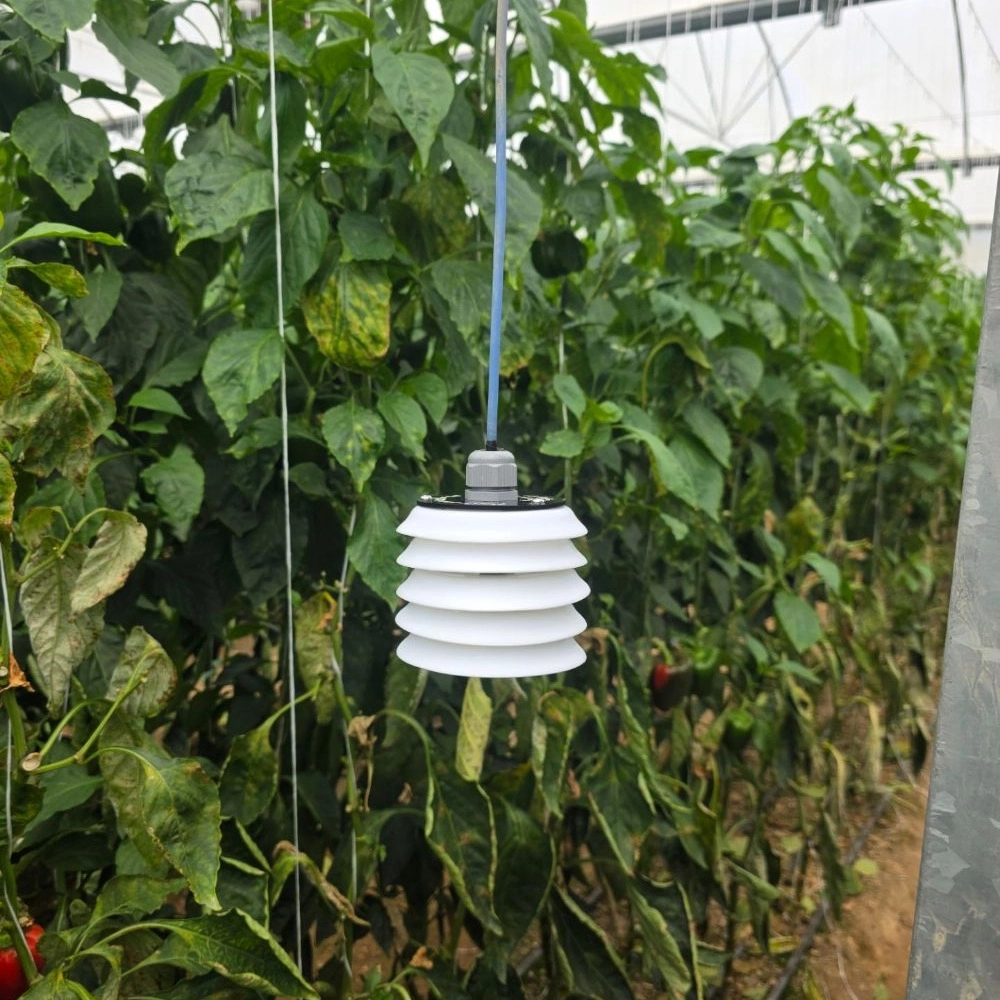
In modern greenhouses, accurate temperature and humidity data are the basis for decisions on irrigation, ventilation, heating, cooling and disease control. But sensors in the greenhouse environment face serious challenges: direct sunlight, water spray, permanent humidity, fogging, spraying and even dust and soluble fertilizers. In such a situation, if the sensor works without protection, the probability of error in measurement increases, and these errors can lead to wrong settings in the automation system and reduce product quality. The greenhouse sensor protector is an engineered solution to put the sensor in a more stable and standardized condition so that the number that reaches the controller and automation system is closer to reality. In practice, the greenhouse sensor protector both physically protects the sensor and prevents errors caused by the environment, so it has a direct role in increasing the measurement accuracy and increasing the life of the sensor. If your goal is to manage the greenhouse climate professionally, the greenhouse sensor protector is one of the small equipment but very effective in the final result.
How does the greenhouse sensor protector increase the measurement accuracy?
One of the most common causes of temperature and humidity sensor errors in the greenhouse is direct sunlight and heating of the sensor body. When the sensor is exposed to radiation, the temperature of the body rises above the actual temperature of the surrounding air and the sensor reports the wrong number. This error in the greenhouse automation system can cause the fans to turn on incorrectly, the valves to open, or the fogger settings to change. The greenhouse sensor protector makes the measurement conditions more natural by creating a shadow and removing the effect of direct radiation. In addition to radiation, water flow caused by irrigation, misting and possible precipitation in semi-open greenhouses can affect the humidity sensor and cause unrealistic responses or measurement delays. The well-designed greenhouse sensor protector allows sufficient air circulation but does not allow water droplets to sit directly on the sensor. This balance between ventilation and protection allows the sensor to be placed in a stable environment and the measurement error is reduced. The result of this process is quite tangible for the greenhouse manager: more precise climate control, greater uniformity of conditions, reduction of plant stress and increase in productivity.
The protective role of the greenhouse sensor in increasing the life of the sensor
Greenhouse sensors are usually sensitive components built with delicate electronics and measuring elements. When these parts are exposed to high humidity, spraying chemicals and soluble fertilizer deposits, they gradually suffer from corrosion, oxidation of the connectors, clogging of the moisture sensor holes and decrease in accuracy. The greenhouse sensor protector reduces erosion by preventing direct spraying and reducing contact with corrosive agents. This does not only mean that the sensor will fail later; Rather, it causes the sensor to go out of calibration less over time and the need for replacement or service is reduced. From an economic point of view, the cost of purchasing a greenhouse sensor protector is very small compared to the costs of replacing the sensor, stopping the automation system, reducing product quality, or increasing energy consumption. So a greenhouse sensor guard is a small investment to protect equipment and avoid hidden costs. If several sensors are installed in the greenhouse, the importance of this issue is multiplied, because any damaged or faulty sensor can affect a large part of the system's decisions.
What is the advantage of protecting the greenhouse sensor against spraying and humidity?
Spraying in the greenhouse is a common activity and many soluble substances have corrosive or sedimenting properties. When the particles of poison or fertilizer sit on the body of the sensor and especially on the inputs of the humidity sensor, the function of the sensor is disturbed. Even if the sensor doesn't fail completely, it may become slow to respond or the numbers may fluctuate. The greenhouse sensor protector prevents direct spraying by creating a physical shield and helps less chemical particles reach the sensor's sensitive surface. On the other hand, the constant humidity of the greenhouse causes water to sit on different surfaces and affect the electrical paths. The greenhouse sensor guard is properly designed to both prevent the accumulation of droplets and maintain the passage of air. This feature is critical for humidity sensors, as the sensor must be in contact with ambient air but not exposed to direct dripping or standing water. As a result, the sensor measures in more realistic conditions and its lifetime is increased. In greenhouses that have a fogger or fogger, using a greenhouse sensor protector is practically a necessity, because without it the sensors are constantly involved with tiny droplets.
What does the engineered design of the greenhouse sensor protection mean?
When we talk about engineered design, we don't just mean a simple coating. The greenhouse sensor shield must be designed to meet several goals at the same time: prevent direct radiation, reduce the effect of water and poison splash, maintain natural air flow, prevent moisture accumulation, and allow easy installation. If the shield is too closed, air will not reach the sensor and the measurement will be slow or unrealistic. If it is too open, water droplets and radiation will reach the sensor and the protection will be ineffective. So the engineered design of the greenhouse sensor shield is actually a delicate balance. The material of the body, the shape of the blades or grooves, the distance of the parts from the sensor, the way water exits and even the color and the amount of light reflection can affect the performance. In professional products, these things are practically and experimentally checked in the greenhouse environment so that the greenhouse sensor guard is not just a decorative piece, but actually increases the accuracy of the sensor and reduces the error. This type of design makes the automation system rely on more reliable data and climate control becomes more stable.
What effect does the greenhouse sensor protector have on automation and energy management?
Greenhouse automation makes decisions based on data. If the temperature sensor reports a higher number than it actually is, the fans may turn on earlier or the valves may open more and waste heating energy. If the humidity sensor shows a higher or lower number, the mister or humidifier is working incorrectly and the conditions are set for fungal diseases or plant stress. The greenhouse sensor protector helps the controller make a more correct decision by reducing the error. This means more efficient energy consumption, reduced wear and tear of equipment, and reaching the desired set point with less fluctuation. In many greenhouses, the main problem is not that they don't have equipment; The problem is that the data is not accurate and the equipment works based on unreliable data. This is precisely where the greenhouse sensor shield is most effective, as it improves data quality. The more accurate the data, the more accurate the automation and the lower the running costs. In the long term, this effect can be seen in the form of a reduction in fan electricity consumption, a reduction in heating fuel consumption, a reduction in water consumption, and a reduction in product losses.
Criteria for choosing the right greenhouse sensor protector
To choose a greenhouse sensor protector, several key criteria should be considered. The first is compatibility with the type of sensor; The protector should have enough space and size for the sensor and its installation should be done without putting pressure on the cable or the body. The second is the quality of materials and resistance to moisture and chemicals; In the greenhouse, poor-quality plastics become brittle or deform, ultimately reducing protection. The third is the air flow design; The greenhouse sensor protector must maintain the possibility of air circulation so that the sensor responds quickly and accurately. The fourth is radiation protection; The shape and color should help eliminate direct radiation and not heat the sensor body. The fifth is installation and service; The shield should be such that it is easy to clean and visit the sensor, because dust and sediment are normal in agricultural environments. If these criteria are met, the greenhouse sensor shield becomes a key component of the sensing and control infrastructure, not an ineffective side piece. It is also better to choose a specialized supplier who knows the needs of the greenhouse and has designed the product for real conditions.
Why buying a greenhouse sensor protector from Savin Sanat Arsam is a smart choice?
Savin Sanat Arsam, focusing on the practical equipment of the greenhouse and the real needs of the users, offers solutions that aim to increase the accuracy of the data and the stability of the performance in agricultural environments. When it comes to greenhouse sensor protection, design details matter a lot; Because the product must provide protection and proper ventilation at the same time. Savin Sanat Arsam, by providing greenhouse sensor protection with a durable and practical design, helps the sensors work in more standard conditions and errors caused by radiation, water spraying, humidity and spraying are reduced. This means your greenhouse automation system receives more accurate data and makes more accurate control decisions. In addition, using the greenhouse sensor protector from Savin Sanat Arsam can reduce the costs of repairing and replacing sensors, because environmental damage is prevented and the lifespan of the sensor is increased. If the stability of equipment performance, measurement accuracy and better climate management are important to you, choosing a supplier that offers the product with an engineering perspective is a competitive advantage. Savin Sanat Arsam can accompany you in the way of equipping the greenhouse with more accurate and reliable solutions.
Conclusion: The result of using the greenhouse sensor protector
The greenhouse sensor guard is a simple but decisive tool to improve the quality of sensing in the greenhouse environment. This product protects the sensor from direct sunlight, water splash, humidity and spraying and prevents errors in temperature and humidity measurement. When the sensor is in a stable condition, the greenhouse automation system will perform more accurately and the climate control will be done more reliably. The end result of using a greenhouse sensor protector is quite clear: increasing measurement accuracy, preventing environmental damage, and increasing sensor life. If you want to have a modern greenhouse with reliable data and stable performance, getting a greenhouse sensor protector from a specialized group like Savin Sanat Arsam is an important and economical step towards the professionalization of greenhouse management.