
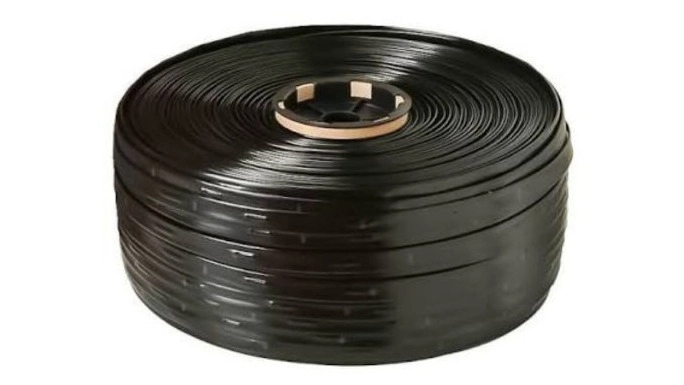
In the modern agricultural world, every drop of water and every rial of cost must be managed carefully and intelligently. One of the most important tools in this management is the use of pressurized irrigation systems, especially Drip Tape. But the question that has always occupied the minds of farmers, gardeners and technical consultants is: "What is the best tape thickness for crops?"
Choosing the wrong thickness can lead to tape tearing, clogging of holes, uneven distribution of water and finally reducing the product. On the other hand, choosing too high a thickness will also unnecessarily increase initial costs. In this comprehensive article, we are going to do a detailed technical review of different thicknesses, advantages and disadvantages of each and how to choose the best option based on the type of cultivation. We will also introduce you to "Zamzam Pipe Khodadadi Trading" as one of the most reliable suppliers of irrigation equipment in Iran, so that you can buy with complete confidence.
What is tip tape and why is its thickness important?
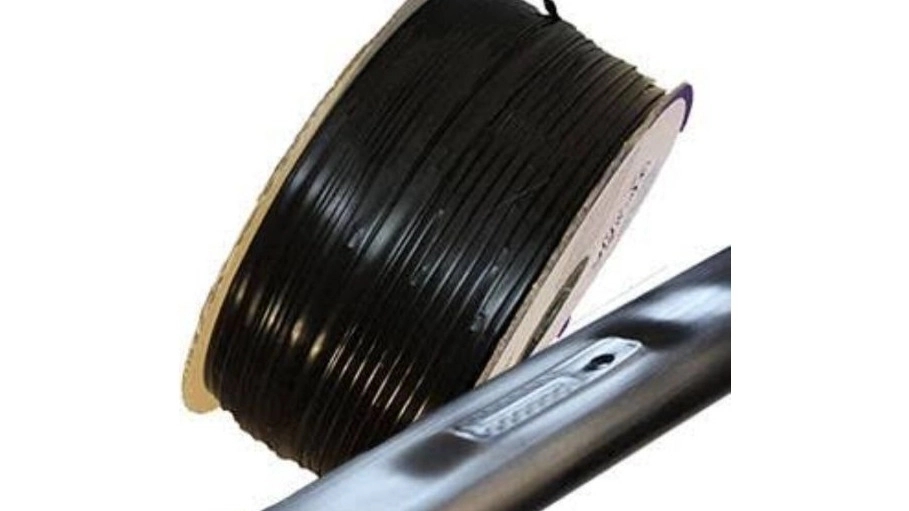
Tip tape is a thin and flat plastic tube that has small holes (droppers) at specific intervals. These holes are designed to deliver water drop by drop directly to the roots of the plant. The wall thickness of this tape, usually measured in millimeters (mm), plays a vital role in its durability, pressure resistance and useful life.
The thickness of the tape is directly related to its resistance to perforation by soil pebbles, tearing due to tension and deformation due to internal water pressure. Therefore, understanding the difference between thin and thick strips is the key to success in your irrigation project.
Types of tape thickness and its applications
In the Iranian market, tapes are offered with different thicknesses. Knowing these categories will help you make the best decision.
1. tape with a thickness of 0.1 mm (100 microns)
These tapes are the thinnest type on the market and are usually designed for short-term use.
- Advantages: Very low price, light weight and low initial cost.
- Disadvantages: Very low mechanical strength, high sensitivity to soil pebbles, risk of tearing due to tension.
- Suitable application: Short-term greenhouse crops, low-risk annual crops, or projects Experimental.
- Recommendation: If your farm soil is clean and stone-free and your project is less than one season, this option can be cost-effective. But for open fields, it is not recommended.
2. tape with a thickness of 0.2 mm (200 microns)
This thickness is the most common and balanced option for most agricultural projects.
- Advantages: Good balance between price and durability, moderate resistance to pressure and wear, useful life between 1 and 2 seasons.
- Disadvantages: Still requires care in installation and avoiding excessive tension.
- Suitable use: Wheat, barley, sugar beet fields, greenhouses and young gardens.
- Recommendation: For most Iranian farmers who are looking for a balance between cost and quality, 0.2 mm tape is the best choice.
3. tape with a thickness of 0.3 mm (300 microns)
These tapes are designed for tougher conditions and more valuable projects.
- Advantages: High pressure resistance, more durable, better resistance to puncture by pebbles.
- Disadvantages: Higher price than 0.1 and 0.2 models.
- Suitable use: Orchards, fields with heavy or sandy soil, and perennial crops.
- Recommendation: If your farm soil has gravel or your network water pressure fluctuates, prioritize this option.
4. Tip tape with a thickness of 0.4 mm (400 microns) and above
These tapes are placed in the category of luxury and durable products.
- Advantages: Very long service life (several years), excellent resistance to all environmental conditions.
- Disadvantages: High initial cost.
- Suitable application: Large national projects, industrial greenhouses with continuous cultivation, and areas with very harsh climatic conditions.
Effective factors in choosing the best tape thickness
To answer the question "best tape thickness for crops", don't just look at the thickness number. There are other factors to consider:
1. The type of farm soil
Sandy and light soils are less composed of sharp pebbles, so thinner strips (0.1 or 0.2 mm) may be sufficient. But clay and stony soils can easily puncture the tape. In these cases, it is necessary to use thicker strips (0.3 or 0.4 mm).
2. Crop type and crop life span
If your crop is annual (such as wheat or barley), there is no need to invest in very expensive strips. But if you're irrigating an apple orchard or vineyard that will last for years, the extra cost of a thicker strip is more cost-effective in the long run.
3. Water pressure and water quality
High water pressure can put pressure on the bar wall. If your water pressure is high, thicker strips will hold up better. Also, if the irrigation water contains sediment or suspended particles, thicker strips with stronger walls reduce the possibility of clogging and tearing due to internal cleaning.
4. Installation and collection costs
Thinner strips are lighter and faster and less expensive to install and assemble. But if the tape breaks during the season, the cost of repairing and replacing it can be more than the difference in the original price.
The role of Zamzam Pipe Khodadadi business in providing high quality tape
Choosing a reliable supplier is half the success of an irrigation system. "Zamzam Pipe Khodadadi Trading" with years of experience in the pipe and fittings industry, is known as one of the leaders in the supply of quality tapes. We are here to help you make the best decision by providing standard products.
Why choose Zamzam Pipe Khodadadi Trading?
1. Guarantee the thickness and quality of raw materials
Unfortunately, in the market, some sellers claim a thickness of 0.2 mm, but deliver a product with a lower thickness (for example, 0.15). We at Zamzam Pipe Khodadadi Trading are committed to providing a product with exact thickness and according to the standard. We use first grade polyethylene raw materials (HDPE) that have excellent tensile and compressive strength.
2. Full variety of products
From thin 0.1mm tapes for special applications to thick 0.4mm tapes, we have all sizes and thicknesses in stock. There are also different distance of droppers (15, 20, 30 cm) and different sizes of tape (16, 20 mm).
3. Free and specialized technical advice
Our engineering team is ready to suggest the best thickness and type of tape based on your soil type, product type, water pressure and budget. This free consultation can prevent you from wasting your capital.
4. Fair and transparent pricing
We offer the best prices to dear farmers by eliminating unnecessary middlemen and buying directly from reliable producers. Transparency in pricing is the principle of our work.
5. Fast shipping nationwide
We know that irrigation time is gold for the farmer. For this reason, our logistics system is ready to send orders to your farm quickly.
Important points in the installation and maintenance of the tape
To increase the life of tape, it is not enough to choose the right thickness. It is also very important to follow the installation tips:
- Leveling the soil bed: Plow the soil and remove sharp stones before spreading the tape.
- Using the filter: Be sure to use the appropriate filler (theory, sand or disc) so that the holes in the tape are not blocked.
- Post-season collection: If the strip is not to be reused, remove it from the soil to protect it from sunlight and frost.
Cost comparison: low thickness versus high thickness
Many farmers tend to use thinner strips to reduce the initial cost. But let's do a simple calculation:
- Suppose 0.1mm tape is 20% cheaper than 0.2mm tape.
- But if the thin tape breaks in the middle of the season, the cost of repair, replacement and lost product can be 5 times the original price difference.
- So, 0.2mm tape usually has the best return on investment (ROI) for most projects.
Conclusion: Choose wisely with Zamzam Pipe Khodadadi Trading
The answer to the question "best tape thickness for crops" does not have a single answer and depends on the specific conditions of your farm. But by following the mentioned technical points and using high-quality products, you can avoid irrigation problems and harvest a healthy and fruitful crop.
Zamzam Pipe Khodadadi Trading is your reliable companion on this path by providing standard products, specialized advice and competitive prices. We are here to help you get the best results from your irrigation system with the least risk.
Contact our experts right now to receive a free consultation, inquire about the price of tip tapes and order complete irrigation equipment. Benefit from the expert advice of Zamzam Pipe Khodadadi business and experience smart agriculture.
نوار تیپ آبیاری مزارع بازرگانی زمزم پایپ خدادادی
برای سفارش و استعلام قیمت لطفا تماس بگیرید