
The strategic importance of the distribution of ingot and billet raw materials in Alorak
What is aluminum ingot and what is its position in the production chain?
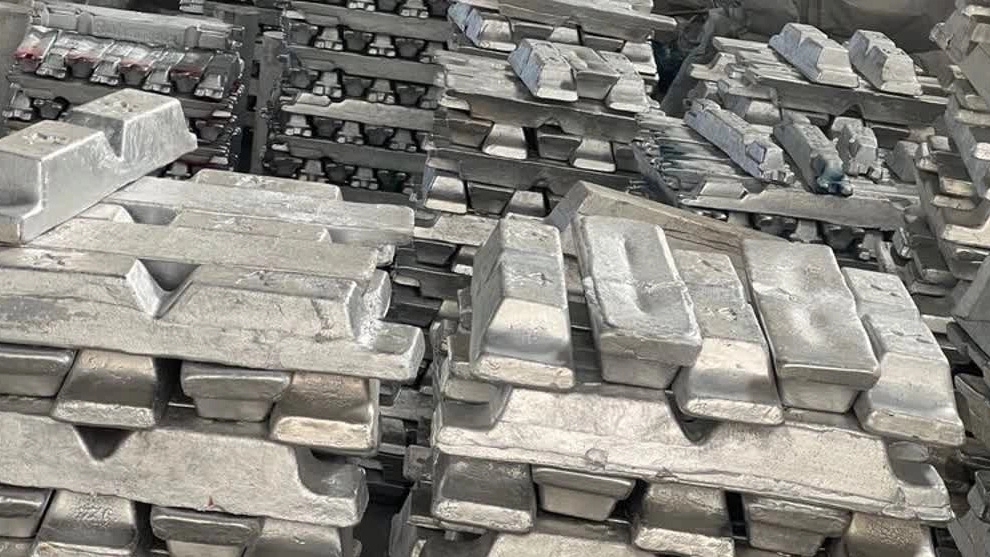
Types of aluminum ingots in the industrial market
- Pure ingots: are usually produced with a purity of 99.7% and are the main basis for making other alloys.
- Alloy ingots: are produced by adding elements such as copper, silicon, magnesium, manganese and zinc to pure aluminum to enhance certain mechanical properties such as greater hardness or heat resistance.
- Slab or flat ingots: are used to produce aluminum sheets through hot and cold rolling process.
- T-Bar ingots: are in the shape of the English letter T and are mostly used in electrical conductor industries.
aluminum billet; The golden key of extrusion industries
Features of a high-quality aluminum billet
- Precise homogenization: The crystalline structure of the billet must be completely uniform during a precise thermal process so that the residual stresses in it are eliminated.
- Absence of hydrogen gas impurities: The presence of tiny hydrogen bubbles in the billet causes cavities and structural weakness in the extruded profiles.
- Dimensional and surface accuracy: Smoothness of the body. The billet and the exact matching of its diameter with the diameter of the container of the extrusion press are particularly important.
The challenges of supplying aluminum raw materials in the country's industries
- Continuous fluctuations in the global and domestic market: Due to the strong dependence of the price of aluminum on the London Metal Exchange (LME) and exchange rate changes, it is very difficult to plan stability for the purchase of raw materials.
- Impurity and inconsistency of chemical analysis: In many cases, the raw materials offered in the open market do not have a valid technical certificate (Certificate) and the quality of the final product of the factories is greatly reduced.
- Improper logistics and transportation: Failure to send shipments on time causes production lines to fall asleep and heavy financial losses.
distribution of ingot and billet raw materials in Alorak; The new hub of supply and distribution
Alorak Industry Leaders Company; Strategic partner of aluminum industries
Why do the big industries of the country choose Alorak industry leaders?
- 100% guarantee of product authenticity and quality:All the shipments of ingots and billets provided by this company have a certificate of identity and a valid metallurgical analysis certificate. This assures the producers that the received alloy exactly meets the defined standards.
- Comprehensive and diverse product portfolio:This collection includes all kinds of pure aluminum ingots, cast alloy ingots (such as LM and A family alloys), rolled slabs, as well as extrusion billets in different sizes and alloys (especially the widely used 6000 series alloys such as 6063 and 6061) in The product basket has its place.
- Modern logistics system and fast delivery:Intelligent management of distribution and warehousing in the Alorak industry leader company means that the orders of buyers are loaded and sent to their destination as soon as possible and in full compliance with the safety principles of transporting metals.
- Specialized technical and engineering advice:The experts of this company are not the only sellers of goods; Rather, as trusted consultants, they help manufacturers in choosing the most suitable alloy according to the final application of the product so that production costs are reduced and productivity is increased.
Technical specifications and quality standards of aluminum ingots and billets
International reference standards
- ASTM (American Society for Testing and Materials): to check the mechanical and dimensional properties of metal sections.
- DIN (German National Standard): to match alloy codes and precise chemical compositions.
- EN (European Standard): to evaluate the thermal and metallurgical behavior of aluminum.
Quality tests performed on products
- Quantometric test (spectrometry): This test is performed to accurately determine the percentage of alloying elements in aluminum ingots and aluminum billets to ensure that the amount of elements such as iron, copper, manganese, and magnesium is exactly within the permitted standard range.
- Ultrasonic Testing: It is used to identify any internal cracks, holes, or discontinuities in the structure of billets to avoid technical defects. be prevented during the extrusion press operation.
- Metallographic test: Microscopic examination of the crystal structure of the metal in order to ensure the correct homogenization operation.
The role of organized distribution in reducing factory production costs
- Elimination of unnecessary middlemen: Buying directly and without intermediaries from the main distributor shortens the hands of dealers and brings the real cost price to the buyer.
- Supply based on need (Just-in-Time): Factories do not need to store a huge amount of raw materials in their warehouses and keep capital stagnant; Because they can receive the materials they need in a phased and reliable manner with regular planning.
- Reduction of production waste: Using homogeneous aluminum billet and standard ingot minimizes the percentage of waste during production, which is the biggest financial saving in industrial processes.