Choosing the right cross table for turning workshops is one of the most important decisions that every workshop manager or skilled technician should carefully consider. The cross table has a direct effect on the quality of turning operations, the accuracy of movement in different axes, the speed of work and also the life of the devices. In professional workshops such as solar turning, where quality, accuracy and speed are three basic principles, choosing a standard cross table is a necessity, not an optional choice. Considering that the cross table plays a key role in today's turning operation in determining the accuracy and output quality, knowing its features, types, technical points and selection criteria is very important.
In this article, an attempt has been made to explain the important points in choosing a cross table suitable for turning workshops with a completely specialized but understandable expression, and also to introduce the experience and high quality of solar turning in the field of using standard equipment, so that workshop owners and enthusiasts can make the best decision in purchasing and choosing this vital tool.
What is a cross table and what is its role in turning?
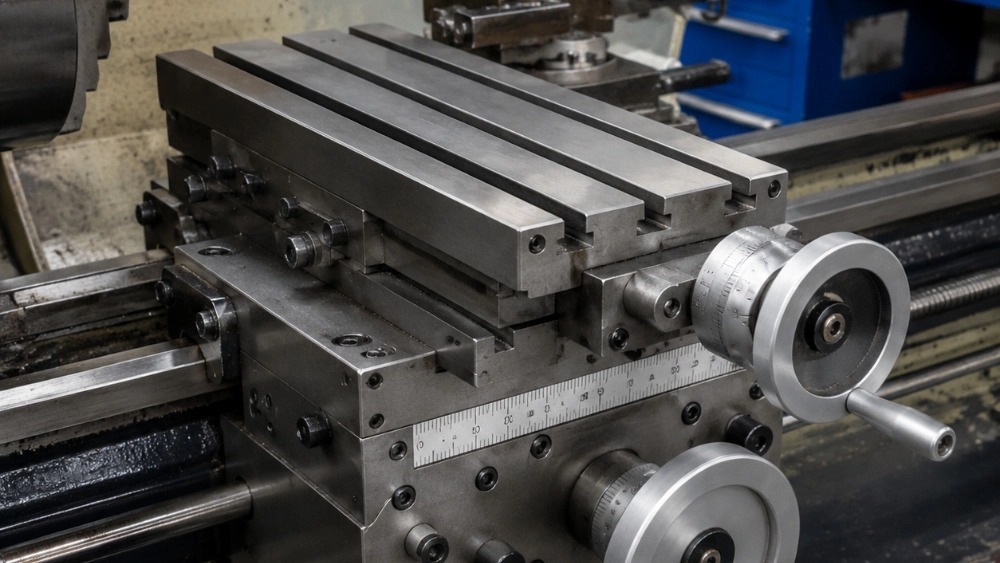
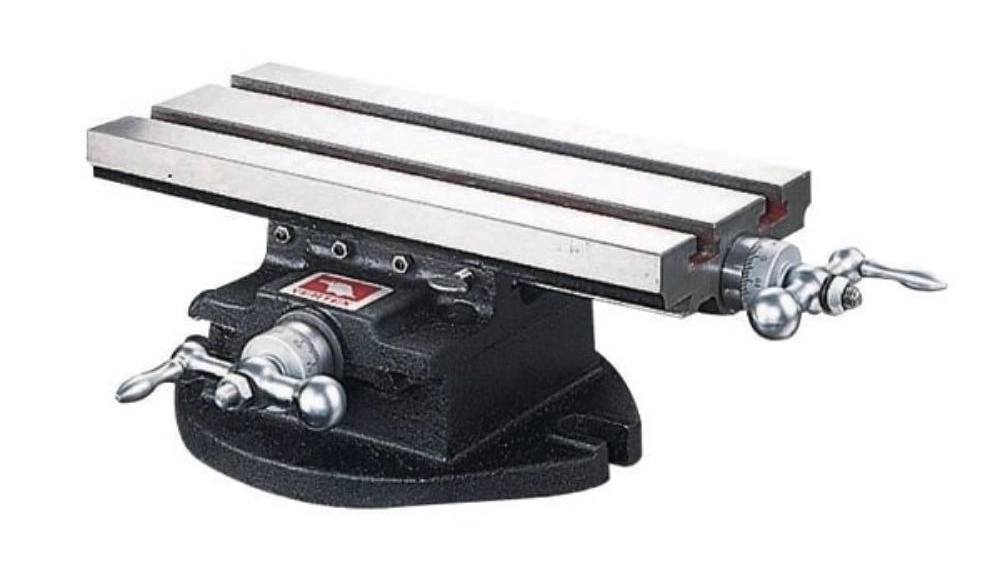
The cross table is a mechanical piece that allows accurate and controlled movement in two axes perpendicular to each other, that is, the X axis and the Y axis. This possibility is necessary for many turning and milling operations, and without a cross table, it will be almost impossible to do accurate work and millimeter adjustments. In professional workshops such as solar turning, the cross table is one of the most important parts of the work tools and is used daily for precise adjustments.
In fact, the cross table allows the operator to move the workpiece under the cutting tool in a completely controlled manner. This precise movement not only ensures the quality of the final surface, but also increases the dimensional accuracy of the part. Any error in the quality of the cross table can lead to vibration, measurement error, reduction of the quality of the final surface and even damage to the tool or device. That's why choosing the right cross table plays an essential role in the quality of the work output.
Types of cross tables and their differences
In order to choose a suitable cross table, you should first familiarize yourself with its types. Cross tables are divided into several general categories in terms of structure, size, materials, and use.
One of the most common types of cross table is manual cross table. This type is suitable for workshops that require accurate and cost-effective manual adjustments. In workshops such as solar lathes, this type of cross table is used for many delicate tasks because manual operator control in many cases provides better results than automatic systems.
Another type is automatic cross table or CNC. These types of tables provide the possibility of moving with high precision and in a planned manner. It is more suitable to use this type of table in workshops where the volume of production is high or very complex work is done.
In terms of material, cross tables are usually made of cast iron, aluminum or hardened steel. Due to its high resistance to vibration and deformation, cast iron is the best choice for industrial cross tables, something that is also used in the solar lathe workshop.
Features of a high quality and standard cross table
A standard cross table should have several key features in order to provide optimal performance in the workshop environment under various pressures and loads. Movement accuracy is one of the most important features. A proper cross table should be able to provide smooth, wobble-free movement in both axes. Even a small slip can affect the accuracy of turning up to several hundredths of a millimeter.
The type of rails used is also very important. Conventional gear rails are lower in price but offer less accuracy and shorter life. In contrast, ball slides or industrial linear rails have high precision, smooth movement and longer life. The use of these rails in professional tables, such as those used in solar turning, significantly increases the final quality of the work.
The weight bearing capacity and dimensions of the cross table
One of the basic criteria in choosing the right cross table is its weight bearing capacity. It should be determined what type of machine and dimensions of the work piece the cross table is designed for. Small tables are suitable for desktop devices, while large industrial tables can withstand loads of several hundred kilograms.
In workshops such as solar turning, where a variety of small parts to large industrial parts are turned, high-capacity cross tables and reinforced rails are usually used to keep the part stable during heavy operations.
The dimensions of the cross table should also be compatible with the type of work. If your workshop often deals with large parts, the small table will not work and the operator will have to install the part on the table in a non-standard way, which increases the possibility of error.
Accuracy and degree of laxity in the cross table
One of the common problems in low-quality cross tables is the presence of laxity in the axes of movement. Laxity causes the operator not to be careful when moving the handle and the part is not placed in the exact position. This issue can be disastrous in works where a few hundredths of a millimeter is important.
In solar turning, to avoid such problems, only cross tables with adjustable backlash control are used. The presence of slack adjusting screws allows the operator to reduce the slack whenever needed and return the accuracy of the table to its original state.
Important points in buying a cross table for lathe workshops
Some important points should be considered to buy the right cross table. First, the table must be from a well-known and reliable brand. Unpopular brands usually do not meet the required standards and after a short period of time, problems such as lagging, warping, or failure of the rails occur.
The second point is to pay attention to the accuracy of the table. When buying, the accuracy of movement in the X and Y axis should be checked. The appropriate accuracy for normal work is a few hundredths of a millimeter, but for ultra-precise work, there is a need for millimeter or micron accuracy.
The third point is to check the strength of the body and the material of the rails. Cross tables made of unbreakable cast iron and industrial linear rails are the best option for professional workshops.
In solar turning, based on years of experience, tables are always selected that can provide precision and strength at the same time so that the work output is of the best possible quality.
The effect of a suitable cross table on the quality of turning output
The cross table has a direct impact on the final accuracy, surface quality, speed of the project as well as the reduction of possible risks in the workshop. If the cross table is not accurate enough, the operator will have to make repeated adjustments, which will increase the production time and even damage the tool.
In workshops such as solar turning, where the goal is to provide ideal output, a suitable cross table will reduce errors, increase production speed, better surface quality and reduce tool consumption. For this reason, choosing the right table can reduce workshop costs in the long run.
Why is it necessary to choose the right cross table for turning workshops?
Because any error or weakness in the cross table causes an error in the entire operation. Even if you have the best lathe or cutting tools, but your cross table is not of good quality, the final result of the work will be affected. The accuracy of turning is not only related to the cutting tool, but also depends on the stability and accuracy of the cross table.
This is the reason why professional workshops like Solar Lathe always make a special investment in equipment like cross table.
The role of solar turning in the use and introduction of standard cross tables
Solar Lathe has been operating in the field of precision lathe for many years and always uses the best standard and industrial cross tables. The experience of the professional operators of this collection has made the selection and use of cross tables to be completely engineered. This collection guarantees quality and accuracy by using the best equipment, and this is the reason why customers trust solar turning.
Long-term experience and the use of accurate and up-to-date tools have made Solar Lathe not only provide high-quality turning services, but also be recognized as a specialized authority in selecting and introducing suitable equipment such as a cross table.
Conclusion and final recommendation
Choosing the right cross table for turning workshops is a highly specialized issue that has a direct impact on the quality, speed and accuracy of operations. A quality cross table should have high precision, standard rails, durable body, suitable capacity and anti-freezing system. In the meantime, workshops such as solar turning can be a good model for choosing the right equipment because they have always provided excellent quality and high precision by using the best cross tables.
If you are planning to buy a cross table or you want to create the most accuracy in your workshop, the best way is to carefully check the stated criteria and, if needed, get help from experienced professionals such as the professional solar lathe team.